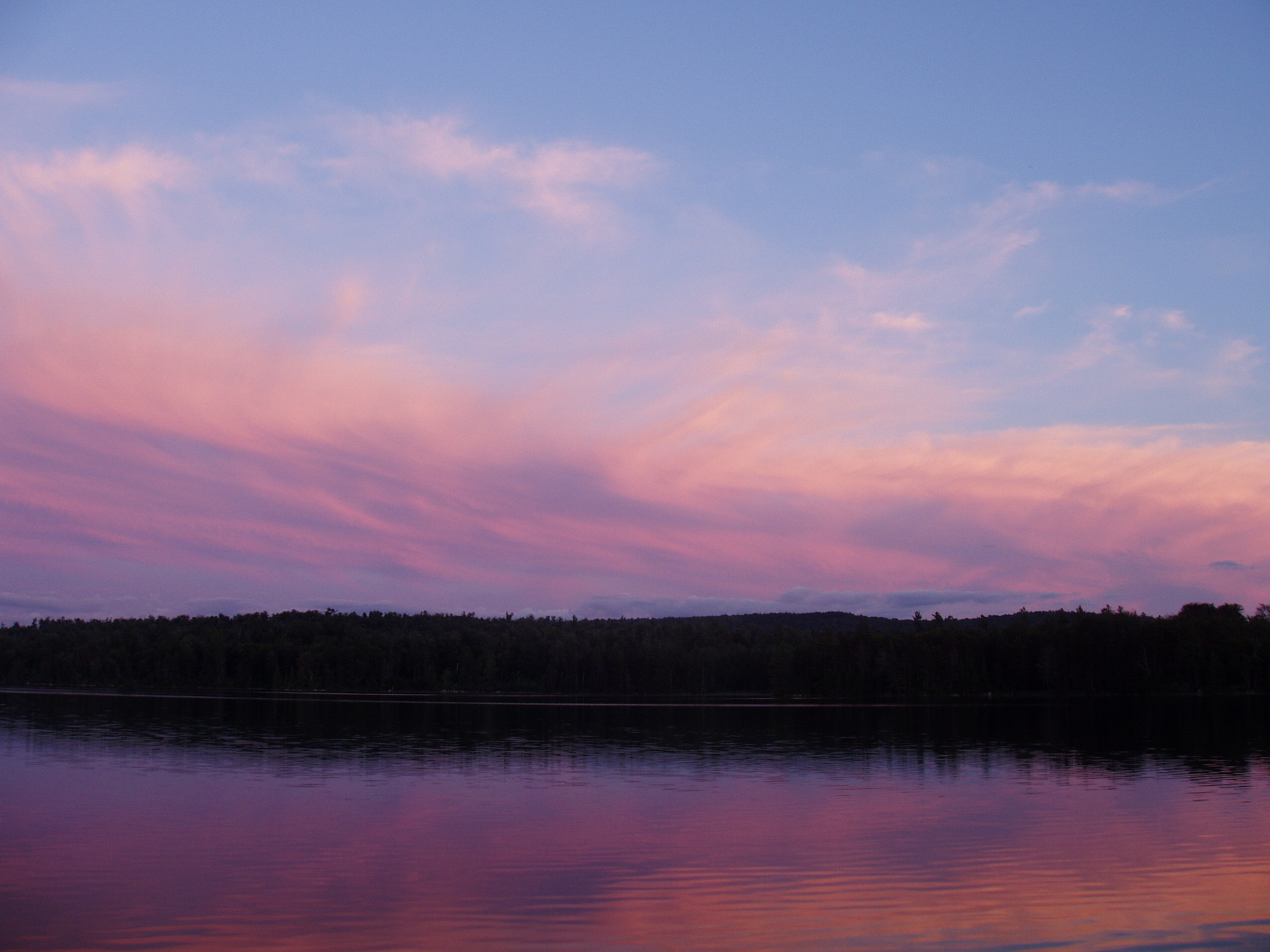
THAYER LAKE, THE BRANDRETH PROPERTY
PREFACE — My essay, Black Spots, tells the story of my adventure at a 15,000 acre camp in the Adirondack Mountains in New York. My partner, Kevin and I, camped, paddled, and fished in the middle of the wilderness for a couple of days with permission of the Nature Conservancy who had just purchased a portion of this family’s original tract.
BLACK SPOTS
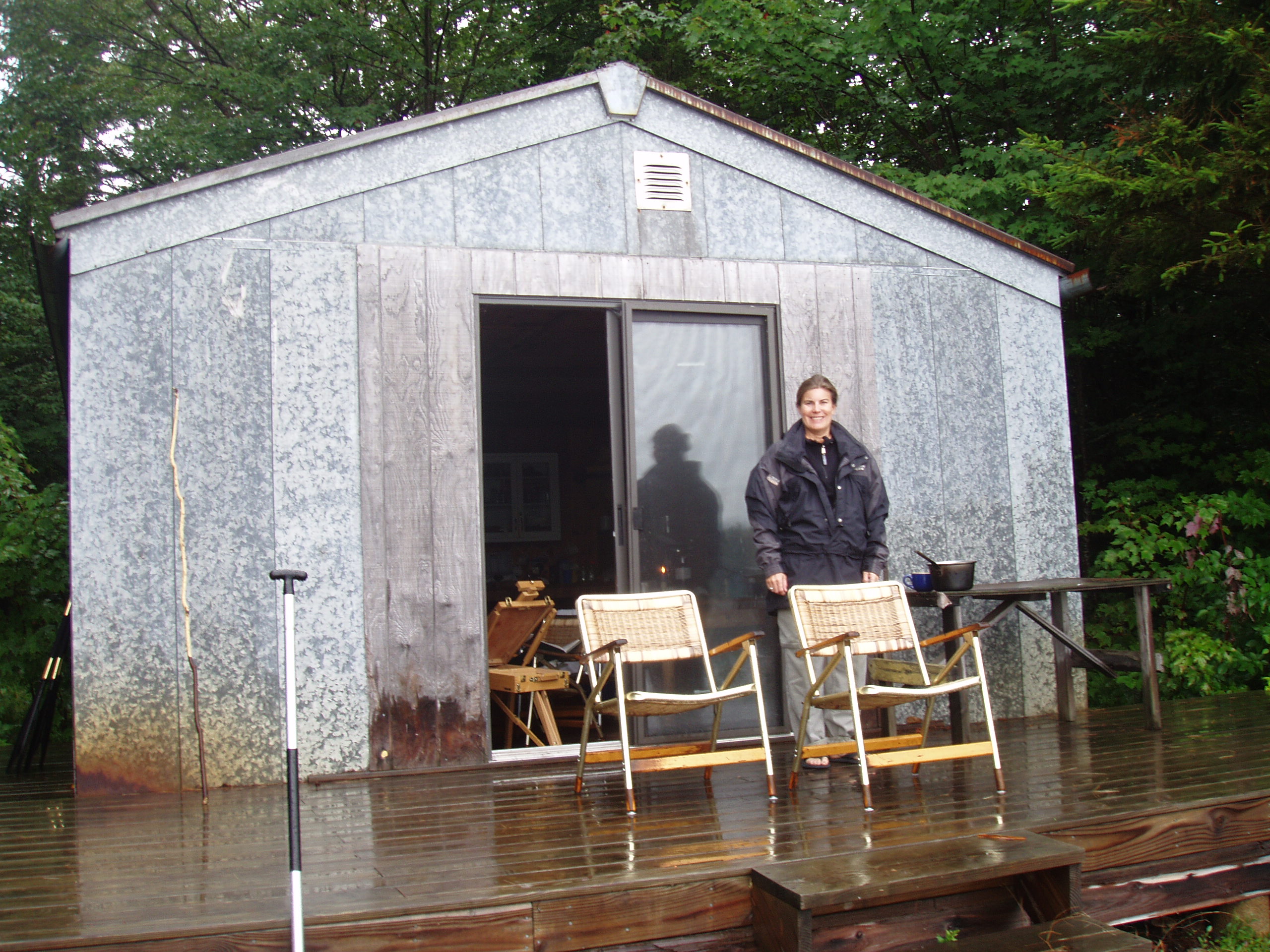
KATIE IN FRONT OF OUR QUONSET HUT
Late last August I went to the Brandreth family tract in the Adirondack Mountains of New York. The same Brandreth as Paullina Brandreth, an early twentieth century hunting and fishing writer who wrote under the pseudonym of Paul Brandreth. I had read her book, Trails of Enchantment, and couldn’t believe my luck when Kevin, a friend and landscape painter, invited me to spend a week there in a Quonset hut type cabin on Thayer Lake, one of several ponds on the property. The Nature Conservancy had recently purchased the 15,000 acre property and they were eager to show it off. I was to write about and Kevin was to paint the reclaimed property that had been in the same family for over one hundred years.
As we drove on the twisting private dirt road fifteen miles into the cabin, we surprised two bears who were feeding on the blackberries that were growing on the verge between the road and the woods. When they heard our truck, they ran as fast as they could down the road, leaped into the heavy brush, and disappeared. All we saw were two large round bear bottoms dashing away ahead of us. People hunt bear here. The woods, thick with alders, are perfect bear habitat and difficult to see or walk through. In fact, you can’t see more than a few feet into the woods on either side of the road.
We stopped at a couple of ponds along the way, one whose water was so clear it was hard to believe that it was dead, a victim of acid rain. Acid rain works like bleach does on fabric. It irradiates everything: all color, design, and life. But just as the fabric looks spotless, so does the water. Spotless and lifeless.
We passed Shingle Shanty Pond where Paullina Brandreth had had a lean-to they used for
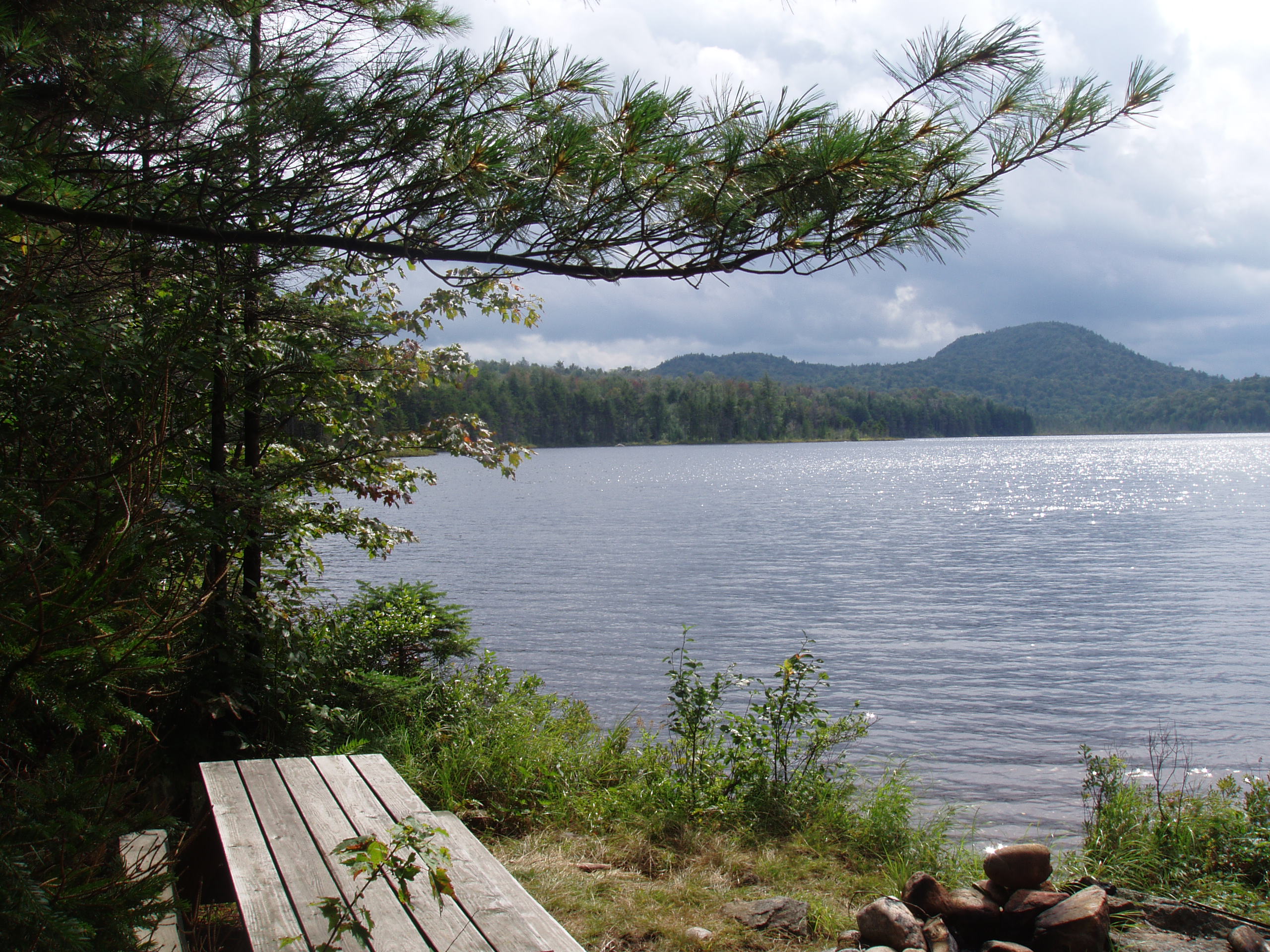
SHINGLE SHANTY POND
hunting expeditions. When you own, hunt, and fish on over 24,000 acres its nice to have shelter here and there. I planned on kayaking its 100 acres, searching around the perimeter in hopes of finding the remnants of her camp. Two hours after we had begun bumping and winding up and down over the hilly woods, we arrived at Thayer Lake and our Quonset cabin. We had expected a dilapidated, primitive structure filled with mice and spiders. To our delight we would be living, sleeping, and cooking in a steel twenty by fifteen foot building with a pine table and matching chairs, aluminum cots with thin mattresses, two folding deck chairs, and a deck overlooking the one mile long lake. We also had a clean, new privy 25 yards away and a barbecue pit style fireplace just off the deck, feet from the water. We had arrived in paradise.
As if it had been choreographed by a Wild Kingdom producer, two loons, a male and female, swan up to within 30 yards of our place. As they swam they called their tremolo, “hahahahahaha” back and forth to one another and to us, we hoped. The pair stayed for fifteen minutes yodeling and diving, dipping their heads and watching — watching us. After unpacking the truck and making our beds, we carried the red camp canoe into the water and paddled out onto the lake. We paddled to the middle, stopped, and just sat. Silence. We were in it, deep in the north woods, surrounded by 100,000 acres of wilderness. The dirt track on which we had arrived was our only way out unless we wanted to hack our way through thousands of acres of dense brushy woods so thick with dead fall, alders, black flies and mosquitoes that we would need a machete and several bottles of bug dope.
After paddling the shore line, we decided upon a likely location for catching some small mouth bass. We were told the lake was full of them, and so we had visions of a dinner of crisply grilled bass, baked potatoes, and steamed string beans accompanied by a couple of glasses of shiraz. Since we only had one fly rod, I had planned on doing the paddling while Kevin, an expert fisherman, did the fishing and catching. But after a couple of casts, Kevin insisted I try, saying it was easy and small mouth bass are fun to catch.
I am a worm fisherwoman and proud of it. Back home on the Gunpowder River in Maryland, I catch lots of rainbow trout and brown trout on my spinning reel baited with worms dug up on the river bank. A fly rod is baited with a fly and has a much longer line than a spinning reel and rod. One must cast back and forth and then out, making the fly appear to the fish as if it is a real insect just waiting to be caught and eaten. I tried it after much cajoling, and incredibly, a bass attacked my bait.
My line went out, and my rod bent over U shaped towards the water’s surface. I had a bass. I actually had a bass! But as I reeled it in, Kevin announced that he’d forgotten the net so I’d “just have to tire it out” before bringing it along side the canoe. I followed his patient directions as I broke my tension with loud high pitched “oooh’s”, imploring every other second, “What should I do now”? Miraculously, the bass stayed on and tired. Carefully, I hauled him up and over the gunwale and into the bottom of our canoe.
I was ecstatic. I couldn’t believe I’d done it and without a net. I wanted to try again. I cast sloppily, but the bass didn’t mind; they jumped onto my bait at almost every cast. Getting them tired and into the boat was harder. As soon as they got close to the boat, they swam away from it as fast as they could. I had to be ready to give them line, but not too much, or they would be able to jump up out of the water and get off of the hook. Every one of them jumped, at least once. And every time, I squealed like a child at an amusement park. After I had caught six and kept four, we called it quits. We couldn’t eat more than two a piece.
As we paddled to shore, the loons called from the other end of the lake. This time their calls sounded primordial like a bevy of ghosts wailing loudly, plaintively. Their “hoooo-lii” echoed ten times over the water, woods, and hills, sending shivers up our backs and raising the hair on our arms. .
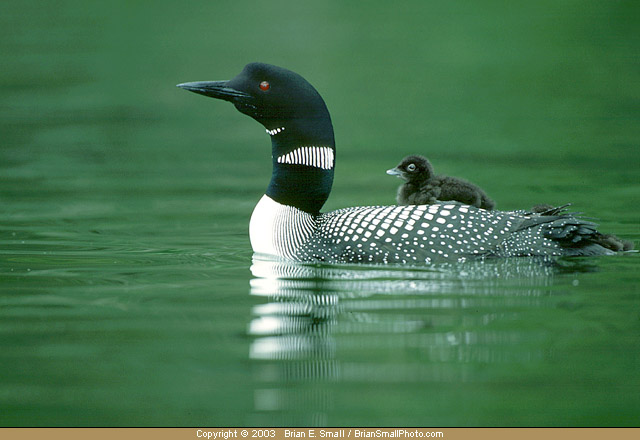
COMMON LOON WITH BABY
Common Loons are large birds, 32 inches long with a wing span of 46 inches. They are described by the Audubon Society as “black-headed, with a heavy, dagger like black bill, a white and black striped necklace, prominent white checkers on their back, and white underpants.” Their eyes are red. They eat mostly fish, sometimes diving 240 feet for them and staying submerged for fifteen minutes. Because they can stay submerged for so long, Eskimos and Native Americans thought them capable of magic.
Back at the shore in front of our cabin, we pulled the canoe out of the water and changed into fleeces and long pants. It was chilly, about 55 degrees. I opened the shiraz as Kevin sharpened his knife. We chatted back and forth about our day, how lucky we were to be here, such a nice cabin and no sign of mice. We’d had bright sunshine and seventy degrees with only a slight breeze. The water in Thayer Lake was still warm. We could swim in it tomorrow. The loons came floating back, looking us over quietly this time. Kevin spread a wooden board on a flat rock and began to filet the bass.
As he cut, he explained that bass smell bad when you gut them, so he was just going to avoid that and simply filet their sides for the only meat we would eat anyway. Why make a mess when you didn’t have to. After cutting the filets from the first fish he stopped and looked at them closely. “Katie, look at this. The fish has parasites.”
I looked and sure enough hundreds of little black spots as small as the head of a straight pin dotted the meat. “Why don’t you clean another one and see if it has any?”
Kevin did and the second one had them and so did the third and the fourth. “I guess the whole lake is infested with them.”
I didn’t want to give up my image of wilderness camping, the image of fishing and eating our catch. “Maybe they’ll be alright if we cook them. The parasites will die won’t they?”
“Katie we’re not eating these fish.” And we didn’t. It’s funny how black spots in fish can change everything.
We thought we were in a pristine environment, fishing in immaculate water. Water we could

BLACK SPOT PARASITES ON FISH PERFECTLY NATURAL
drink, water cleaner than we’d ever seen. But now that notion was dashed. Our small mouth bass had little black spots all through them. We imagined the worst and blamed man, acid rain, and pollution. We made grilled chicken instead and sipped our wine wondering how this lake in the middle of no where could have become contaminated with parasites.
Ironically, we were all wrong. Humans didn’t cause the parasites. After our trip, we found out from a local Adirondack fisherman and the Michigan Department of Natural Resource’s web site that Black Spot is not man made. Black spot is a naturally occurring parasite that is commonly found in earthen bottomed lakes and ponds. It has nothing to do with pollution. The parasites only infest fish with certain diets, not humans swimming in their waters. Even when a fish is heavily infested, he is no danger of dying or becoming sick. These parasites are not harmful to humans and die when the fish is cooked. So we could have eaten the fish, even though they looked pretty unappetizing with all those hundreds of tiny black parasites imbedded in their flesh.
Has our postmodern culture conditioned us to believe that we are the cause of everything that seems harmful because we see the havoc we have caused in more populated places? Well, we’re not always the cause of harm, and parasites are a natural part of the natural world.
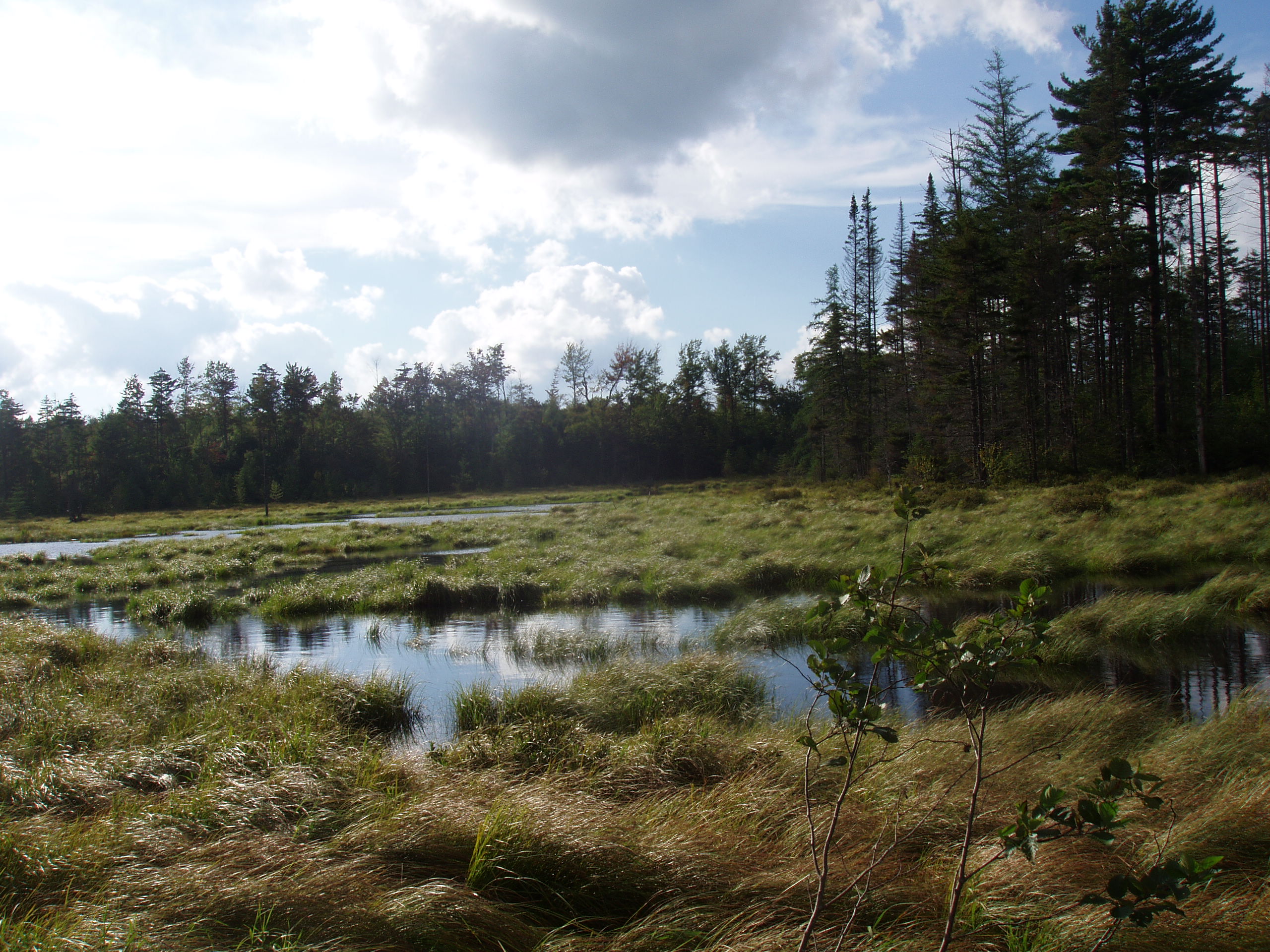
BRANDRETH PROPERTY
If being in the wilderness for a few days taught us anything about our place in the natural world, it taught us that we are a part of the whole. We’re not the center or the biggest part or the most important part. We’re just a part. We don’t affect everything. In the wilderness, we affect very little unless we bring along dynamite and heavy equipment. Without any props, we fit right in — we aren’t too loud or too rough. We eat and sleep and make love like everything else in the woods. And that is what we’d come for after all– to fit in and to be a part of the wild with or without parasites.


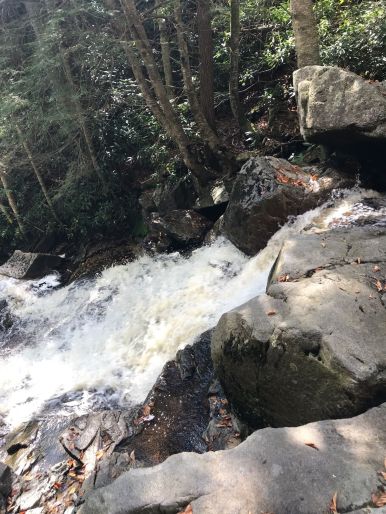
 Seeking The Wild