Covid Chronicle: Musings on Living with Covid

I’ve collected these snippets over the past year. Sometimes writing in my journal, sometimes my phone. Whatever was handy. 

*March, April, May 2020. Don’t touch anything. Wash your hands 10 times a day. Wear gloves/don’t wear gloves. Wear a mask. Wear only an N95 mask. Don’t touch your groceries for 48 hours. Stay 6 feet apart. Strip and Wash your clothes ASAP. Take a shower as soon as you get home. Never, ever touch anyone. Don’t touch your face.

*March, April, May 2020. One of our daughters is in Brooklyn. FaceTiming everyday. We are glued together over air space. She is so frightened. Frightened to leave her apartment. Frightened to go outside for a walk or a quick trip to the small grocer a block away. She is glued to the screen, reciting the latest human stats. Deaths from Covid, number of ICU beds with Covid patients, refrigerated tractor trailers filled with bodies, the wide empty streets, the loneliness, the uncertainty about how you can contract Covid. The daily news briefing from the mayor and then governor. 

*March, April, May 2020. Another daughter in Hawaii. So terribly frightened. Doesn’t know whether or not she should fly home to the east coast. So many dangers. Should she risk the gauntlet of two flights, three airports, taxis? What if she makes us sick? What if she gets sick? So far from home. Life threatening Danger in what was a special trip to paradise. Hell.

*March, April, May 2020. Still another daughter here in Maryland. Now working from her apartment. Mostly safe. Thank god. She has autoimmune problems and almost died nine years back in every parent’s worst nightmare – a very sick child. We know she is careful. We can see her in our backyard patio, six feet away, masks, no hugs. A heartache but not heartbreak. Thank god.

*September, 2021. I’m slowly absorbing the fact that I’m living here in upstate New York for Covid – in this place I wrote about from Pennsylvania. Beauty is everywhere, part of every day. Amazing. You can feel it and see it in all of the people who live here. When you’re walking on the road the guys in the pick up trucks slow down, move over and wave instead of speeding up and getting as close as they can like they did in Pennsylvania.

*Fall and Spring Semesters, 2020, 2021. A hard Zoom class. Many students missing. Some emailing me about Covid sick selves, mothers, aunts, and siblings. Everyone looks exhausted. Everyone has had enough. Enough of everything: school, family, work and life. We all need months of restorative care on a tropical island. Floating in blue water and snorkeling with the 1000 yellow, orange, and turquoise fish.

*February, 2021. “Is it true? Is it kind? Does it need to be said”?  Priya Parker quote heard on interview podcast with Brene Brown. My daughter sent me Parker’s book, The Art of Gathering. I thought, how strange we are listening and reading about gathering when we are all in our own silos or pods. Still. Maybe that’s the point. Reflecting on gathering when we can’t and therefore have a different perspective, one we’ll perhaps never have again. 

*March, 2021. Two thousand Canada geese (my guesstimate) fly overhead. It’s spring. It’s March. In upstate New York, these are the real deal migrating Canada geese flying from the USA to Canada, not the domesticated and then released Canada Geese of Maryland, Pennsylvania and other states.  Did you know that the Canada geese you see in Maryland stay all year long, flying from one local body of water to another, were domesticated in the 1700’s? Their descendants escaped and grew into large flocks that stick around all year long. Canada goose for dinner anyone?

*March, 2021. Song of Rapa Nui, the film. Watched it and was filled with hope. If a person can make such a beautiful life filled with music, grace, hope and love with the support and care of many, Can’t we? Can we open our minds and arms and act to help those in need, to help those who are different, to help those who have less. What has happened to all of the pledges and ideas of real social change and equality since the spring 2020 demonstrations?

*March 8, 2021, 2:00 PM. The pileated woodpecker on the Sumac bushes in early March. Eight inches of snow on the ground. None on my sun baked picnic table perch overlooking Wadhams and the mountains. 25 degrees. I lie motionless for 10 minutes as he perches on one branch after another gathering and eating sumac seeds. A late winter feast. Six feet away. I study his magnificent red pyramidal crown. His silken black feathers. His near miss fall when he reached out too far. I swear he glanced over to see if I’d noticed. I didn’t flinch or breath. A miracle.

*Fall and Spring Semesters, 2020, 2021. My students’ family members are dying. Three so far. After twenty years of teaching, I’ve had students with every trauma you can imagine. But, that’s usually one student with one big trauma every couple years or so. A mother who died in Nepal before her son could fly there. A father who died in three short weeks at Johns Hopkins Hospital as his daughter sat vigil.  Surreal. Numb. Unbelievable. I go outside to ground myself. The woods are my solace.

*March 2, 2021. That’s what I came for – black-green pines against this incredible Meissen blue sky. Nowhere else has this. This combination of trees against sky fills me up so much that I could cry. How lucky am I to be here, mostly safe and sound and surrounded by beauty.

*March 25, 2021. Another challenging Zoom class day. Many students not there again. Someone’s dad checks me out as he walks by his son’s computer.  My student is embarrassed. He apologizes. His dad just wanted to see what I looked like. After class, I need a walk. I grab my sneakers and step out onto our porch. Unbelievable serendipity. Coming round the corner are three of my friends who are taking a pre dinner stroll.  That’s what they call it. A stroll. It’s warm, 70 degrees. I join and vent my Covid teaching frustration. Ahhh. I’m outside, home with friends, trees and the lake. I’m good.

*April 12, 2021. 9:00 PM. When you take away the stars, you take away everything. Crisp, clear, no moon April  night. The Milky Way. Once you’ve seen it, you can imagine anything. No wonder, we’re in such bad shape. Most of us never see the ‘unadulterated’ night sky. The ‘heavens’ as they were once called. Now I see why.

*May, 2021. First dinner at a restaurant in months. Girls’ night out. Amazing. Outside on Chez Lin’s porch overlooking the lake. Chilly. No mixed drinks. We don’t care. Delicious scallops.  Smiling and laughing. Lightness. Home at 10.  Almost hit a deer but didn’t.

Later, nightgown and a small Basil Hayden on our rental house porch while down the hill on the lake live music plays, people laugh and sing. Floating up, filling the small neighborhood. The Westport Restaurant closed for 18 months. Opening night. Lovely. I lean back on the rocker and listen into the dark. A treat on top of a treat.

*Saturday, May 15, 2021, 11:10. Life goes on with or without us. The osprey hatchling cries and cries for more and more food. They have no idea about our Covid madness. Now I have an idea about their lives on the edge. Horseshoe Pond, May, 2021.

*May, 2021. “Frogs are our heartbeat at night”, I write in my journal in mid May. First night hearing peeper and tree frogs. The darkness pulse with their sound – the pulse of us all – together and apart.  Listening. Connected.

Home Tending

Home Tending. Some people like to tend their gardens, some to mow their lawns. Others like to make curtains and paper their walls. I like to arrange things upon our tables, shelves, and chests. Upon the dining room buffet, I place smooth, sculpted rocks from Lake Michigan, calico patterned damask and white, a bumpy tortoise seashell lined in satin ribbon pink, and an urn shaped crystal vase jammed with wild flowers that I cut down the road. I place these and other objects on tables, mantles, and shelves, usually in groups of three. Three is good, two never enough, four cluttered. I think of them as still lives, ever changing still lives.   I arrange and rearrange.

When I grow tired of the monochromatic theme I had to have after Christmas’s colors – white pillar candles, white pottery, and white stones arranged carefully on the walnut chest – I change them. I turn on Bach or Chopin, sometimes even light candles or a fire and then I walk around our living rooms placing things, changing things. Arranging things reconnects me with my home, my idea of what home is – a place both stimulating and restful.

I take antique pewter bowls out of the wardrobe and sit them on the bookshelf. I stand a charcoal-colored terra cotta burial urn, marked with grasses of the African plains, on the Irish pine chest in front of the window. I lay velvet lime bracket fungi inside an ornate Victorian platter whose painted flowers match it. Sitting on the dining table the duff-smelling fungi will remind me of the Gunpowder woods and my hike there in early spring. I rearrange objects on the mantel — lean a carmine Native American basket against the wall behind an azure Emus egg, a mottled brown and white conch shell and a Waterford crystal decanter. It works.

The Politics of Place

IMG_0090

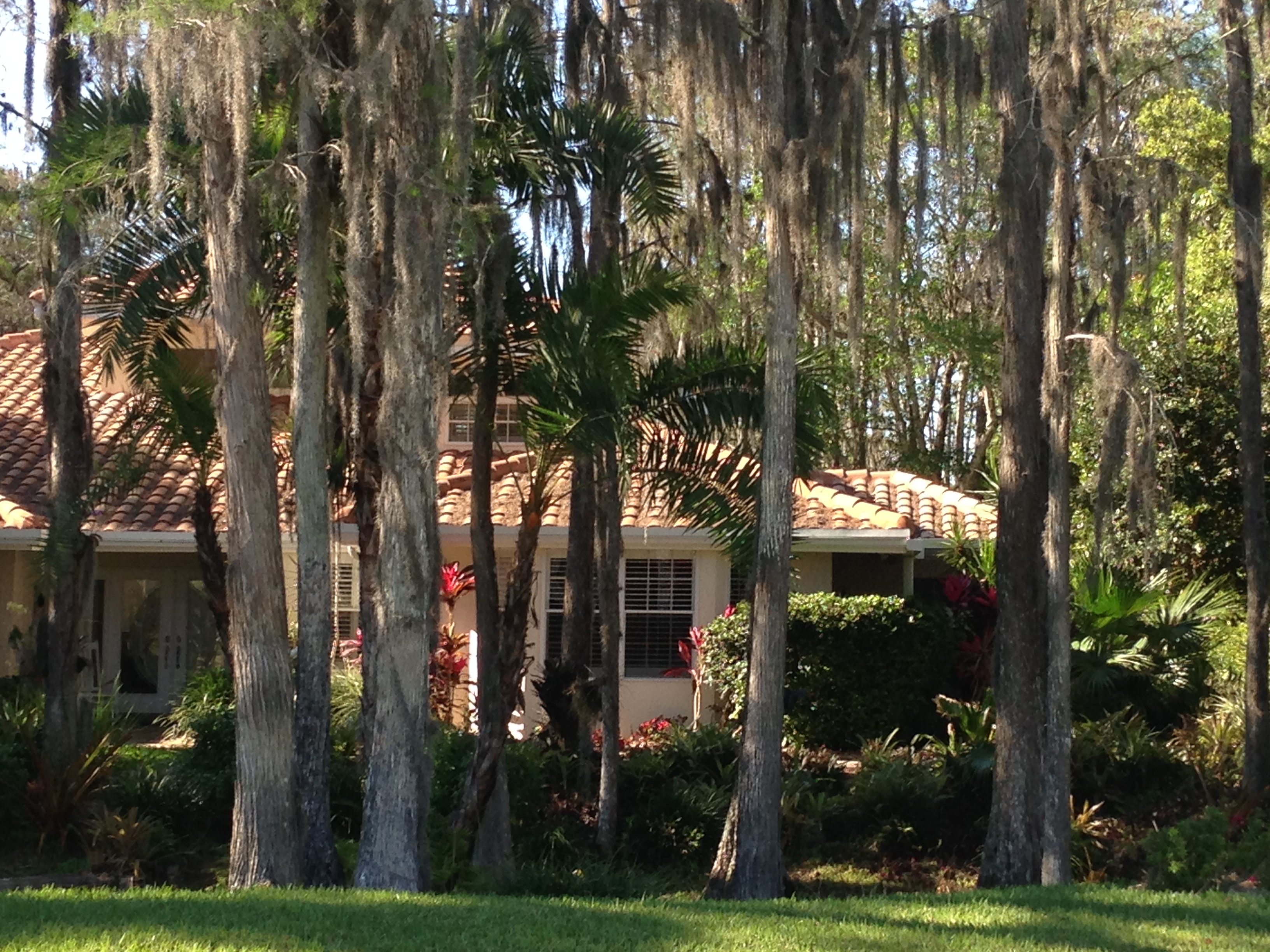
I just came back from visiting my parents in Southwest Florida where it was eighty degrees in March with a constant cool breeze. My parents live in a golf club community where homes vary from condos to mansions, costing from $175,000 to $5,000,000. not including maintenance fees,  golf privileges and club membership dues. The 2000 acre enclave, called Fiddlesticks, is surrounded by six foot high chain link fencing topped with barbed wire. This is thickly covered with taller shiny leaved Euonymus bushes that were just coming into fragrant white-flowered bloom. So as I cycled or walked or drove around the inside perimeter road, the only thing I saw on my visit was the lush foliage waving in the breeze. Just outside the fencing, a construction company is building a canal into which water will be drained from adjacent land that will become the newest to-be-built golf community. It’s easier to build on dry ground.

IMG_0040

Fiddlesticks Home

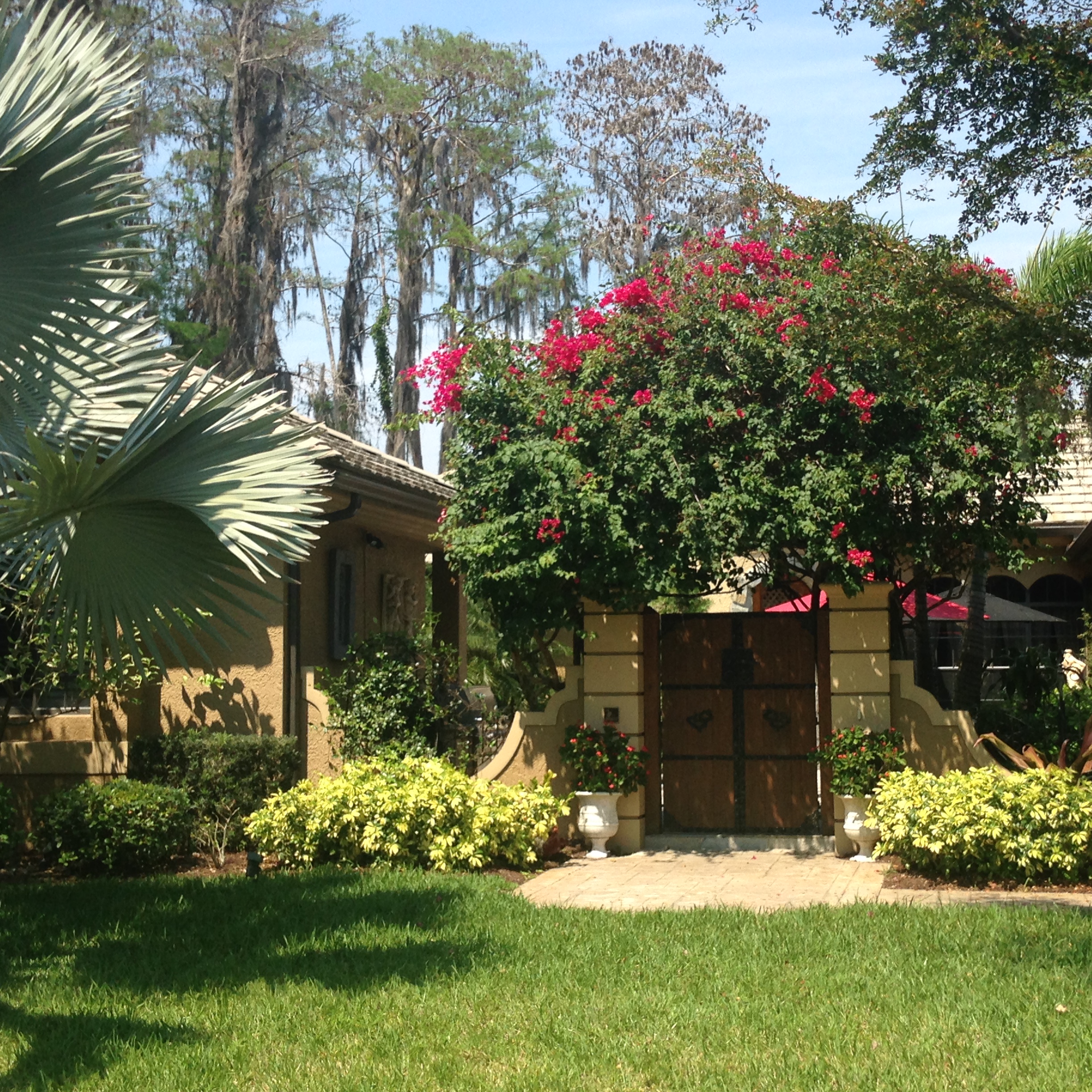
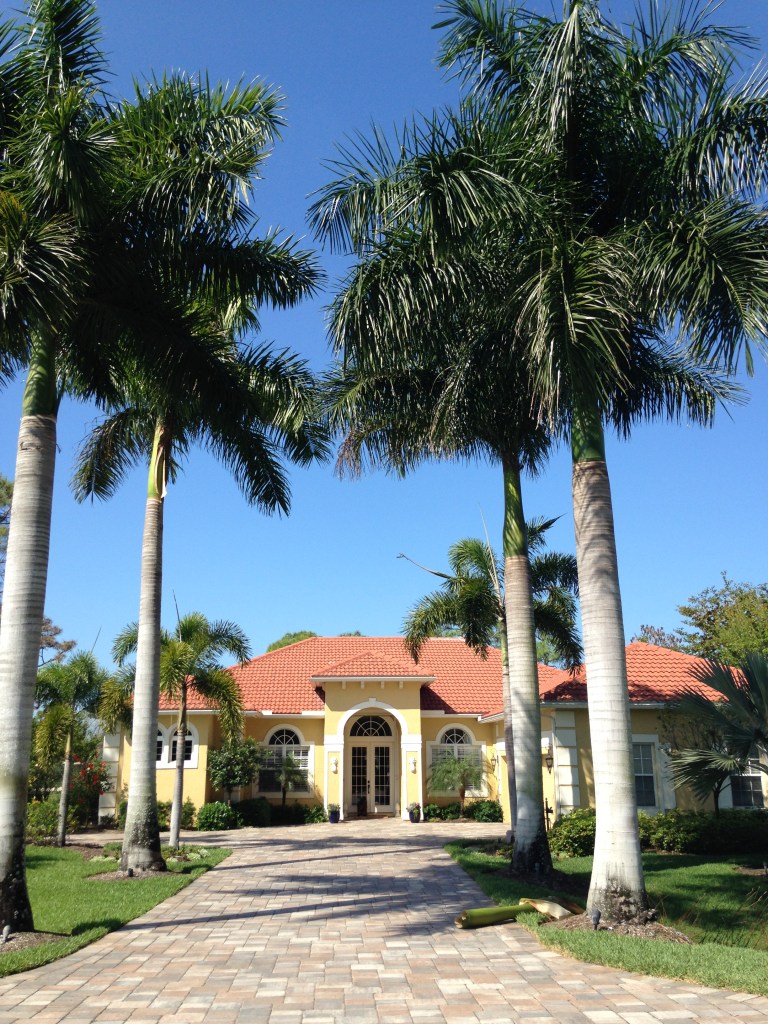
The Fiddlesticks property is stunningly beautiful. Many species of palms — royal, chamel, and saw palmetto live here along with cypress trees draped with hanging moss. Bougainvillea climbs up trees and around doorways and walls. Sometimes it stands alone, a ten-foot bower of dark pink. Dense plantings of begonia, alyssum, Tradescantia ‘Purple Queen’, hibiscus, impatiens, and petunias line roadways, swirl around houses, surround trees, congregate at corners, and form islands. Color, scent, and texture are everywhere. Lawns are edged, manicured, and irrigated with underground sprinklers fed by recycled wastewater from the community. As I rode my bike each morning in and out of the different ”villages” and around the golf courses, I couldn’t help thinking, how lovely. This gated and guarded community is only one of many in the area. How nice it would be if most of us could live in such a place. But most of us don’t.

IMG_0052

Fiddlesticks Home

One mile outside the gates of Fiddlesticks is the “real world.” Eight lanes of traffic sprawling on and on bordered by one unattractive shopping center after another. There are no trees or flowers, not a scrap of nature anywhere. This vast suburban sprawl goes on for miles in every direction. One marvels at the ability of so many stores to stay in business. One marvels that we perceive we need so many things. Tucked amid and behind the commercialism are the small tract houses and trailer parks of the not so-well-to-do. In their neighborhoods a scraggly palm leans here and there; sometimes a pot of orange geraniums or pink impatiens sits on a porch or stoop.

9022d6f8-dde8-4838-99e4-88e62739a7b0

FL Trailer Park

I’ve never seen a more vivid picture of how wealth equates to plenty of comfortable, beautiful space and lack of wealth equals lack of space, beauty, and comfort.   Those who have, have the best places. Those who have not, have the worst ones. I guess it’s the American way–exaggerated in this particular locale to the point of   unpalatable absurdity. In a culture that equates success with money and money with a nice place to live, our newer cities are bound to look this way. What happened to open space and parks?

Unfortunately, many American city parks and even some suburban ones have degenerated to meeting places for criminal activity and dumping grounds for old furniture and tires. They are unsafe, scary places. These planned green places originally were built as space for us to reconnect with nature and recharge our inner and outer selves. Why have they failed? Are the many trees and bushes to blame because they are good hiding places for muggers and rapists? Or is it that we don’t have enough police and security people patrolling should trouble arise? Perhaps it is because we don’t use then enough because they are dangerous, and they are dangerous because we don’t use them enough — a vicious cycle.

Jane Jacobs, who wrote The Death and Life of Great American Cities, believes that in order for public spaces to be dynamic, safe and people- filled, they must intersect. She says in an interview in 2001,” In a real city or a real town, the lively heart always has two or more well-used pedestrian thoroughfares that meet. In traditional towns, often it’s a triangular piece of land. Sometimes it’s made into a park.” This kind of park is not pushed off to the outskirts of a town or city; it is an integral part of it. And that makes it both user friendly and safe.

In Southwest Florida, a few county and state parks sit along the Gulf of Mexico where those who can afford the five-dollar parking fee may swim and sun themselves. However, another park, the Six Mile Cypress Slough Preserve is free and volunteer guides will take you on a ninety-minute walk through a preserved cypress slough (a moving swamp) filled with birds (some endangered), plants, and animals that wouldn’t be in the area otherwise.   The park closes at dusk and large steel gates make sure no one can enter to make mischief or to hunt for alligators. Again the problem of open space attracting troublesome behavior.

Perhaps these predators in our parks are trying to tame the wilderness, exerting control over our natural world. Or are they dominating that of which they are afraid?   Perhaps their psychoses require an outlet, and dark, brushy spaces are a conducive environment for heinous acts. Or maybe drug addiction prompts them to prey on victims in the easiest places, those empty and unpatrolled.   Whatever the provocation, parks evoke a wilderness in an urban environment that harkens back to when primitive man began to “tame” it.

Thousands of years ago man tamed the wilderness, cutting down the trees and cultivating the earth. This huge leap in the way we lived removed us from one place and put us into another. We separated ourselves from the natural world, took ourselves out of it psychically and physically. Even though we still prayed to gods and goddesses, made sacrifices to ensure good crops and prosperity, we “created” our own food, rather than “searching it out” in the wilderness.

When the Romans arrived in the Netherlands around 150 B.C., they found a people that they described as blue skinned because of the cold, swampy conditions of their environment. At that time, the Netherlands was a series of terps (manmade mud hills) amid swamps and lakes. It was cold, damp, dreary and rainy. The “Nederlanders” ( below the land), as they are still called, and their land were quickly passed over by the conquering Romans. Who would want to live in such a place?   Yet through incredible ingenuity and imagination, the Nederlanders developed their bit of land into a thriving place by manipulating too much water into a maze of dikes, waterways, and locks. By the twentieth century, they had increased the size of their country’s landmass by twenty-five percent. And by inventing and using windmills they were able to grind grain, process lumber, operate the locks and eventually produce electricity.

One might argue from this example that landing in the better place does not always ensure having the better life. It is human imagination together with a positive attitude and cooperative spirit that can create a productive and comfortable living space out of a swamp.

Take the Yucatan village, Nueva Vida (New Life) as a modern example of what man can do if so motivated. This village was begun as an experiment at the edge of the Calakmul Reserve as an attempt to save what was left of the wilderness reserve. For centuries, the natives had slashed and burned the dense forests in order to grow rows of corn. Every three years they moved on to a new place because the poor soil was used up. Nuevo Vida has changed that cycle by not cutting down all the trees and not growing corn. Instead, these ancestors of the Mayans live in the forest, clearing only a small area of land. They grow crops, plants, and trees that thrive in this environment — lime and papaya trees, bunched plantings of cilantro, lettuce, and chaya (a high protein leaf crop). The cooperative of thirty-six families works together composting, cultivating, building cisterns and high peaked houses, and gathering medicinal herbs from the forest. Recently they began beekeeping. Where once they subsisted, they now thrive – in the same place but with a different understanding.

Finding a new and different understanding of how to live has prompted humankind to create utopian societies particularly in the nineteenth and twentieth centuries. Some of these “utopias” were inspired by religion, others were inspired by political ideas, and still others by aesthetics. Some such as, the Branch Dividians in Waco, Texas or the People’s Temple in Guiana began innocently and ended in tragedy. Others resembled tidy perfectly neat towns like Columbia, Maryland which was the first entirely planned city built in the late 1960s and early 1970s by James Rouse. Everything in Columbia was pre-planned and approved from street signs to house colors and construction materials to commercial areas and landscaping. Critics called it “Milton Bradley Town” after the maker of the board games Candyland and Chutes and Ladders.

Utopian societies created from religious ideals such as the Shakers have vanished, but the Amish culture still survives and thrives. The Amish believe in living a simple, plain life close to God and the earth. This belief informs their idea of living a kind of heavenly existence on earth. Although some of the Amish have adopted the use of modern conveniences such as cars, computers and telephones, they have picked and chosen which things and how much they will be incorporated into their lives. They may use electricity at their work places but not always in their homes. One thinks of the Amish as a group both unwilling to change and uncertain of change. This is not true. More and more Amish are going into business. In 1990 in Lancaster County, Pennsylvania the Amish owned 1000 businesses. Now they own 2000 businesses. Unlike “regular” American businesses whose failure rate is 50%, the Amish have a 5% failure rate. And this is while doing business on their own terms within the values and beliefs of their religion, culture and life style.

The Amish who work at and own the Amish market near my home in southern Pennsylvania use telephones and computers at their market, but many don’t at home. They still dress in plain black clothes with no buttons or zippers and only bath on Saturday evenings. Most Amish live on family farms where they grow their own food and keep dairy cows and pigs. Extended families living together is the norm. Theirs is a tight knit community where they know and help one another with child tending, harvesting, and building.   This dependence on each other fosters their unique lifestyle and helps them to grow and prosper. Although they have become merchants by opening Amish markets that cater to consumer-minded Americans, they retain their core values and beliefs in the non-material. It’s an interesting contradiction.

For example, my sister recently attempted to buy some outdoor wooden furniture from the Amish market owners. Initially, they were delighted to sell several pieces to her until they learned that the furniture had to be shipped to Holland where my sister lives. As Matt, the Amish owner, explained to my sister, they had no idea how to do this nor did they wish to do it. My sister couldn’t understand this thinking. Being a businesswoman herself, she thought she was expanding their market. Her friends in Holland would want to buy Amish furniture too once they saw my sister’s. When she explained this to Matt, he said he didn’t want to expand his market. He said it would be too stressful to ship furniture to Holland. He didn’t care about the money. What was he going to buy with the extra income? What did he need? He was contented with what he already had.

I wonder if Matt would say the same thing if he wasn’t Amish and lived in a trailer park next to a Saks Fifth Avenue in southwest Florida? Out side of his Amish community Matt would quickly become a member of the ‘have nots.’ Inside the Amish community, he is has all that he needs. He feels he is prosperous. I wonder if mainstream American culture is capable of forming communities where people work together like the Amish or the Mexicans in Nueva Vida to create a fairer, less destructive, more beautiful, more prosperous place? I wonder if we, as individuals, have the courage to work and to do business within the limits of our values and beliefs? How many of us have the courage to say, “no”?   I wonder if we are capable of imagining a society where no bad places exist?


Ballina

3D858F07-074B-44E0-BCB9-BF2DDD85B5E6

Ballina


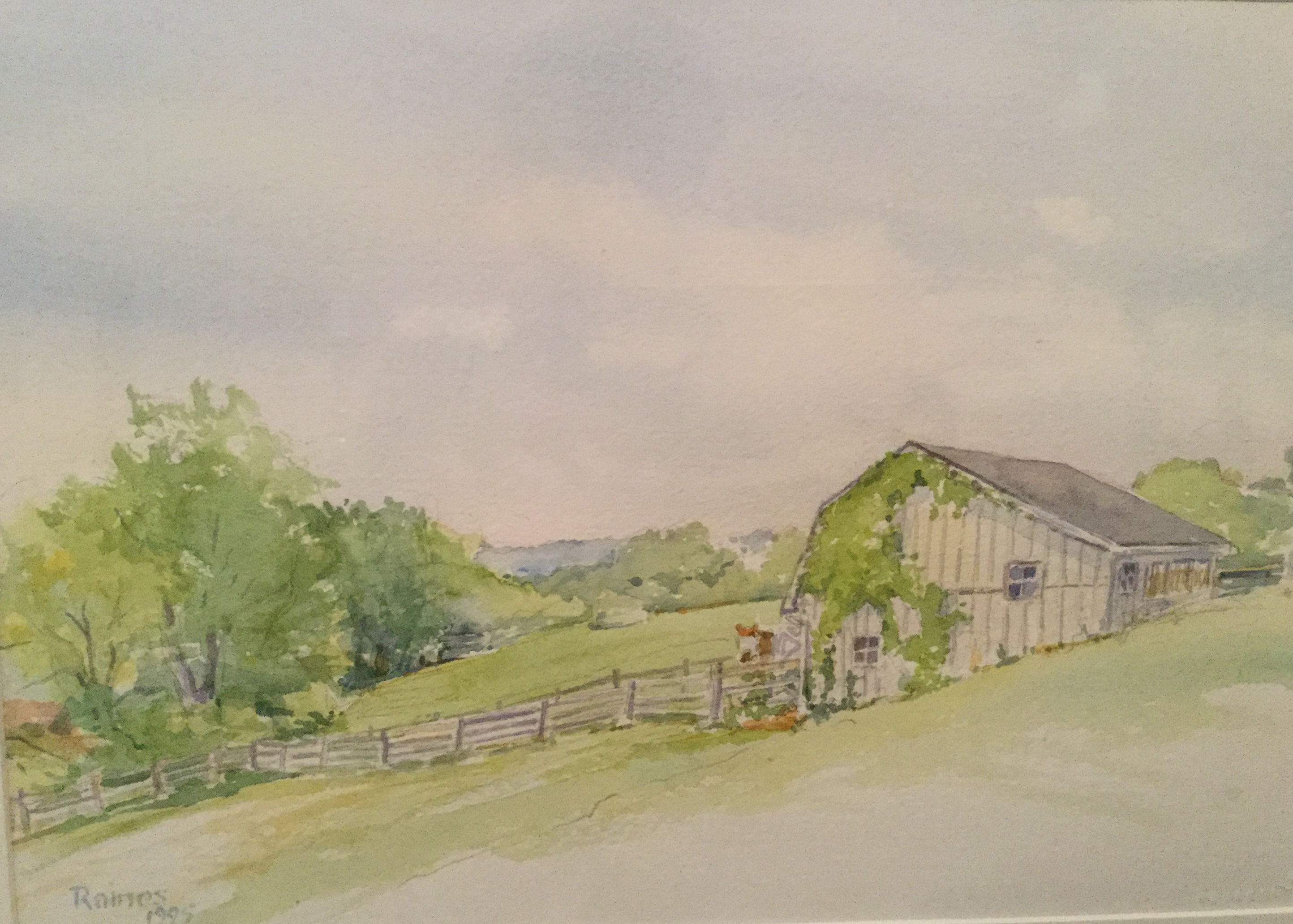
Here I am. The car door creaks; the mid morning sun makes me squint. I look, down the slope of weedy pasture to my old barn, now lifeless, buried under creeping vines, waist tall wild roses, and lots of poison ivy. Hopefully, this will be the last time. After the barn is cleared out I won’t have to come back here again. No more crying. I’ve cried enough and the new owners might be here.

“Ballina”, our farm, looks unused and alone with weeds clogging our flowerbeds, choking our hydrangea. Everything is dry, too dry just as I am, coming back to this place, this land, this view from the hill that I gazed on every morning. I used to count on that view to keep me balanced, to fill me with its every nuance, and to reassure me with its familiarity.

I used to scan the field from my bathroom window as I brushed my teeth. I’d look for our horses just outside, their hindquarters to me, their heads looking east. I thought they stood in that spot every morning to watch the sun rise and in the winter to feel its first warm rays.

Later, I’d put on my barn clothes (a pair of old tan pants and a turtle neck in winter or a T-shirt in summer) call the dogs, put on my work gloves, wellies and walk outside. As I walked around the house I’d scan the sky, feel the wind, and call the dogs back to me. They loved to race round and round my legs as I opened the gate, walked across the field, and listened for Peader’s whiny. Usually Peader was waiting in his stall except in early spring when the grass was too good to leave behind even for a handful of feed and a pet from me.

I’d muck out the stalls, sweep the floor, and refill the water buckets and hayracks. I loved the mindless routine of it. As I worked I’d watch my neighbors leave for school or work. Sometimes we’d wave to one another or even yell “Hey” across the fields.

Once many years ago, a flock of snow geese flew over me, over our field. I stood watching, transfixed. Funny, standing here now I can hear the sound of their trumpeting, in this empty place I once called Ballina.

Birthing Duke


For their fortieth birthdays most women want gold, diamonds, or a weekend at a fancy spa. Not me. When my husband, Freddy, asked me what I wanted, I replied, “Goats. Pygmy Goats.”

Pygmy goats”? he said, not quite understanding.

“Yes, Pygmy goats, the little ones. I want to breed them and have a few little goats running around. They’re so cute. You should see them.”

He simply shook his head in amazement and then asked where do you get them and how much do they cost. He also said that ‘few’ meant no more than ‘two’ to him. He reminded me that we already had 2 horses, a pony, a dog and 4 cats. Two little goats were plenty. What he meant was that he didn’t think we needed anymore animals – we already had enough work to do every day.

I had seen the goats at the Maryland State Fair and had been pinning for them ever since, but couldn’t think of a way to broach the subject. Now I had my chance. My fortieth birthday. How could he say, “No.”

And he didn’t.

After some phone calls to various farm neighbors, I found the goat lady in Pylesville, Maryland. Peggy bred and raised pygmy goats and miniature horses. When I called, she invited me to come out and have a look and to bring along the girls.

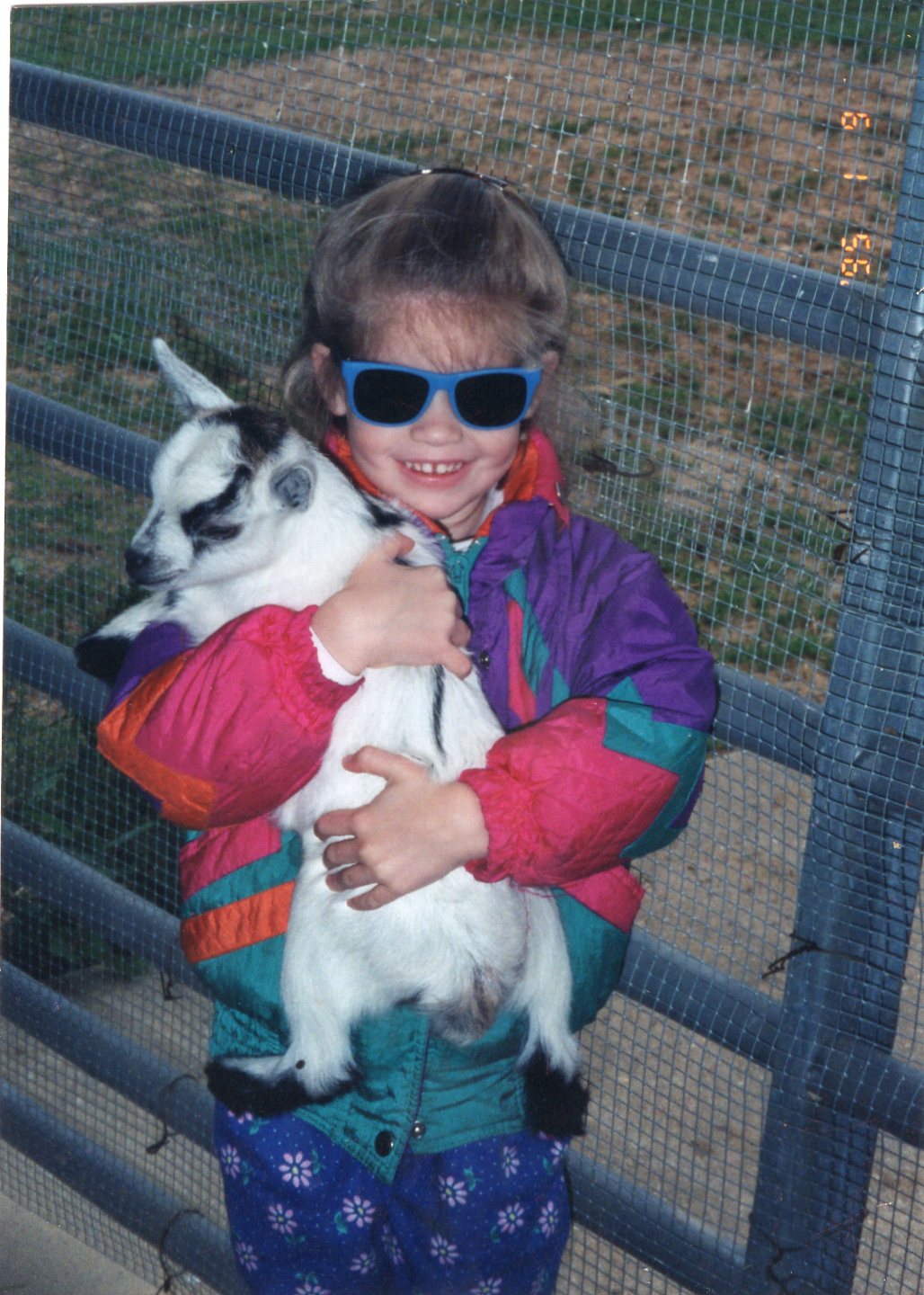
Anna Lou and Campbell were just 2 years old at the time. It was a snowy February day. I bundled them up in their snowsuits and boots, hats, and mittens. They looked like colorful beach balls with heads and hands.

I drove for a good 25 minutes before I wound my Bronco up the winding driveway and through the woods, up and up until we got to the top of the hill on which her small farm sat. It was a maze of several small sheds and outbuildings, looking as if they had been built as every new animal venture had come to pass.

And indeed that was the case. Peggy had had no children and had wanted them. So with each passing childless year, she and her husband had adopted a new animal or animals. They had turtles, ducks, chickens, dogs, cats, pot-bellied pigs, miniature horses and of course the goats. The goats had been a venture for several years, so she had twelve – two  Billies and ten nannies.

When I got out of our car, I noticed a strong pervasive sickeningly sweet musky smell. I had to go to the bathroom when we arrived and even inside her house – there was that strong, stick in your throat smell. As we walked toward the pen that held the Billies, I noticed the smell was even stronger. The whole place smelled like goat cheese on nuclear steroids.

As Peggy walked into the small playhouse-sized building next door to the billie goats, she said, “Do you smell that smell?” I nodded. “That’s why most people don’t want Billie goats on their property, but we don’t mind the smell. We kind of like it.”

I couldn’t imagine having every article I owned perfumed with that cloying almost gagging odor. As we walked inside the goat house, she said that the nannies would not hurt us. They would only nibble on our clothes but not bite us. I walked in holding Anna Lou’s and Campbell’s hands. They were frightened at first, but when they saw that the goats came to their waists, they were no longer frightened but instead delighted.

Goats are curious by nature so they immediately scampered around us. Peggy put all but two of them outside so the girls wouldn’t be overwhelmed. One of the goats was named Greta. She was newly pregnant and would have one or two babies in the early spring. Peggy suggested we take this one, since then we wouldn’t have to buy 2 goats; they must be sold in at least twos since they are herd animals. With pregnant Greta, we would end up with two or possibly three goats, and we’d have the experience of birthing goats as well. I was so excited.

I decided not to tell Freddy about the possibility of more than one baby. I would just dwell on the fact that we wouldn’t have to buy more than one since a pygmy goat costs more than you would think. And as a bonus, if we had a male and didn’t want a billie, then we could trade him in on breeding rights with one of her billies and Greta could have more baby goats. This was too good to be true.

But what about our twin girls? Would they be safe around these goats? As my girls put out their little hands to the two goats left inside the goat house, they came over and sniffed and then nibbled their coat sleeves. Anna Lou and Campbell laughed and put their hands around the goat’s necks. The goats didn’t mind; they shook them loose gently and nuzzled and nibbled on their coats some more.

One goat, Greta, was black with white markings on her ears and legs. The other was a salt and pepper combination with black ears and tail. Neither had horns and they were friendly and interactive, but not rough or pushy. Anna Lou tried to kiss one on the face but the nannie moved. She laughed and followed her around the shed. Campbell followed the other trying to pat and touch her. Sometimes the goats nibbled and nuzzled, and sometimes they walked away. The shed was carpeted with straw which I knew must have some manure in it, but c’est la vie we were having fun.

Peggy came in with a can of feed and showed the girls how to hand feed the goats. “Put out your hand nice and flat like this,” she showed them. And each took a small handful and held out their hands as the goats nibbled away. Anna Lou laughed and laughed and wanted to do it again and again. Campbell, being quieter, tried a few times after Anna Lou did it but was still a little uncertain.

My angel girls were true to form, Anna Lou rushing ahead never concerned about what lay ahead even when it was an unknown. And dear Campbell watching and waiting to see how the goats responded to Anna Lou before trying it herself.

Whenever we were doing something new, Campbell would always say to Anna Lou, “You can go first.” Or “You go, Anna Lou.” And Anna Lou always did. I don’t think Campbell would have adapted so well to nursery school at three if it hadn’t been for Anna Lou taking her hand each morning as they walked through the classroom door. As Anna Lou brought her sister into the room, she would call out, “I’m here”.

After much squealing and feeding and calling to them to ‘come’ (the goats didn’t of course), I announced for the third time that now it really was time to go home. They still didn’t want to go of course. This was too much fun –playing in a playhouse-sized shed with animals that were just the right size for a 2 year old. They said, “NO” and “No” again.

Thankfully, Peggy bribed them with a peek at the miniature horses if they would cooperate and walk outside. They did.   My girls do not like to leave a place they find exciting. Too many times I have had to pick them up and carry them away screaming from a beloved activity. One would think that I was jabbing them with barbs of steel the way they could wail. I’ve found through many unpleasant and sweat–filled experiences that two year olds do not like transitions especially from one activity to another.

After each one had looked into the horse shed and waved at the tiny horses, we finally said goodbye. It took another few minutes to get everybody strapped in, but finally we were off.

It was cold that day, about 15 degrees, so it was cold for quite awhile in our car. As we drove and the car began to warm, I smelled the same smell I had smelled at Peggy’s farm, only now it was stronger. It smelled like a mixture of skunk, fox musk and cat urine. The billie goat smell had gotten on us. As it got warmer in the car, so did the smell. I sniffed my coat sleeve. It smelled like the musk. I thought, ‘Oh, no’. When we got home I smelled the girls’ coats, and they reeked. Their hats reeked, their mittens, their hair, their hands and faces all smelled like a musky billie goat. Every crevice on the soles of their boots was packed with goat manure pellets.

I took off their boots in the garage, carried each child upstairs and into the front hall where there was a stone floor. I stripped each one down to her diaper and ran a bubble bath. I put everything they had worn into the washer and prayed that their new snowsuits and hats would come clean. I washed their hair which they hated, but I couldn’t let them go to bed with that smell. I tried to make a game out of getting the Billie goat smell out of their hair. I adapted the South Pacific song — “Gonna Wash that Goat Right Outta My Hair”. They didn’t think it was as much fun as I did.

Thank goodness, the smell was gone after their bath. After a long wash cycle and fabric softener in the rinse cycle, the snowsuits, hats and mitten smelled like a fake pine woods, better than the Billie goats. I took me one hour with an ice pick and a knife to pick out all of the manure from their boot soles. These I dipped in pine sol and rinsed. It worked. No more smelly boots.

When Freddy came home he asked how it had gone at the goat farm. I smiled and so did the girls. We all smelled wonderfully clean. I said, “Great.” Anna Lou said, “I love goats.” And Campbell said, “I wanna a goat.”

Over the next weeks we had had a wood and wire fence put up in a portion of the horse pasture and a cute pygmy-sized shed built. The cream –colored shed was approximately 4.5 x 4.5 x 4.5 with slanted roof and a wooden door in which a mouse shaped hole was cut. Inside there were two shelves, one on either side about a foot off of the floor. I spread straw on the floor and on the shelves.

Goats like to sleep off the ground; it keeps them away from drafts and dampness. They naturally like being up high so the design works well. I could open the door with the mouse hole cut into it and clean out the straw from time to time. The hole in the door was just big enough to admit one goat so it was draft free, warm, and cozy.

Six weeks later, in early April a very pregnant Greta arrived via Peggy and her husband. I walked her across the field on a horse lead attached to her collar. Peggy’s goats were trained to wear leather dog collars so it was easy to grab and hold them if you needed to, and they would break in case a goat got caught on something. No strangulation worries with leather.

 Because Greta was ready to give birth any day, we had made a place for her in a horse stall. In it we had laid straw 2 feet deep, and hung a heat lamp  in one corner. She had food and water and cats to keep her company until her time came. I checked on her many times a day.

On her fourth day here and fortunately on a Saturday since Freddy was home, I noticed she was lying down and panting a bit. I called Peggy for the same instructions she had given me 10 times before. I went back and forth to the barn every 10 minutes for the first hour. She seemed to be fine. Peggy had assured me Greta had had several healthy uncomplicated deliveries, and I should not worry. Freddy and I were excited and nervous.

We decided to take the girls down to the barn when they awoke from their naps. This would be a great experience for them, so natural, so every day. Maybe they wouldn’t have the hang-ups most of us grew up with concerning reproduction.

When we arrived, I looked over the stall door first. There was a light colored shape in the straw. My heart beat faster. Oh no. It was a tiny, emaciated tan goat, dead in the straw. I was so upset, but couldn’t show it for fear of frightening our girls. I opened the door and told them to wait for a moment. Then I gently and quietly moved the little body to a corner and covered it with straw. The girls never really noticed being two years old and having only eyes for their Greta who was lying on her belly just inside the door.

Greta was panting heavily. I looked under her stubby tail and to my amazement there was a wiggling nose coming out of her vagina. I said, “Freddy, look. She has another one inside.”

We sat there anticipating that the baby would be born at any moment. We showed the girls the tiny nose. They were so excited. Freddy kept them over in a corner away from Greta, but near her head where she could see them. I sat at her behind. Greta strained and strained but the baby could not get out. He never moved. I started to get worried after about 5 or 10 minutes. I thought, “How long has she been straining like this? This is just like a story from James Herriot’s, All Creatures Great and Small. “

I thought I should do something so I said to Freddy. “I think I have to pull him out.”

Freddy said, “Do you know how to do that”?

I said, “Not really. But I’ve read about it in James Herriot.”

“Well, go ahead and give it a try”, my husband replied. “Greta doesn’t look too good.”

I was too afraid to use my bare hands, and I didn’t have surgical gloves. Then I remembered. I’d just bought myself a brand new bright yellow pair of Playtex dish washing gloves. So, I  ran up to the house, retrieved them from under the sink and back I raced to the barn. Greta was still panting and looking worried. With much trepidation, I pulled on my  gloves and thought  ‘Would it be really slimy inside and would her contractions break my fingers’?

Still panting from running back and forth, I squatted down and timidly stuck my gloved index and middle fingers inside her, praying I would feel the tiny legs and hooves. Greta was indeed slimy inside, but her contractions didn’t hurt at all. It felt like the pressure of a hand gently pushing against my fingers. Then, I felt a leg and pulled it forward.  I went to the other side of the little body and found the right leg and pulled it out. ‘Thank God’, I thought, ‘I can’t believe I’m doing this.’

As I was working, Freddy was sending me words of encouragement, saying things like, “You can do it. I bet this goat is a big hugger.” I guess the idea of a hugger pygmy goat was such an obvious oxymoron and brought to mind the idea that a  big pygmy goat must be a male because Freddy suddenly said, “If it’s a boy, we’ll call him Duke.” My husband was a died-in-the-wool Duke University Basketball fan, never having missed a game in 20 years. I was too stressed to answer so I nodded and said, “Okay. Fine”.

As soon as I had both feet out, Greta knew she was finally good to go. She strained one more time, and I held on to the baby’s legs. Out he came. A tiny black billie goat. He looked like a toy. About 6 inches long and 6 inches high, he was wet but breathing well. Greta licked and licked him. After about 25 minutes, Duke stood up on wobbly legs and looked at this fine new world. He naaed to his mother, and she licked him some more.

In a couple of hours, Duke was gambling and frolicking through the straw. I sat there with Freddy and our girls watching this toy goat jumping as if he’d been doing it for years.  He was so happy to be out and about. Anna Lou and Campbell took turns trying to hold and pet him, which he wasn’t too thrilled about. I couldn’t believe that such a tiny perfect thing could move with such grace and enthusiasm.

Over the next weeks, Greta  and Duke became accustomed to our multiple daily visits, leaping and settling into our laps when we sat in the straw. Soon, they were  an integral part of our extended animal family and the highlight of our children’s days. We couldn’t imagine life without goats.

And I couldn’t imagine what I’d have done at Duke’s birthing without the guidance of James Herriot’s All Creatures Great and Small and my brand new yellow Playtex gloves!   


Fishing With Daddy, Fishing With Dad

My daddy picked me up from Camp Mosey Wood the summer I was ten. Usually, my parents came together for my annual camp pick-up. This year, my mom was pregnant and resting. As we piled my sleeping bag and footlocker into the Buick’s deep trunk, my dad announced we were stopping for an adventure on our way back to Bethlehem.
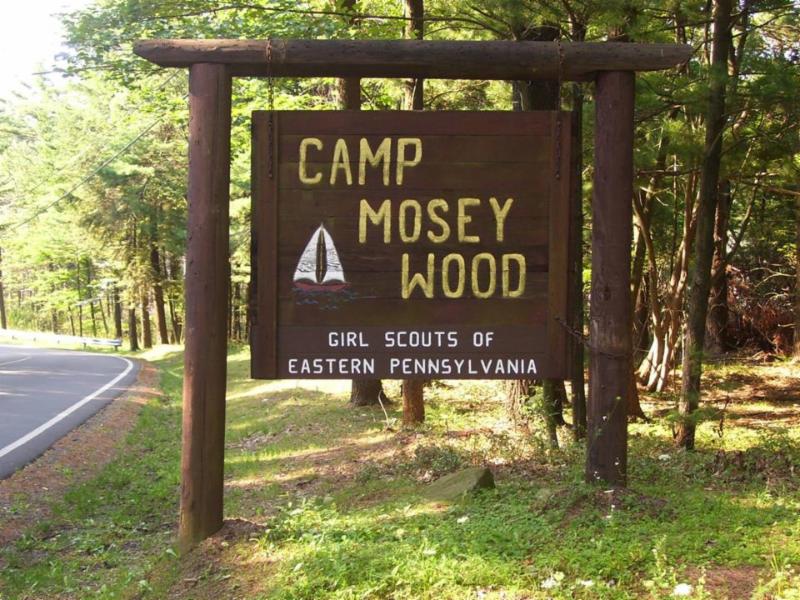
Camp Mosey Wood

“Where are we going?”, I asked excitedly. I loved doing anything with my daddy. His enthusiasm for life sparkled everything he touched.

“It’s a surprise”, he answered with soft brown eyes twinkling and that smile that meant this was going to be something really fun.

As we drove further into the Pocono Mountains, he began talking about how when he was a boy he loved to fish with his Uncle Joe.

“Trout fishing was my favorite. I loved standing in or beside a stream of flowing water, just below the riffles”, Daddy explained. He talked on about how he baited the hook with a worm or a fly and cast it so that trout feeding at the end of the riffles would grab it.

“When the trout hit, I’d tug up hard on my rod, setting the hook and then carefully, purposefully reel it in with the rod bent over, the line taunt. Usually when the fish became visible, it began to fight and flip. Then with one hand”, Daddy said, I’d keep the line tight as I grabbed hold of my net and sweep it underneath the fighting trout. And wah-lah, I had it! Trout for dinner”.

Daddy went on explaining how sometimes his Uncle Joe took him to a pond or lake where he stood on the bank and cast and re-cast his line, each time hoping for a hit.

“Either way, stream or lake, catching trout, cleaning them and then eating them, fishing anywhere, anytime is the best”, Daddy said.

Daddy stopped his reminiscing as he pointed to a huge billboard painted all over with pine trees and a huge jumping rainbow trout, curled and flying in the foreground. The words, Kriss Pines, were painted at the bottom.

“Here we are, Katesey, Kriss Pines! This is where you’re going to learn how to fish. You will love it!”

And I did! First we stopped at the small cabin that rented rods and sold worms, fish eggs and corn kernels (yes, trout love them). I loved the fishy smell, the sparkling lures hanging on the walls, the rods and reels for sale. This was almost as good as a hardware store, My favorite kind of store when I was ten.
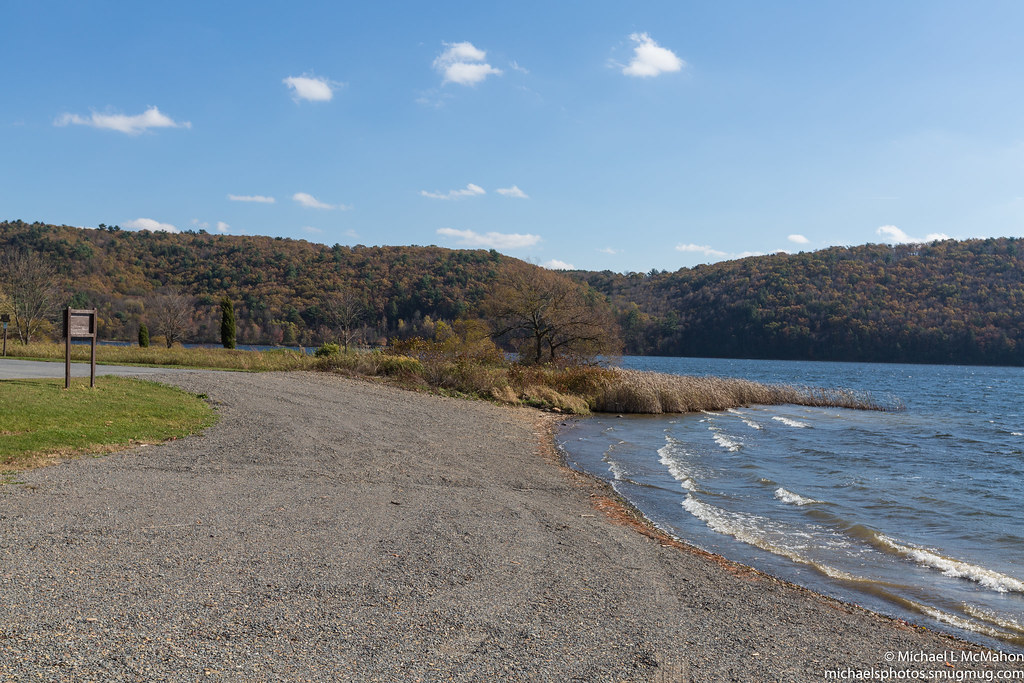
Kris Pines Lake Poconos

Kriss Pines Lake

After we had my rod and our fish eggs. (I was so happy we hadn’t gotten night crawlers because daddy said I’d be baiting my own hook), we drove round the rutted dirt road that surrounded part of the large lake. As we unloaded our gear, I could hear the katydids and crickets on this hot dry August afternoon. After some hands on instruction on baiting and casting, I was rearing to go. I loved being out doors especially in the woods and most especially in the woods by a lake.

Daddy cast first and within ten seconds he had a trout! Amazing! At ten I didn’t realize this was a stocked lake, a super stocked lake. Everyone caught fish, which was why daddy had brought me to Kriss Pines. He wanted me to learn and to be successful so I’d try fishing again and again and again.
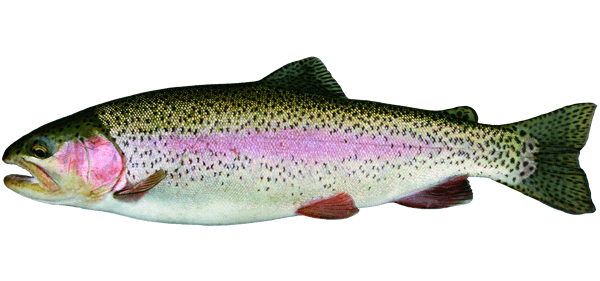
rainbow-trout- drawing

Rainbow Trout

Then daddy helped me cast. He softly told me to reel in ever so slowly. Bam! I had a trout! “

“Hold your rod up and reel. Keep your line tight. Great. You’re doing it, ‘ he quietly said, as he stood beside me, net at the ready.

I was excited and serious, focused laser like on my rod and line. It felt awkward holding the rod and reeling at the same time. As I reeled, the rod slipped this way and that. Daddy put his hand on the rod to steady and lift it. It seemed like many minutes instead of many seconds until I could see the trout, flipping and turning this way and that, trying to get away.

You might think, a ten year old would feel sorry for the poor old trout, but I certainly didn’t. The more it resisted, the more determined I became. This fish was mine and it wasn’t going anywhere. As the fish got closer and closer to shore, the trout gave it all he got. But with one graceful swoop, Daddy had it in the net. He was mine! My first fish.

We spent the next two hours casting and catching. Laughing and commenting on our casts, catches and losses. Sometimes my trout got away. Sometimes my dad’s got away. Sometimes we threw them back if they were too small. It didn’t matter because we were fishing together, side by side.

As we fished, we chatted about what fun and what not so much fun, I’d had at Camp Mosey Wood. I relayed my lake swimming accomplishments – treading water for 10 minutes in 10 feet of water. My arts and crafts projects – a butterfly paperweight, a green and blue lanyard. I sang the camp songs I’d learned and the ones my friends and I had made up.

I complained about the hike and overnight we’d had and how terrible it was to have to walk so far with all of your stuff pouring out of your sleeping bag all over the trail as it got darker and darker. How when we finally made camp and settled into our sleeping bags, I felt something squirming in mine. I grabbed a hold of it and screamed as it slithered out of my hysterical hand. A snake. I didn’t sleep all night.

One of the best things about Camp Mosey Wood – we only had to take one shower, the night before we went home. (The counselors thought our daily swims in the lake were good enough, and we agreed. At ten, you’d rather be dirty than naked in an open shower for twenty.)

As Daddy looked over our catch, he counted six trout. Wow! Then he announced we’d have to clean them before we left. I wasn’t so sure about this part, but as Daddy drove back to the cabin and set our now dead trout upon the wooden fish-cleaning table, I thought, this could be fun too. Maybe.
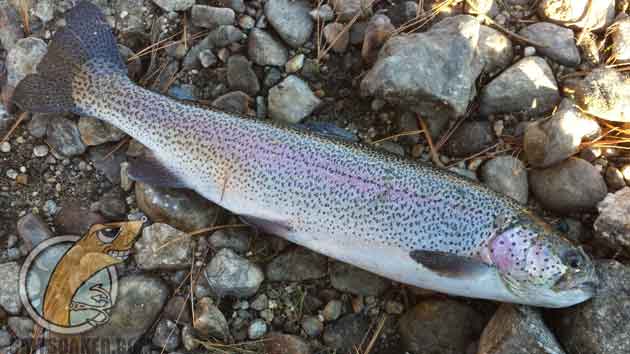
rainbow trout

Rainbow Trout at Kriss Pines

Daddy explained what he was doing as he cut a slit up the trout’s belly and then carefully removed the intestine, stomach, heart. The guts as I called them. He said if you were going to be a fisherwoman, you had to clean your fish. And so I did with Daddy’s hand guiding mine so I didn’t cut myself on the slippery flesh. After a couple tries, I thought I had the hang of it. I remember Daddy did most of the cleaning.
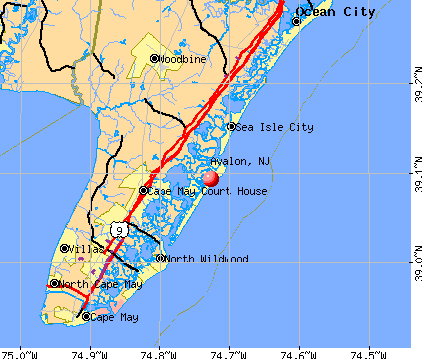
map avalon

Map of Avalon and Stone Harbor, New Jersey

Fast forward, 25 years. My dad and I are going fishing as usual in his boat on the Avalon Bay off the New Jersey island of Stone Harbor and Avalon. It’s August, 7:30 AM, the bay is calm as I unhook the bow and step onto our 15 foot Bass boat. My dad is grey at the temples and has less hair under his stained light kaki baseball cap. He wears his fishing outfit: light kaki Bermuda shorts, faded white alligator shirt, a blue gro-grain ribbon belt, sunglasses, white socks and sneakers. He’s dark tan and smiling.

“This is the best time of the day. Isn’t it beautiful out here?” Dad asks.
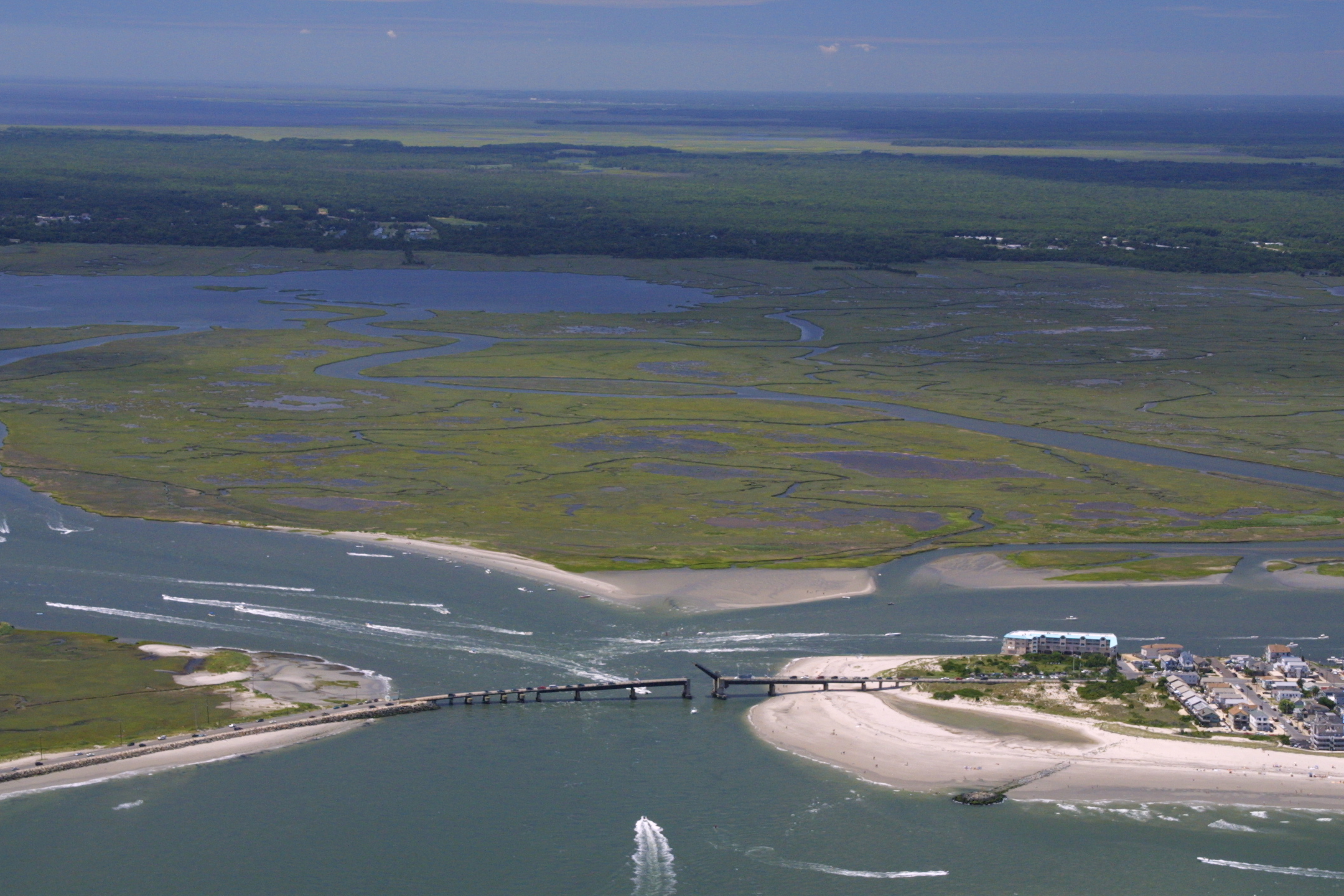
avalon wetland bay aerial photo

Wetlands and Bay between Avalon and Mainland New Jersey

As I look over the landscape, out beyond the marina, I see a large bay bordered by miles of sea grasses. Every so often a break in the sea grass reveals a winding swath of glistening green water. Some of these ‘streams’ are 20 feet wide and wind deep into the wetlands. Some are only 10 feet across and lead to dead ends of grass, bird’s nests, and thousands of mosquitos and green head flies. I love the bay early in the morning. Today is sunny with a light wind blowing; the water dances on the thousands of tiny waves, sparkling like blue and green diamonds.

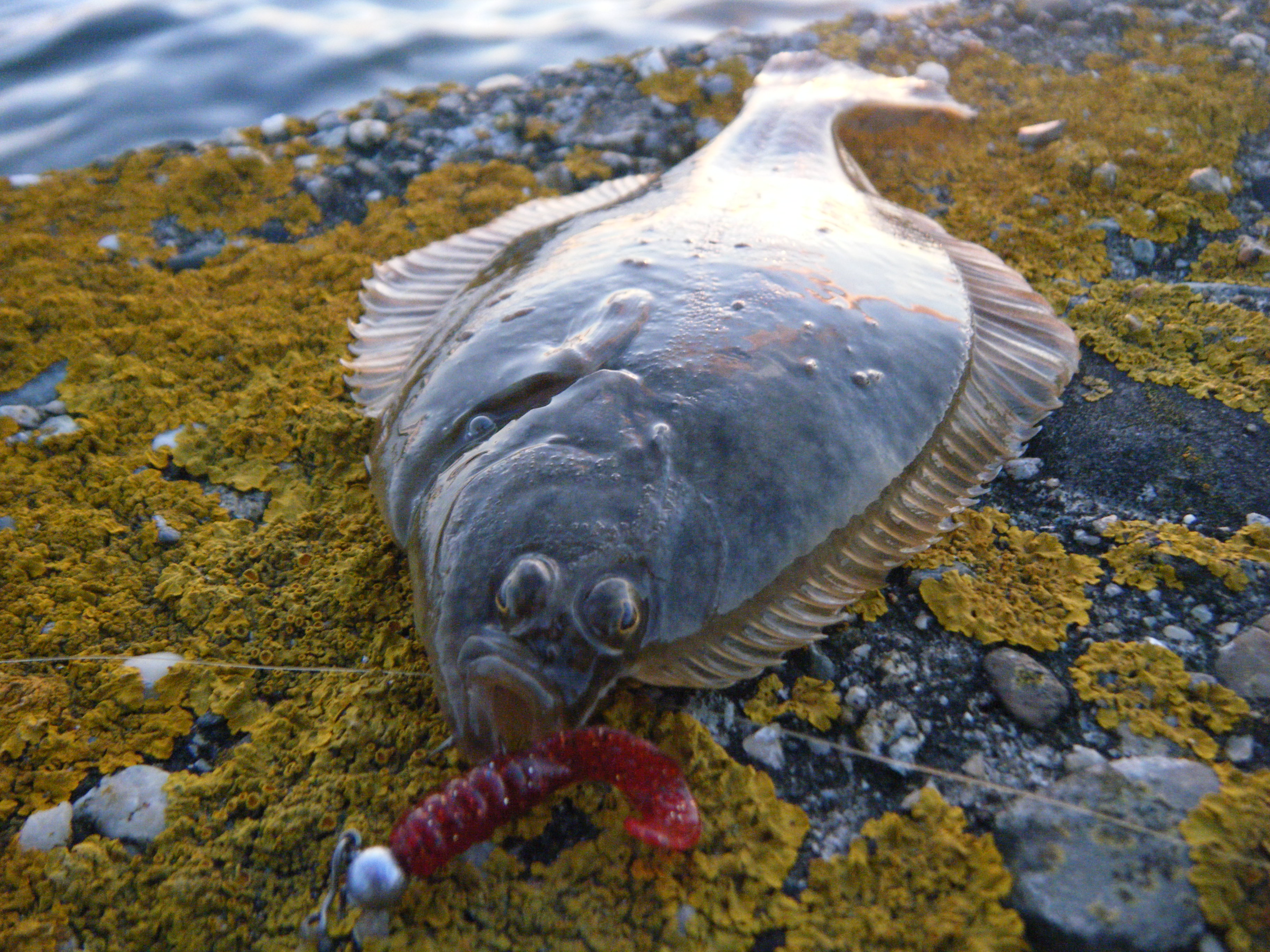
Seagulls call and swoop. They’d love to get a hold of our bait. We use both live minnows and sliced squid for bait as we fish. We’re after light tasty flounder, bottom feeders who take the bait gingerly in their mouths. We must be vigilant so we don’t miss a nibble.

We decide where to fish based on the wind and the tide. Our strategy is to find a good fishy looking spot and motor up tide so we can catch the tide’s drift moving us slowly along not to close to shore and hopefully over flounder, sea bass, and bluefish. My dad is an expert at this after 30 plus years of fishing these waters.
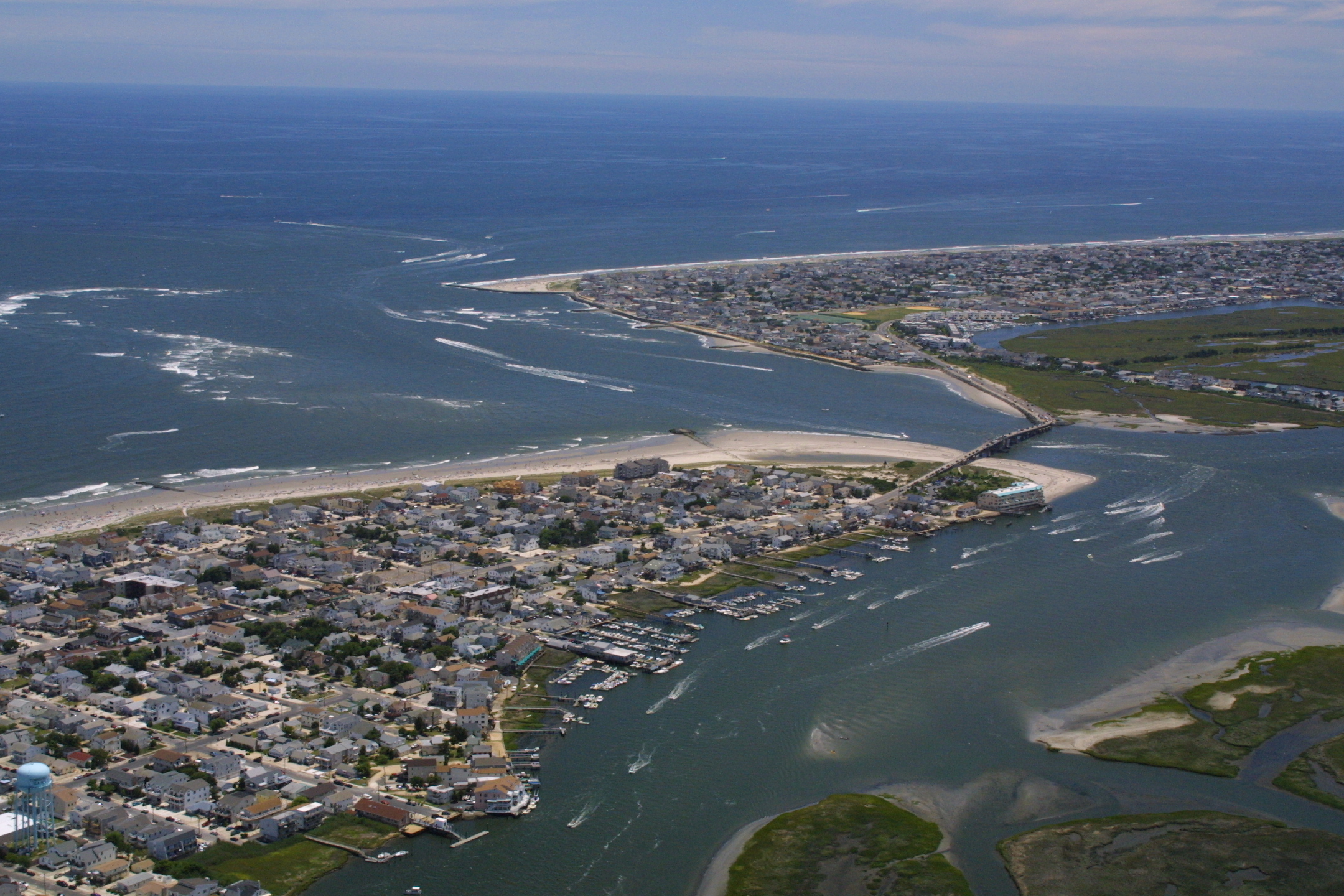
Avalon Bay

Where We Fished!

The best part of fishing is our talks. We talk about the fish, the drift, the landscape. We talk about our lives at home and at work. We talk about our friends, our experiences and adventures. We talk about our problems and concerns too. My dad is a great conversationalist; he sells steel for a living traveling across the US meeting with and entertaining customers. He loves what he does because he loves meeting and talking to everyone.

He likes talking with me too. He often says, “If I was driving across the United States, I’d like to drive with you because we would never run out of things to talk about.” I feel the same way. Sometimes Dad talks about when he was a boy, and I love those stories best of all.

Those stories are set in a bygone era, the 1930’s and 40’s that are nothing like the late twentieth century. One of my favorite stories is the one where Dad and his buddy shot dried peas through a pea shooter into bread and bagel dough through the bread factory window on summer days. According to him they never got caught because they were high in an adjacent tree. The baker would look out the window and down the street, never suspecting my dad and his buddy were above him.

Or the story where as a teen, he’d decide on a Saturday that he wanted to walk in the woods on South Mountain, miles from his home in Allentown, PA. He described how he’d pack up his backpack with a sandwich, water and an apple. Then off he’d trek to South Mountain some five miles away. When I asked if he went with a friend, he said no. He just wanted to be alone, walking and watching in the woods. I always found this fascinating because he is such a people person. It was a whole other side of him.

Today is a serious talk.

After thirty minutes of fishing and making small talk, my dad asks, “So how are you doing?” I know he’s asking about my desire for a baby and my inability to conceive.

“If the fertility shots and IUI (Inter-uterine insemination) don’t work, we’ve decided to try IVF (Invitro Fertilization)”, I say with that little pain in my gut that always appears when I talk about my quest for a child of our own.

My dad considers this and says, “ You know being married with no children has many positives.”

“Like what?” I ask.

“ You and John would be able to travel, not have the worries of a parent.”

“That’s true, but I really don’t care much about traveling. “

“Okay you’re not that interested in traveling right now.”

After a pause, he says, “Sometimes children bring couples closer, sometimes farther apart”.

“I’m sure you’re right, Dad, but I don’t think John and me are like that. We think a lot alike about most things. And we’ve discussed the down side of kids.”

\“You could have that farm with a stream you’ve talked about since you were twelve. Your horse could be right in your back yard,” dad added.

“ I know. It would be a dream come true.”

“I only want you to be happy, Katsey. When you think there’s just one way you can be happy, life is hard. We never get it all,” he looked at me and smiled as he spoke.

“I know.”
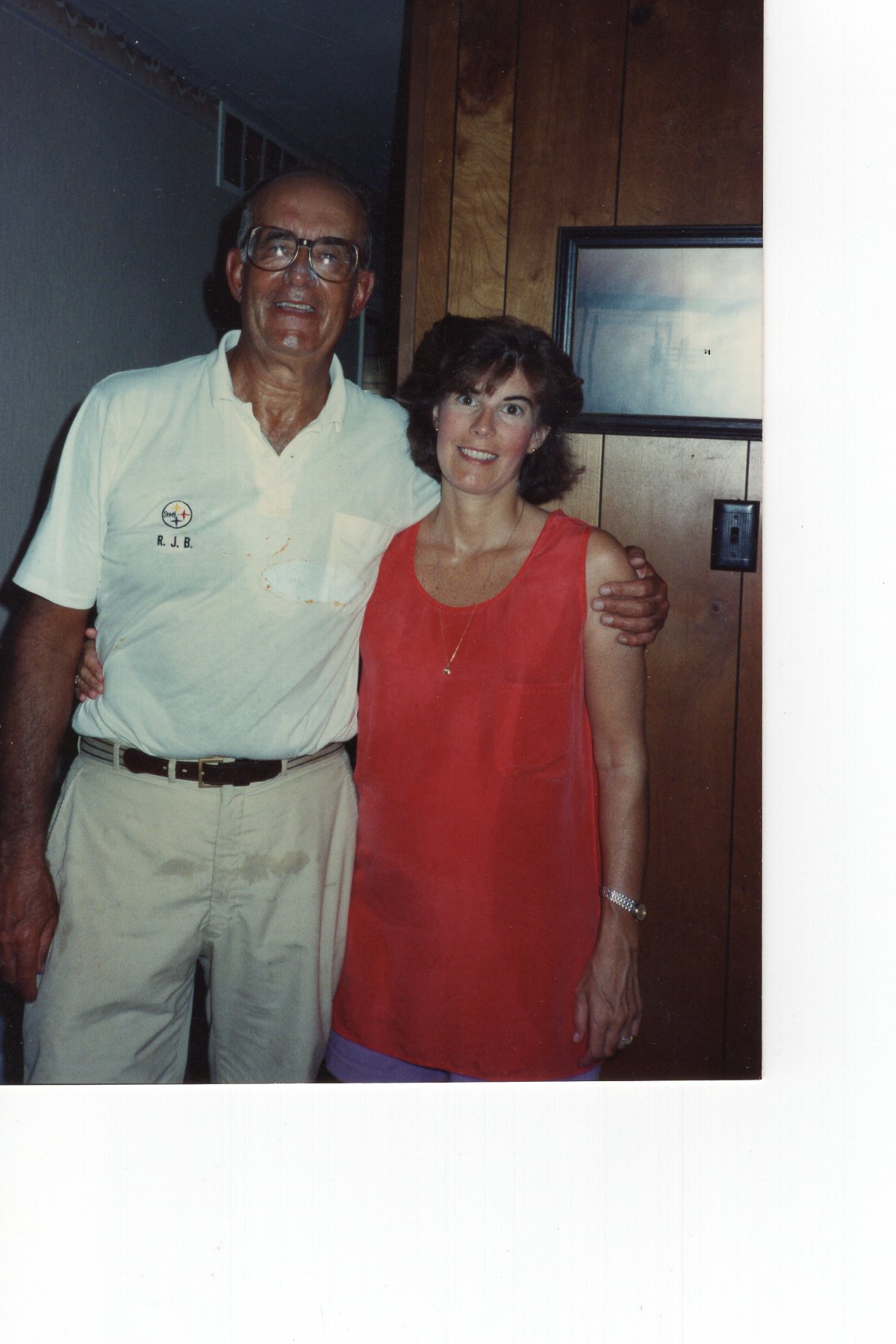
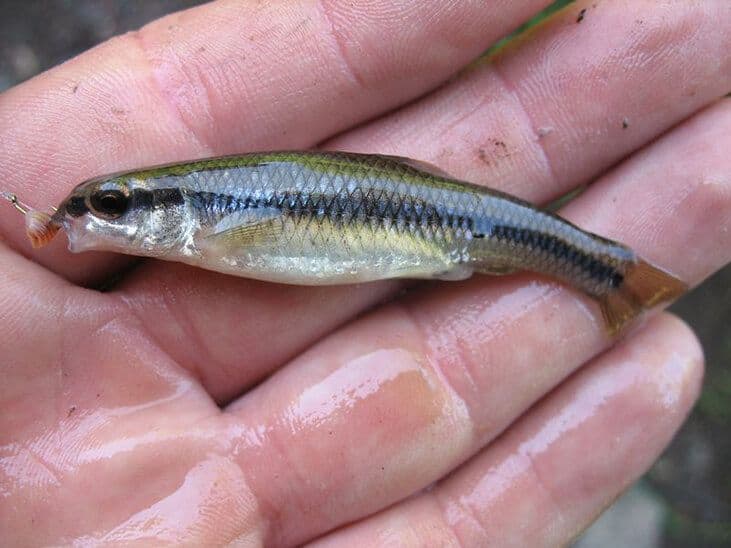
PHoto Dad and Me again025As we talk, we take turns skinning and slicing the bait squid into triangles. You put them on the hook with the pointy end dangling so they’re super appetizing to our cold blooded quarry. When we use live minnows, they are kept in a perforated bait bucket hanging from the stern cleat bobbing up and down in the briny water. Since the minnows inside are constantly oxygenated with fresh water, grabbing one inside the bucket, holding on to it as you put it on the hook through its mouth, challenges both our dexterity and our will.
 

live-minnows-bait-for-fishing-in-lakes-preppingplanet.com_

Baited Minnow

Many people are squeamish about baiting minnows, but if you’re a ‘real’ fisherperson, you do it and do it quickly so you don’t harm them. The hook does not hurt their mouths; however they don’t like being on a leash so to speak and so move rapidly trying to get away. How can we blame them? Would you like to be a bait minnow? Fortunately, dad and I believe they have no idea about their possible fate. If they are lucky enough to survive inside the flounder’s mouth, we always set them free. (Even though they’ll most likely be eaten sooner or later by another passersby.)

A good drift can last 30 minutes, so we have plenty of time to bob our rods up and down, always making sure we hit the bottom each time so the flounder will see the bait. The bobbing of the rod is key to fishing for bottom feeders in salt water. When I was younger, my dad constantly reminded me to keep my rod moving – up and down, up and down in a slow rhythmic beat. Now, it’s second nature to me. I like the bobbing rhythm; it’s a sort of moving meditation that calms and soothes.
flounder-on-a-lure

Flounder on Lure

When one of us has a fish on the line, the other reels in and gets the large net stowed under the starboard gunnel. Then quickly and steadily, keeping tension on the line and pointing the rod up, we reel and reel until we see the fish. Usually, when we see the fish, the fish sees us.

If it’s a bass, it usually jumps partially out of the water and sometimes breaks free from the hook. Other times when the flounder or bass sees the boat, it fights more. But the person doing the netting quickly gets underneath the fish, lifts it straight up and wala it’s ours! It’s important to carefully take the hook out of the fish’s mouth so as not to harm it. Next onto the stinger and over the side of the boat into the water.

If you wonder how our catch goes from alive on the stringer to dead in our frying pan or oven, we hit the fish’s skull just before the dorsal fin and instantly he or she is gone to fish heaven.   A good fisherperson never breaks the skin or damages the flesh.

As I’m writing this, I’m imagining readers cringing and closing their eyes trying not to picture my descriptions. I, too, upon reflection am amazed how easily and without any moral/ethical angst, I embraced everything about fishing from baiting live minnows to the cleaning (gutting) on our beach house back porch. To me it seemed and still seems the most natural of human activities. To fish for food – catch it, kill it, eat it with thankfulness for its nutrition and sustenance. We’ve been doing this for millennia.

The sun is directly overhead, and we are getting hot and hungry.

“Do you want to go in or do one more drift?” My dad asks.

“Let’s do one more drift – a long one. It’s so beautiful today,” I answer.

“Just being our here is the gift. Catching fish is icing on the cake. Even when it’s bad it’s good”, My dad responds. This is a usual refrain. I’ve never known anyone who enjoys life as much as he does. I realize now, he mostly operated in the present. He was a man of very few regrets.

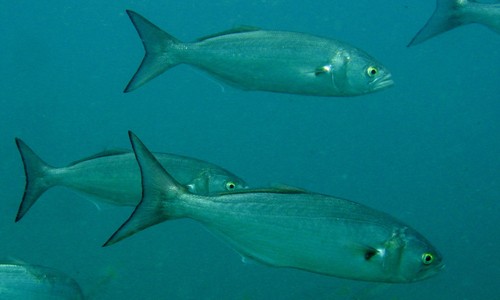
Dad turns on the engine and off we go back up the stream beside the Wetland’s Institute to catch another drift as the tide is turning. When the tide turns fishing is good. Thirty seagulls are swarming above a roiling on the water’s surface – a large school of blue fish are in a feeding frenzy. As the blue fish force the mullet to the surface, the seagulls dive and dive feasting and feasting.
Bluefish underwater

Bluefish

Dad throws in a line at the bow, and I cast from the stern. In seconds, Bam, Bam – two hits.

“ Get the net.”

“It’s right there. Grab it.”

“I can’t. No, I have it.”

“The seagulls. They’re swooping near my head. “

“They won’t hurt you. Watch the rod. Keep it up.”

“I am, I am.”

We laugh and whoop as we reel them in. Bluefish for dinner.

Now at 67, after scores of fishing adventures together, I can see my dad and me fishing and talking when I was 10, when I was 35, and later when I was 55. Sadly, we haven’t fished for ten years. My daddy, my dad died three years ago at 87. Yet, yet here he is. Brown eyes twinkling, face smiling as we head back to the marina. “Its always a good day when we’re fishing, Katesey.”
 

Lemon Jello, Rollers, and Toilet Tissue

Brendel, Mary Photo 2 copy

My Mom

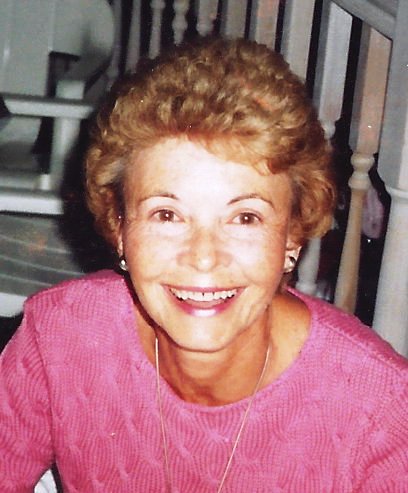
When I was in elementary school, my mother began sleeping with her hair swathed in toilet tissue topped with a brown nylon hairnet. My mother hadn’t always slept with her hair wrapped in toilet paper, that is until she began using lemon Jell-O to keep her hairdo fresh and perky.

The lemon Jell-O was a 1960’s version of hair sculpting lotion, a pre-cursor to hair mousse and wax, all of which hadn’t been invented. I believe my mom had read about this alternative use for Jell-O in a women’s magazine: the writer claimed that applying a small amount of liquid Jell-O to ones’ hair before rolling it onto curlers would make your hairdo last much longer and give one’s hair a bouncy, shiny appearance.

In the 1950’s and early 1960’s, most women wore their short to medium length hair curled with the use of plastic rollers. Most nights or days depending on ones schedule, woman would spend anywhere from 10 to 30 minutes, winding their hair around 1 to 1 1/2 inch plastic cylinders and bobby pinning them into place. It was quite a procedure and anyone who could afford it went to Betty’s Beauty Salon on Broad Street to have it done once a week. Yes, back then, women washed their hair only once a week.

My 29 year old mother couldn’t afford the weekly beauty parlor and besides both my brother and I were around most of the day making it both logistically and financially impossible. So as always with my mom, she found a short cut to the professional ‘do’ she wanted.

I remember clearly how my mom took one of the lemon Jell-O boxes out of our pantry, snipped open a corner of the envelope of gelatin, then poured a teaspoon into a tea cup which she then filled with hot water. Often she let me stir the mixture until all of the powder dissolved. Then up to the bathroom we trooped. I wasn’t going to miss this weekly entertainment.

First, my mother draped a towel over her shoulders so as not to get the super sticky and sickeningly sweet smelling stuff all over her cloths. Then standing in front of the mirror over the sink, she would pick up a piece of hair with one hand as she dipped her comb into the tea cup of jello with the other hand. Then quickly so as not to drip too much, she would comb it through her hair before rolling it around a metallic brown colored roller. Finally, I would hand her first one then another bobby pin that she would use to secure both sides of the roller. She had to work fast so that the jell didn’t jell. In between my bobby pin job, I mostly watched in awe, thinking about how I, too, one day would be rolling my hair in lemon Jell-O and rollers.

Using lemon Jell-O was crucial because of the bland color and less pungent smell. Strawberry, raspberry, and orange were never used for obvious reasons: no one wanted to smell like a super strong imitation flavor or have a red or orange tint added to their hair.

My favorite time was when my mom’s hair was finally dry. It took hours to dry before the late 1960’s bonnet hairdryers. We would troop back up to the bathroom and begin the process of unwinding my mom’s black hair. I was in charge of taking each roller and booby pin and placing then back in their proper places. I watched in wonder as each curled section of hair stood rock hard in a perfect cylinder shape.

After all of the rollers were removed, it was a marvel to see. Two dozen stiff shiny cylinders in perfectly lined rows covered my mother’s head. She looked like a totally different person. Her head seemed so much smaller without the bush of bouncy shiny curls. She looked like a Martian whose stiff hair cylinders were awaiting contact from her mother planet.

I always asked to touch them before the inevitable ‘combing out’. And my mother almost always said yes. They felt like hard-shelled fibers, smelled like too strong imitation lemon, and looked like white-flecked shiny black tubes. The white flecks were from the Jell-O. Thus a proper combing out was of the utmost importance. My mother worked hard, combing, brushing, and rubbing her hair to remove those white specks. She didn’t want to walk around looking like she had a massive dandruff problem.

Finally, all of the Jell-O was removed and her hair was ready for the final step. An atomic cloud of throat choking aerosol hairspray was applied over and over and over again. Now my mom’s hairdo looked almost like she had come out of Betty’s Beauty Parlor down on Broad Street. The almost was because of the lingering white flecks that occasionally showered down on my mother’s navy blue wool cardigan for the rest of day.

And thus the necessity of sleeping with the toilet tissue and hairnet. In order to keep her hairdo up to snuff for an entire week, my mother had discovered the toilet tissue/hairnet method of preservation. The toilet tissue swathed carefully and then covered gingerly with a hairnet each night ensured that with just a bit of teasing, combing and spraying each morning, my mom could look like she had just stepped out of Betty’s Beauty Parlor on Broad Street. And no one but mom, my brother, and I would be the wiser.


Growing Up In A Crazy Kitchen

img_0503

In the 1950’s most kids ate oatmeal, cornflakes, cheerios, or shredded wheat for breakfast. Not at my house on Wells Street in Westfield, NJ. When I came down for breakfast, my brother was sitting in his high chair mushing cottage cheese and applesauce, mostly into his mouth and spreading the remainder around on his tray. My petite 29 year old mother, donned in a powder blue negligee’, was standing over a smoking iron skillet frying calves liver. Yes, calves liver for breakfast. My mother was totally into health food and organic eating 50 years ahead of the rest of us.

Each breakfast time she’d ask my dad and me if we wanted any liver for breakfast. My dad dressed in suit and tie and ready to head into Manhattan on the train, always said the same thing, “Are you kidding, Mary? I don’t ever want liver for breakfast no matter how good it would be for me. I want cereal like everyone else in the United States!.” My father would quickly kiss my mom and us goodbye and rush off to get his train. I realize now he rushed to get away from the smell. He didn’t want to smell like our kitchen, a combination of animal blood and freshly slaughtered and seared calf. It was not a pretty smell and even at five, I wondered why anyone would want to smell that first thing in the morning. I still do.

img_0502

My mother was usually humming as she sautéed, happily beginning a new day nourished with loads of iron and protein. My mother had read and studied all things health related. Currently she was totally into Adelle Davis’s then best selling book, Let’s Eat Right to Keep Fit (1954). It was her newest health strategy for keeping all of us and especially her fit and strong.


Image result for photo of adelle davis

Adelle Davis

My mother’s mother, my Nana, had been chronically ill with Rheumatic fever and then rheumatoid arthritis from the age of 24. Nana’s pain was often so terrible that she could not hold my Aunt Cathy when she was an infant or attend her daughters’ school activities. My Nana had spent most of her adult life house bound or when things were really bad, bed-bound.

My mother had grown up with an ill and ill-tempered mother who was always looking for the next miracle cure for her degenerative disease. This environment had embedded a deep and lasting fear of illness in my mother. If we complained of a sore throat, we were immediately taken to our pediatrician, Dr. Fiddler (yes, really. That was his name). However my mother’s fear also played out in another strangely counter-intuitive way. My mother never went to the doctor herself, except for an annual visit to the gynecologist. That was it. Happily, my mother was quite hardy which she claimed was totally due to Adelle Davis, the Roman Catholic mass, and Bonnie Prudden.

Bonnie Prudden was my mother’s personal trainer. Each morning after her calves’ liver, she would dress and make her way to our little den or later to our light filled dining room, where she would go through her paces under the direction of Bonnie Prudden’s recording, Keep Fit Be Happy Vol. I (1960). Prudden was one of the first fitness trainers and a prolific fitness researcher, writer, and teacher.

Image result for photo of bonnie prudden

Bonnie Pruden

Bonnie Prudden was born in 1914 in NYC and lived to be 97. Growing up Prudden was an avid dancer, gymnast, and later mountain and technical rock climber. After a climbing fall in her 20’s she rehabilitated herself with chair exercises and aqua and swimming exercises. She went on to be one of the most important people in both adult and children’s fitness, writing over 30 books, and making over 15 recordings, films, and television programs. She earned over 30 awards and appointments during her lifetime, including the President’s Council on Physical Fitness, Sport and Nutrition – Lifetime Achievement Award and the creation of annually celebrated Bonnie Prudden Days in the states of New York and Arizona for her contributions in the areas of fitness and myotherapy. Prudden was also way ahead of her time. Just like my mom.

In the 1950’s, most moms did as little exercising as possible. Moms in my mom’s circle played bridge or arranged flowers. They studied in study groups through the American Association of University Women; sat on boards at the local school district; volunteered at the hospital, lead Girl Scout or Cub Scouts. My mom did these things as well. But she was different, that I could see by Kindergarten.

She had a voracious appetite for knowledge about anything that interested her. Lunchtimes were her ‘do not disturb’ time. Then my young mother would curl up on the sofa with a plate of celery, carrots, scallions, and cottage cheese (apparently cottage cheese figured as a must-eat health food staple). After eating she would begin reading and taking notes about whatever was her interest of the month or year.

For two years, she studied the Plantagenet’s, reading everything she could find at the local libraries. She did all of this eating and studying on the den sofa, never at a table or desk. In fact, she never ate at a table except when we ate as a family. I wonder if that was a habit developed from childhood, where mealtimes were often fractured and eaten alone.

Perhaps because of growing up in a sad house, my mother made sure our house was always full of fun, music and laughter. She played pretend games with my dolls and me; served us tea with cherry topped banana slices, and always sung us our own personal lullaby when she tucked us in. She wanted to make sure we didn’t grow up the way she did.

As I reflect on my mother’s life, there is another thing she did that I hated at the time, but now see why it was so important to my mother’s well being. If my mom were picking my girlfriend and me up from piano lessons for instance, she could suddenly say with a lilting and theatrical voice, “Let’s stop at St. Simon’s girls and make a little visit. It’s just what we need.” I’d groan and say I didn’t want to. If I mentioned we didn’t have hats, (at that time women had to wear hats in church) my mother would laugh and say, “Yes, we do” as she fished about in her handbag for Kleenex and bobby pins. Yes Kleenex and bobby pins. While I tolerated wearing a bobby pinned Kleenex on my head at five, by the time I was eight with my girlfriend in tow, I despised the weirdness of it, especially in front of my girlfriends.

Ironically, none of my girlfriends minded this stop and even saw fun in it. They liked going into the nearly dark, medieval church with massive ten foot long carved wooden angels flying from the buttresses. And if there weren’t enough Kleenexes and bobby pins to go round, never fear, my mother would gleefully rip each in half or quarters, and we were in business. Sometimes my mom couldn’t find enough bobby pins in her purse so we all had to hold our Kleenexes on our heads with our hands. Then my mother would turn to us with her hand atop her Kleenex draped head and exclaim, “Isn’t this fun? See who can keep their Kleenex on without holding it.” I was horrified and wanted to crawl under a pew. My mother? She found the fun in just about everything.

The many eccentricities of my mother bothered me sometimes. No one wants to be different when you’re growing up. As a child and a teenager, I couldn’t imagine why she did the things she did. I couldn’t understand why she didn’t mind being different.

My mother had a full social life and many friends though she didn’t talk with them about spontaneous visits to dark churches or liver for breakfast. She knew that would be way too out there. And so she kept certain beliefs and behaviors private and so did we. After all, we didn’t want our friends to think our mother or our family was weird or strange or the worst ‘different’. Back in the 1950’s and 1960’s, everyone was trying their hardest to be the same. It was a homogenous time.

Looking back, I see my mother knew she needed certain things to keep her balanced (a word she would not have known to use in 1959). She healed herself through food, exercise, and meditation (though she wouldn’t have know to call her church visits that word either). She just knew all of her daily habits (some may say quirks) made her feel well and happy. They gave her energy and confidence.

I know my mom never sat down and analyzed what she did and why. Even though I believe she knew that the exercise and the meditative church visits gave her a deep sense of peace and calm. She needed them: the food, the movement, the knowledge, and the quiet.

My mother was way ahead of her time, just like Adelle Davis and Bonnie Prudden. My mom lived what we call today a ‘healthy life style’. She nourished her body and mind with wholesome unprocessed food and yoga type exercise. She meditated and enjoyed the healing effects of music and nature. She is what we would call today, mindful, aware, and curious. She wasn’t afraid to eat calves liver for breakfast.

“I Don’t Want to Die in Stewartstown”

img_0802

My Husband and Me

In the past seven years, my life has been filled with one sick family member after

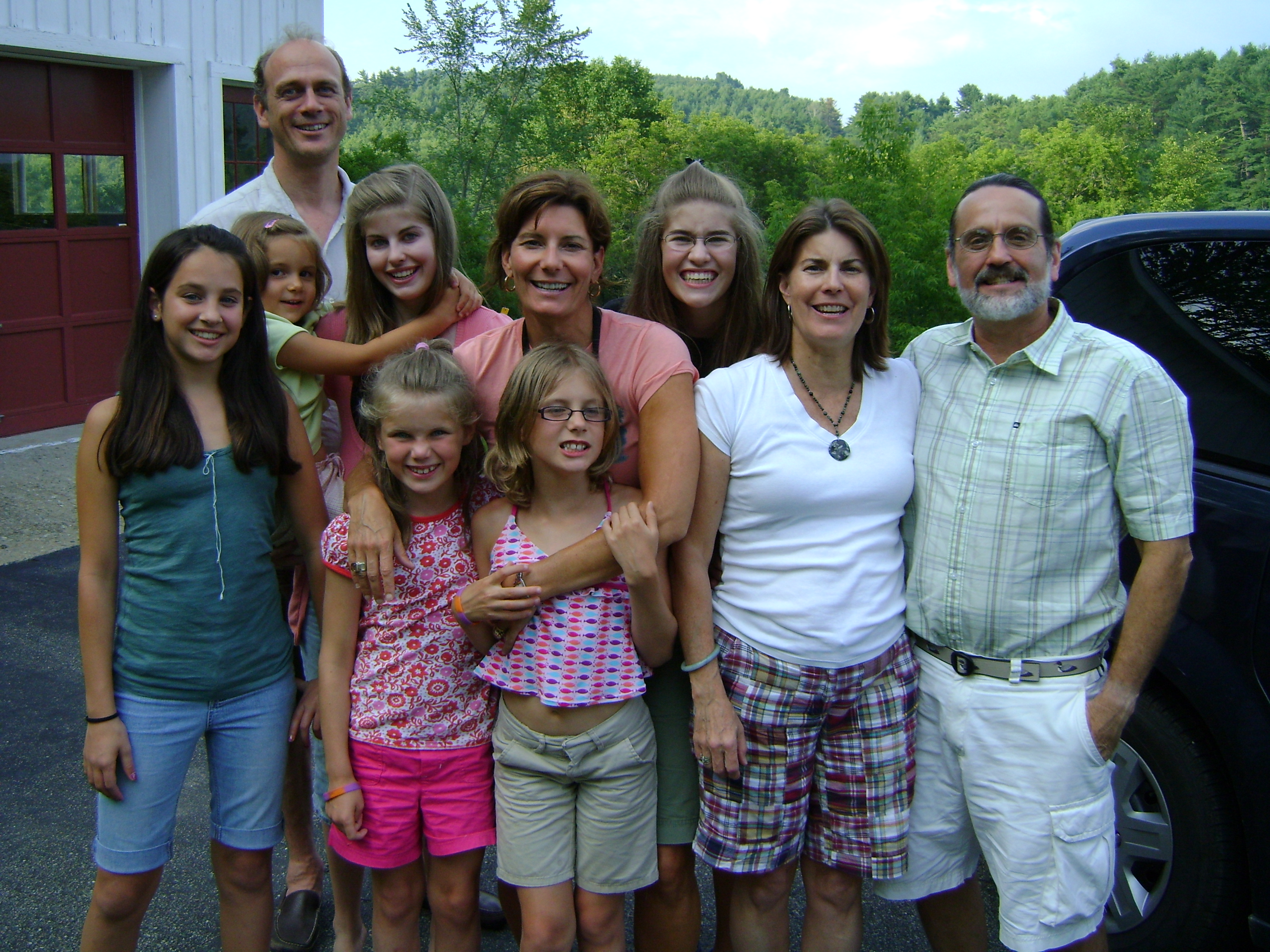
img_0824

My Daughters and Me

another. My daughter became deathly ill with ulcerative colitis and endured five major surgeries. My mother became suddenly ill with liver disease and died in four terrifying months. My father fought against and lost his four year battle with mylofibrous. My sister fought and won her battle with breast cancer. And almost a year ago, my husband was diagnosed and is currently challenging colo-rectal cancer. 2011 to 2018. It’s been quite a time.

You know how well intentioned people will say, “there’s always a silver lining’ or “in our darkest hour one door may close but

dsc00112

My Sister and Me

another will open”? And you just want to say, “Screw you”. Or at least that is what I’m sometimes thinking and feeling, but I say, “Yes, there are many silver linings”. And weirdly, this is also true. There are many silver linings in trauma. And it also totally sucks.


My husband’s cancer diagnosis came out of the blue. A routine colonoscopy changed our lives from one minute to the next.

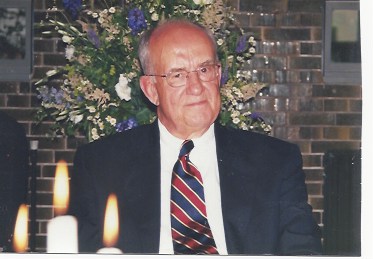
Dad Pic 6

My Dad

It’s been quite a ride this past year. Chemo and radiation followed by surgery with many complications followed with more, stronger chemo and looking forward to more surgery in the spring. Anyone who’s done it knows this drill well. It’s exhausting, terrifying, traumatic, and numbing. And then there’s my intermittent and unexpected cortisol highs that bring on raging bouts of anxiety and dark frightening projections about the future., usually at 3:00 AM.

Yet all this angst also brings a whole lot of hope and positivity. That old saying that ‘you are more alive when you are close to death’, is really true, at least for me. Some days I am so filled with light-filled energy, that I must get outside and walk and walk and walk, up and down one rural road after another. I crave the sight of the hills, fields, and woods; the sweeping vistas from the top of Mc Cleary road are balm and nourishment both. I search for coyotes and hawks. Sometimes I’m lucky enough to see a bald eagle or Great Blue heron. I long for the sound of water over rocks and the roar of the wind in the 200 acre woods. Wind especially reminds me of power and grace and of my tiny place in this universe. A tiny place in a good way. I am not alone. I’m part and parcel of every moving atomic particle. It’s a comfort and exhilaration both.

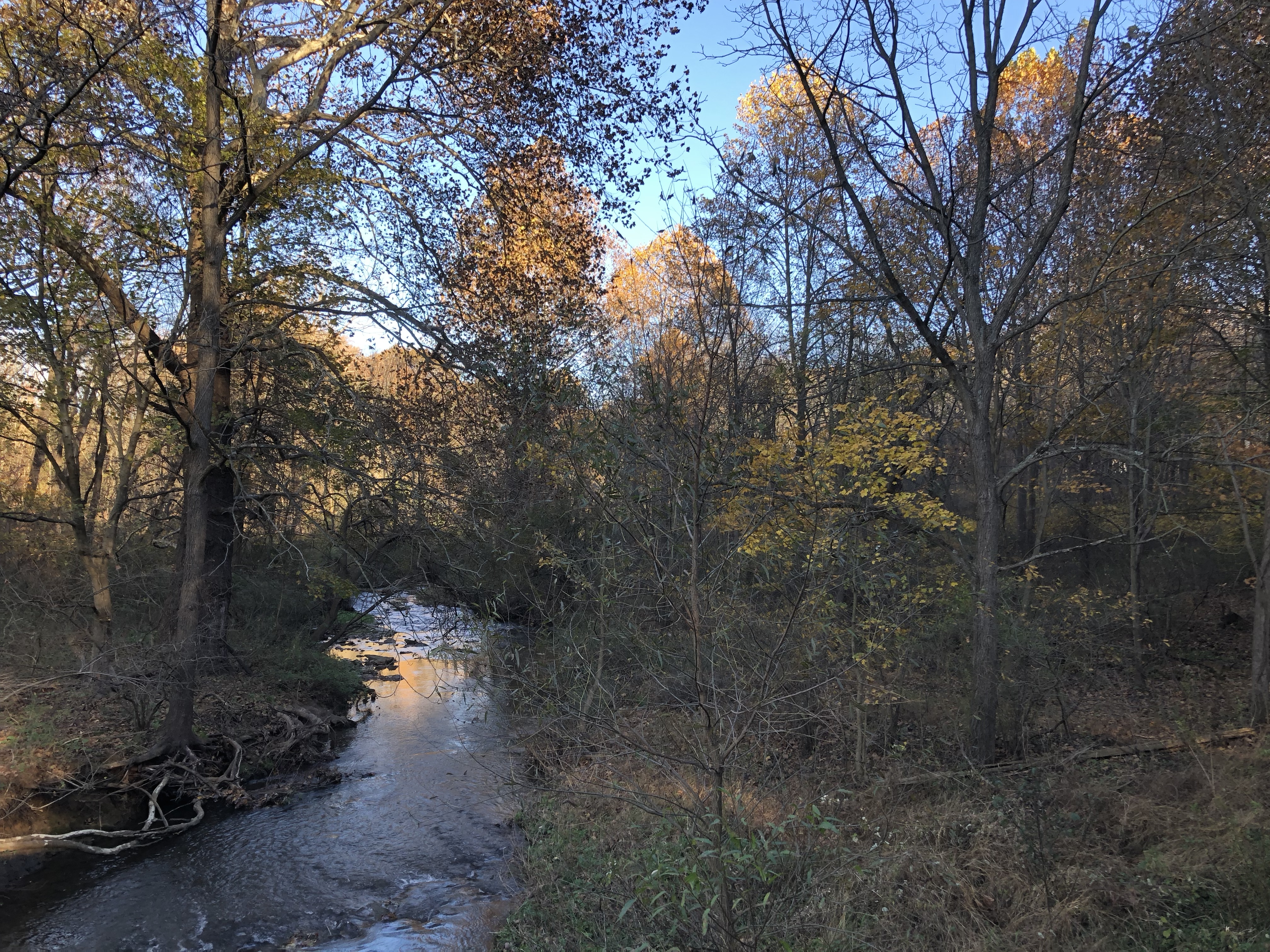
img_0678

Cross Mill Stream

Don’t get me wrong, I also feel sad, frustrated, and trapped in the get me out of here for a week at the beach kind of way. Then I must push hard to get out of bed and get outside. I make myself meditate because it definitely helps me, and I drink a couple of glasses of wine at the end of the day. That helps too. A little numbness is good in an unrelenting situation.

As for silver lings, there have been many these past seven years. I’ve learned I’m way, way stronger than I thought I was. I’m more confident, more tolerant, more patient. I appreciate more. I relish experiences with friends more. My relationships with family are closer and stronger. There’s a tenderness in my heart and perspective that wasn’t as apparent to me before. I pause more often and take stock. Perhaps this list is something that all caregivers and family members experience during a serious illness. I know I’ve read many of these on online caregiver testimonial sites. Even though they sound cliché, they are indeed true, at least for me.

What I learned from cancer is that life is short. It goes by so fast. At 30, when I was working as the only woman in a commercial real estate firm, Carter Dye, the 70 year old broker, took me aside and said, “I know you probably won’t believe me when I tell you that one day you will look back on this time in your life and wonder how it could have possibly gone by so fast, like a handful of sand sifted through your fingers in 30 seconds. That’s how it feels from 70. You just can’t believe you did all of that stuff in such a short time. It didn’t feel fast while you were doing it. But now it feels like it went by at warp speed. “ Of course I didn’t believe him at the time. I thought he was old and giving me ‘fatherly’ advice. But now, now I do.

The warp speed of life has made an impression on me particularly over this past year. I’m turning 65 in February, and incredibly, unimaginably, I can see the end. Something unfathomable for me even a year ago. That sense of leaving leaves me with a ‘seize the day’ mentality. I know time is short. I probably won’t be able to fit everything I want to do into the ten or twenty years I have left.

So I’ve reevaluated my bucket list, a list whose contents have always been haphazardly organized and prioritized. Now I ponder and mull over what I want to do, where I want

to live, and with whom I want to be. Time is of the essence and no longer a thing to traipse about in as if I had a boundless supply of it. It matters very much how I spend my days and nights. And that, that is exhilarating, and freeing. Instead of tightening around this ‘end’ idea, I’ve decided to try to loosen my hold and just go. Much the way I did so easily in my twenties. Now it’s not so easy, but I’m determined to go for it anyway. Time, time, time. It’s a big motivator.

Just as in my twenties, I want to live in the mountains. I want to work in a community of like-minded people who know that we create our lives and our environment. I want to live among people who love and honor nature. I want to live among rocks and water, snow and sun, wind and soaring mountaintops.

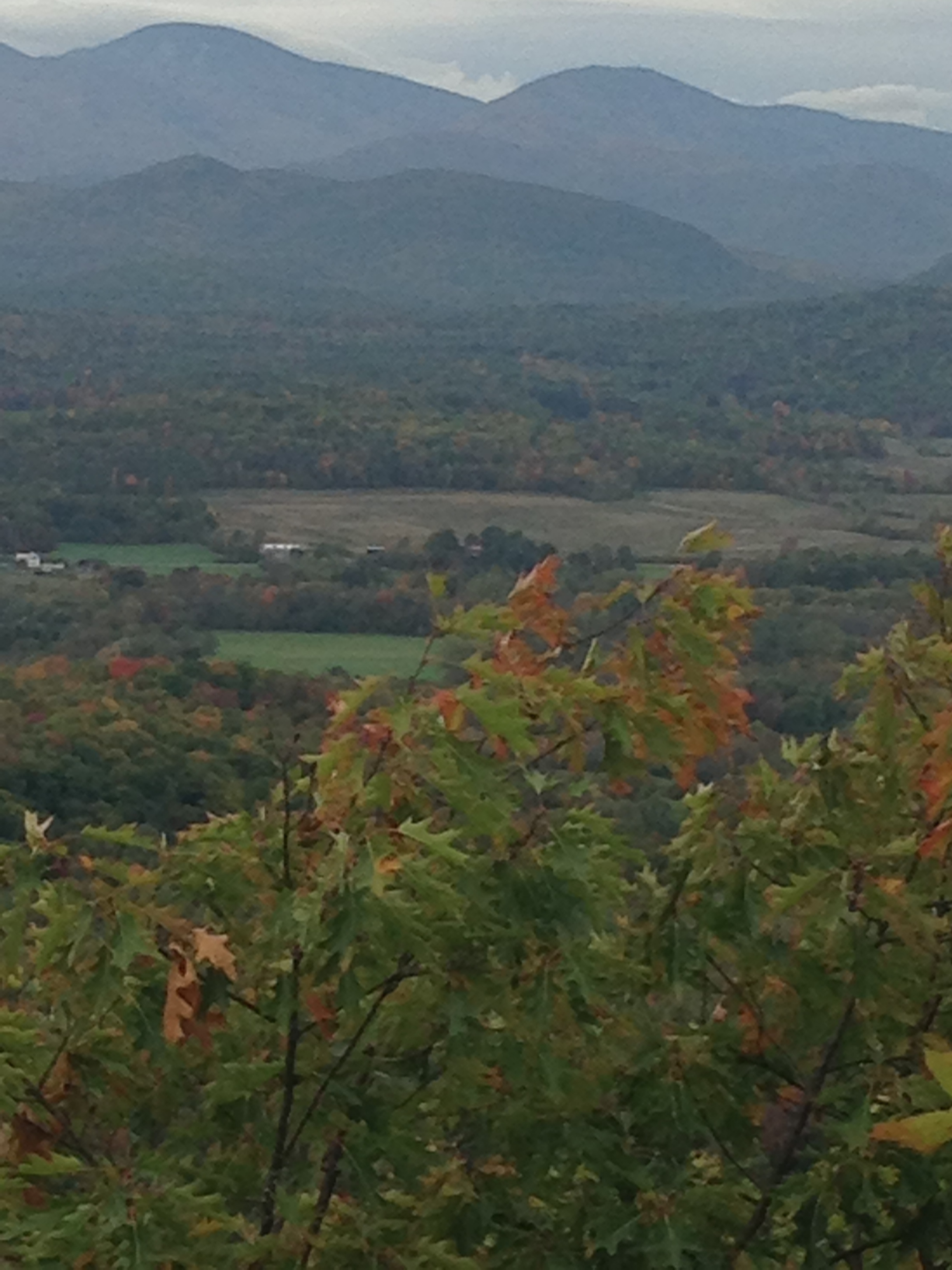
img_1358

View from Coon Mt, NY

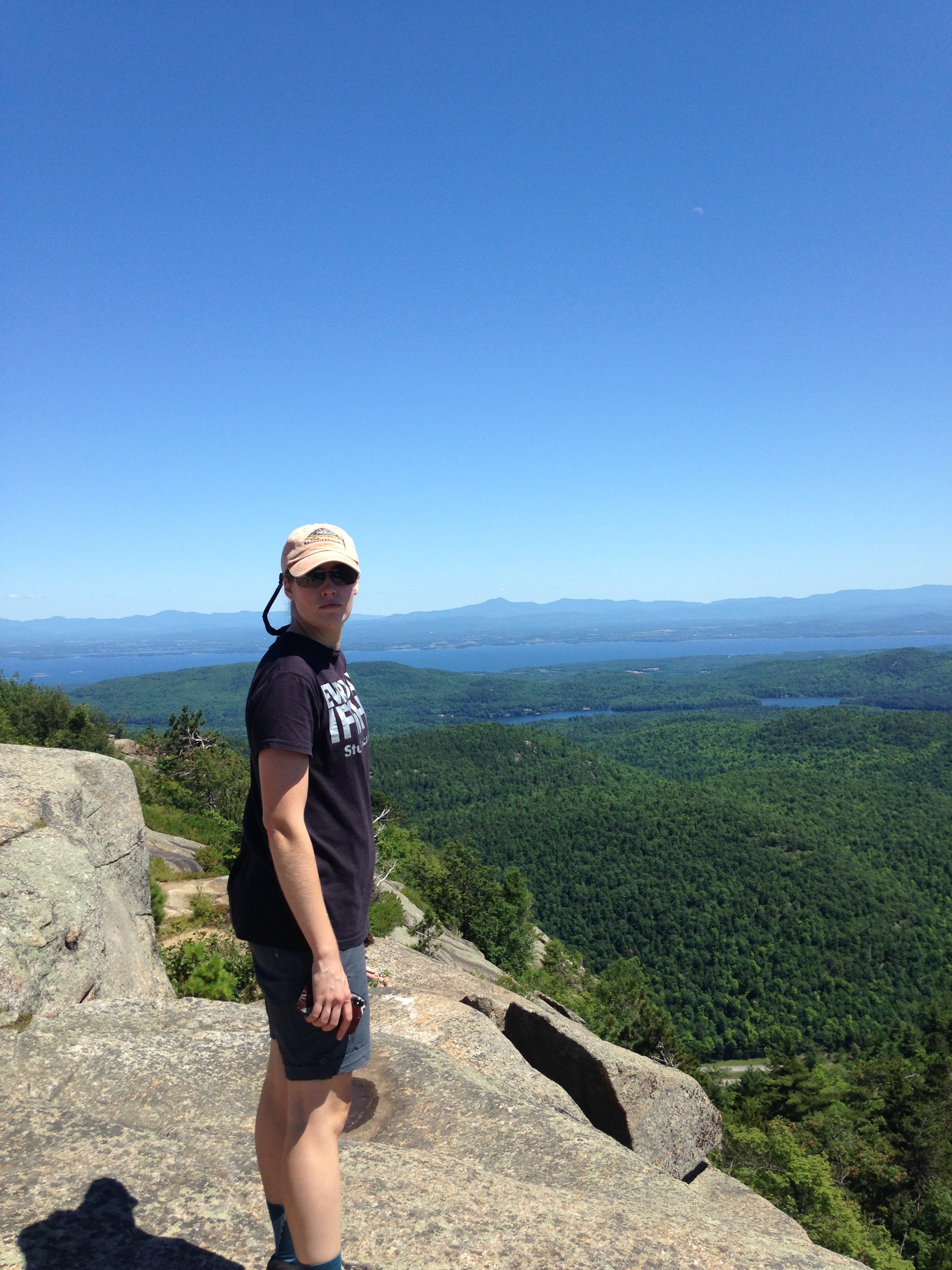
Amazingly, I found the New York Adirondack Mountains through my husband twenty years ago. Since then, we’ve spent all of our vacations and school breaks somewhere in the six million acre Adirondack Park. It’s the oldest and largest forest preserve in the United States, larger than the combined size of Yellowstone, Everglades, Glacier, and Grand Canyon National Parks.

dsc00033img_0500img_0525

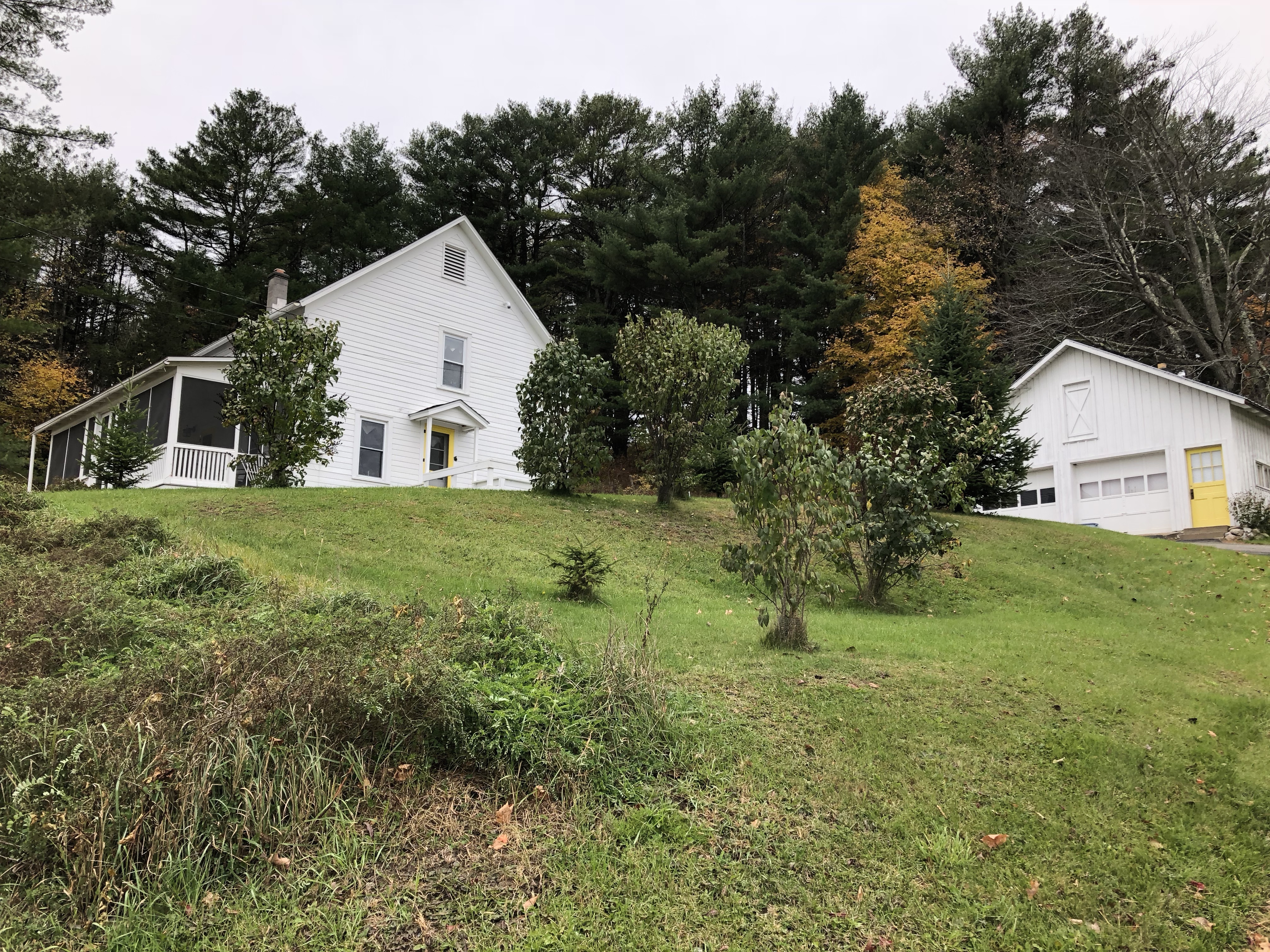
Ten years ago we bought a small, tidy 100 year old farmhouse in the hamlet of Wadhams, close to Lake Champlain. It has been our refuge from the hubbub of big city life and work in Baltimore, MD. We go there to restore and create, to hike and paddle with friends who seem like people we’ve known forever. The Adirondacks is our home-spot. The place where we feel most ourselves.

img_0643

So how do we get there? Can cancer be both our epiphany and tipping point? Can we ditch our secure jobs and lives here in Stewartstown, PA and go for it in a place we know and love, but have never lived a work-a-day life in? Do we pave our way by making a financial plan with our Morgan Stanley guy, Dave? Do we look for work there from here? Do we let that nagging fear that we’re ‘too old’ get in our way?

img_0729

I’ve thought a lot about these things and have come to a few conclusions. We ain’t getting any younger. We ain’t going without a plan. We are going to be afraid, just like when you make your first dive into deep water. But should fear stop us? We’re challenging cancer at the moment. Moving can’t be any scarier than that, can it?

img_0422

So when my husband says, “I don’t want to die in Stewartstown, I want to die in the Adirondack Mountains”, I enthusiastically agree. In the past, we laughed as we said this, believing it would happen later, rather than sooner. Now when we say it, there is a tolling immediacy that wasn’t there a year and a day ago. Cancer changes everything.


Saying Goodbye

Dad Pic 6

It’s impossible to summarize a person you’ve known for 64 years into a short essay or biography. So after many weeks of thinking and making notes, this is a glimpse into thewonderful, loving man, I called dad or daddy depending on the occasion or situation.

My dad loved life, mostly everything about it. He loved people, anything to do with people. Playing golf, squash, poker and gin, selling rods and wire, serving on boards and committees, and eating, drinking and laughing with his family and friends. He was full of life, affectionate, robust, and warm. And until the last couple of years, always, always, always positive.

My dad called and visited people in need regularly, sometimes for years. Some of these people were sick or lonely; some were friends and some acquaintances. My dad empathized with them all, even though his life was mostly a charmed one, free of pain and sickness until the last few years he was here.

My dad loved nature. He told me not so long ago that when he was a teen, he used to walk up to South Mountain from his home on Union Street in Allentown. He’d walk alone all Sunday with a backpack filled with sandwiches, cookies, water, and fruit. He said he just wanted to be in the woods and away from the city. He just wanted to be.

My father’s love of fishing was all about being. Being on the water or in the water. Saltwater fishing from one of his boats or surf fishing on the beach or fresh water fishing by a stream or on a lake. When he was in college in fished with roommates on a lake in Maine rubbing motor oil all over his face and arms so that the swarming blackflies couldn’t get through to his skin. He liked adventure.

My dad was a fun and funny dad. He taught me to dance when I was two or three, cheek to cheek, holding me in his arms, and twirling me around. Later when I was six, he taught me how to jitterbug. He was a great dancer. He was also a tickling, chasing, hide and seek game playing dad. Roughhouse was one of our favorite games, even though I usually ended up with a bump on the head or a bruised knee or shin. My father never said ‘no’ when my brother or I asked to play. Our dad was a ‘yes’ dad until we became teenagers.

As we grew up, my dad made alone time for each of us children. He took me out to dinner here at Saucon Valley or later at Tio Pepe’s or Libertores in Baltimore. We continued those dinners until a couple of years ago. In fact, our last alone dinner at Saucon was in the Men’s Grill. I remember that evening thinking ‘I wonder if this will be our last time here together.’ It was.

My dad and I were big talkers. One evening, we talked for three hours straight over the phone, each of us with our drinks – dad with his Gordon’s and me with my wine. My mother finally stopped us asking, ‘how can you two talk for so long?’ My dad replied, “If Katie and I were driving cross-country, we’d never run out of things to talk about.” And we never did.

And lastly, I can’t end this piece without saying how incredibly funny our dad was. He could see the humor in absolutely anything. He was a real jokester. Whether it was knocking me overboard when we were fishing, or driving crazily as we water-skied and of course fell down, or hiding my mother’s stuffed mouse from taxidermy class in my bed, or rattling the bathroom doorknob as I was showering in my teens and me screaming every time, “don’t come in” – he was there smiling and laughing in delight. My dad was a happy man.

Now after two plus years of being really sick, my dad is once again safe and sound, strong and laughing. He is with his Mary and all of the others who left before him. Some mornings, as I leave my dreams and float in that middle space between dreaming and waking, I remember my dad is not here. Then I think – he is okay. He is home. I smile and say to myself and to him, I love you, Dad.