My daddy picked me up from Camp Mosey Wood the summer I was ten. Usually, my parents came together for my annual camp pick-up. This year, my mom was pregnant and resting. As we piled my sleeping bag and footlocker into the Buick’s deep trunk, my dad announced we were stopping for an adventure on our way back to Bethlehem.

“Where are we going?”, I asked excitedly. I loved doing anything with my daddy. His enthusiasm for life sparkled everything he touched.
“It’s a surprise”, he answered with soft brown eyes twinkling and that smile that meant this was going to be something really fun.
As we drove further into the Pocono Mountains, he began talking about how when he was a boy he loved to fish with his Uncle Joe.
“Trout fishing was my favorite. I loved standing in or beside a stream of flowing water, just below the riffles”, Daddy explained. He talked on about how he baited the hook with a worm or a fly and cast it so that trout feeding at the end of the riffles would grab it.
“When the trout hit, I’d tug up hard on my rod, setting the hook and then carefully, purposefully reel it in with the rod bent over, the line taunt. Usually when the fish became visible, it began to fight and flip. Then with one hand”, Daddy said, I’d keep the line tight as I grabbed hold of my net and sweep it underneath the fighting trout. And wah-lah, I had it! Trout for dinner”.
Daddy went on explaining how sometimes his Uncle Joe took him to a pond or lake where he stood on the bank and cast and re-cast his line, each time hoping for a hit.
“Either way, stream or lake, catching trout, cleaning them and then eating them, fishing anywhere, anytime is the best”, Daddy said.
Daddy stopped his reminiscing as he pointed to a huge billboard painted all over with pine trees and a huge jumping rainbow trout, curled and flying in the foreground. The words, Kriss Pines, were painted at the bottom.
“Here we are, Katesey, Kriss Pines! This is where you’re going to learn how to fish. You will love it!”
And I did! First we stopped at the small cabin that rented rods and sold worms, fish eggs and corn kernels (yes, trout love them). I loved the fishy smell, the sparkling lures hanging on the walls, the rods and reels for sale. This was almost as good as a hardware store, My favorite kind of store when I was ten.
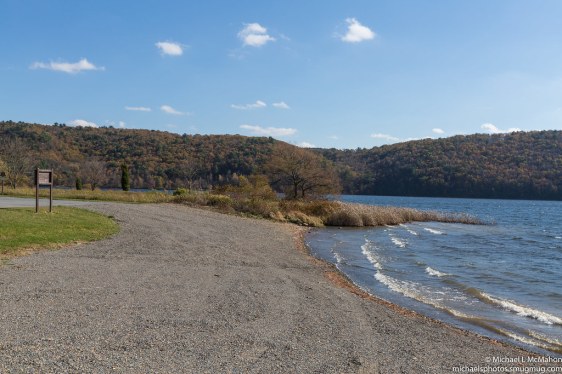
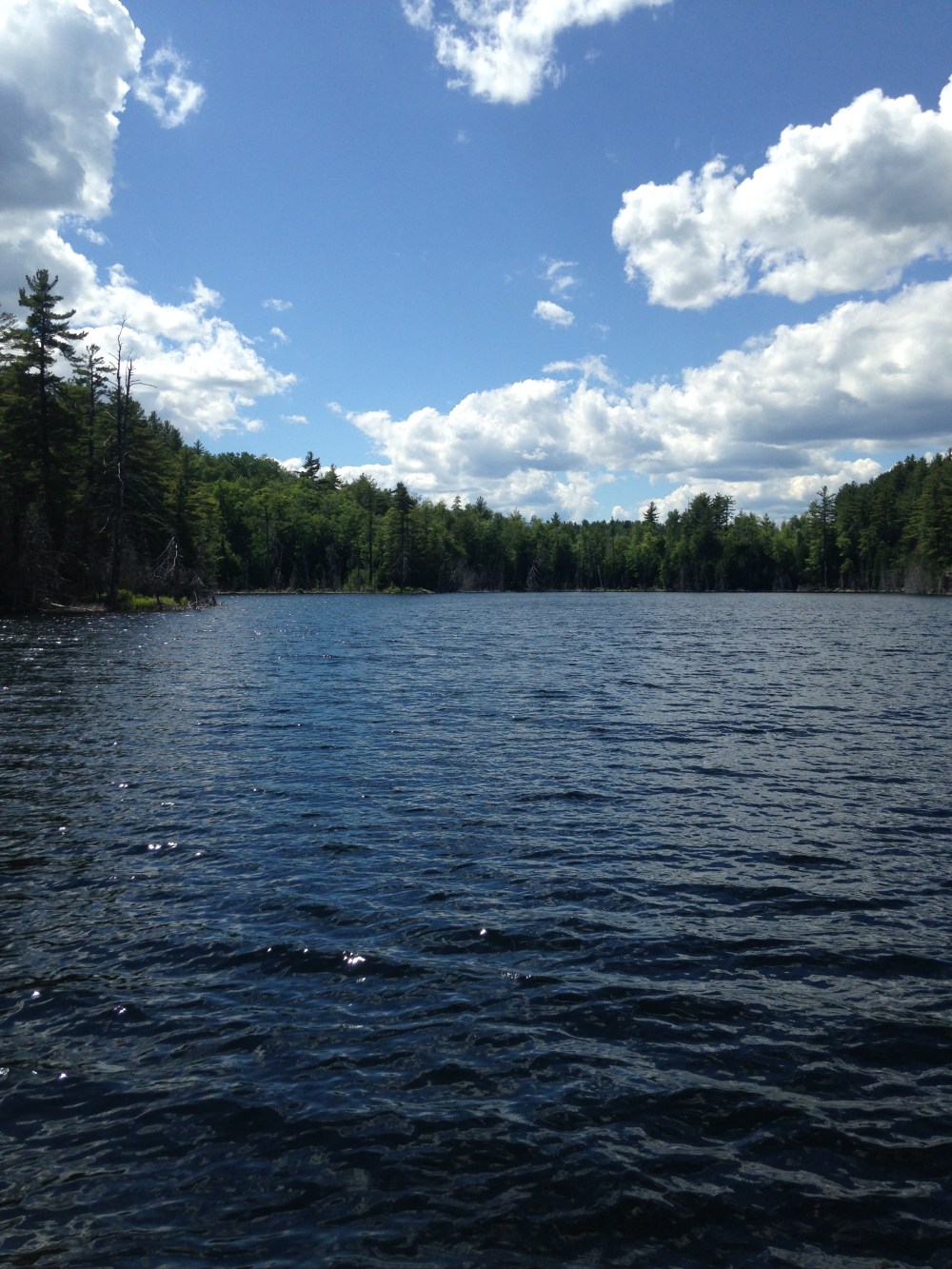
Kriss Pines Lake
After we had my rod and our fish eggs. (I was so happy we hadn’t gotten night crawlers because daddy said I’d be baiting my own hook), we drove round the rutted dirt road that surrounded part of the large lake. As we unloaded our gear, I could hear the katydids and crickets on this hot dry August afternoon. After some hands on instruction on baiting and casting, I was rearing to go. I loved being out doors especially in the woods and most especially in the woods by a lake.
Daddy cast first and within ten seconds he had a trout! Amazing! At ten I didn’t realize this was a stocked lake, a super stocked lake. Everyone caught fish, which was why daddy had brought me to Kriss Pines. He wanted me to learn and to be successful so I’d try fishing again and again and again.

Rainbow Trout
Then daddy helped me cast. He softly told me to reel in ever so slowly. Bam! I had a trout! “
“Hold your rod up and reel. Keep your line tight. Great. You’re doing it, ‘ he quietly said, as he stood beside me, net at the ready.
I was excited and serious, focused laser like on my rod and line. It felt awkward holding the rod and reeling at the same time. As I reeled, the rod slipped this way and that. Daddy put his hand on the rod to steady and lift it. It seemed like many minutes instead of many seconds until I could see the trout, flipping and turning this way and that, trying to get away.
You might think, a ten year old would feel sorry for the poor old trout, but I certainly didn’t. The more it resisted, the more determined I became. This fish was mine and it wasn’t going anywhere. As the fish got closer and closer to shore, the trout gave it all he got. But with one graceful swoop, Daddy had it in the net. He was mine! My first fish.
We spent the next two hours casting and catching. Laughing and commenting on our casts, catches and losses. Sometimes my trout got away. Sometimes my dad’s got away. Sometimes we threw them back if they were too small. It didn’t matter because we were fishing together, side by side.
As we fished, we chatted about what fun and what not so much fun, I’d had at Camp Mosey Wood. I relayed my lake swimming accomplishments – treading water for 10 minutes in 10 feet of water. My arts and crafts projects – a butterfly paperweight, a green and blue lanyard. I sang the camp songs I’d learned and the ones my friends and I had made up.
I complained about the hike and overnight we’d had and how terrible it was to have to walk so far with all of your stuff pouring out of your sleeping bag all over the trail as it got darker and darker. How when we finally made camp and settled into our sleeping bags, I felt something squirming in mine. I grabbed a hold of it and screamed as it slithered out of my hysterical hand. A snake. I didn’t sleep all night.
One of the best things about Camp Mosey Wood – we only had to take one shower, the night before we went home. (The counselors thought our daily swims in the lake were good enough, and we agreed. At ten, you’d rather be dirty than naked in an open shower for twenty.)
As Daddy looked over our catch, he counted six trout. Wow! Then he announced we’d have to clean them before we left. I wasn’t so sure about this part, but as Daddy drove back to the cabin and set our now dead trout upon the wooden fish-cleaning table, I thought, this could be fun too. Maybe.
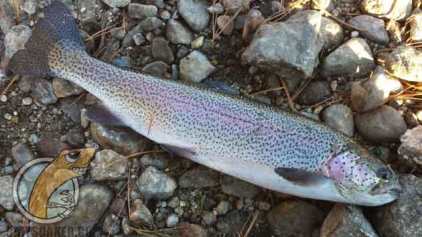
Rainbow Trout at Kriss Pines
Daddy explained what he was doing as he cut a slit up the trout’s belly and then carefully removed the intestine, stomach, heart. The guts as I called them. He said if you were going to be a fisherwoman, you had to clean your fish. And so I did with Daddy’s hand guiding mine so I didn’t cut myself on the slippery flesh. After a couple tries, I thought I had the hang of it. I remember Daddy did most of the cleaning.
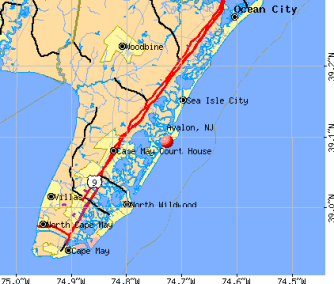
Map of Avalon and Stone Harbor, New Jersey
Fast forward, 25 years. My dad and I are going fishing as usual in his boat on the Avalon Bay off the New Jersey island of Stone Harbor and Avalon. It’s August, 7:30 AM, the bay is calm as I unhook the bow and step onto our 15 foot Bass boat. My dad is grey at the temples and has less hair under his stained light kaki baseball cap. He wears his fishing outfit: light kaki Bermuda shorts, faded white alligator shirt, a blue gro-grain ribbon belt, sunglasses, white socks and sneakers. He’s dark tan and smiling.
“This is the best time of the day. Isn’t it beautiful out here?” Dad asks.
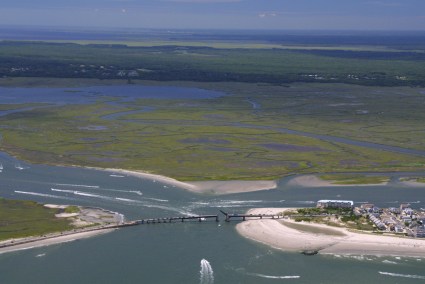
Wetlands and Bay between Avalon and Mainland New Jersey
As I look over the landscape, out beyond the marina, I see a large bay bordered by miles of sea grasses. Every so often a break in the sea grass reveals a winding swath of glistening green water. Some of these ‘streams’ are 20 feet wide and wind deep into the wetlands. Some are only 10 feet across and lead to dead ends of grass, bird’s nests, and thousands of mosquitos and green head flies. I love the bay early in the morning. Today is sunny with a light wind blowing; the water dances on the thousands of tiny waves, sparkling like blue and green diamonds.
Seagulls call and swoop. They’d love to get a hold of our bait. We use both live minnows and sliced squid for bait as we fish. We’re after light tasty flounder, bottom feeders who take the bait gingerly in their mouths. We must be vigilant so we don’t miss a nibble.
We decide where to fish based on the wind and the tide. Our strategy is to find a good fishy looking spot and motor up tide so we can catch the tide’s drift moving us slowly along not to close to shore and hopefully over flounder, sea bass, and bluefish. My dad is an expert at this after 30 plus years of fishing these waters.
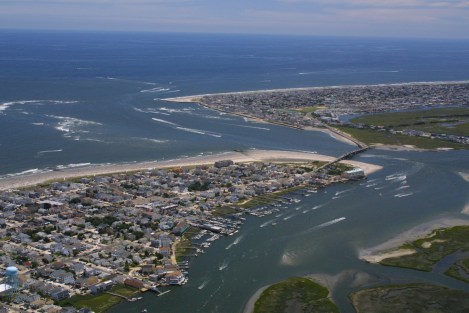
Where We Fished!
The best part of fishing is our talks. We talk about the fish, the drift, the landscape. We talk about our lives at home and at work. We talk about our friends, our experiences and adventures. We talk about our problems and concerns too. My dad is a great conversationalist; he sells steel for a living traveling across the US meeting with and entertaining customers. He loves what he does because he loves meeting and talking to everyone.
He likes talking with me too. He often says, “If I was driving across the United States, I’d like to drive with you because we would never run out of things to talk about.” I feel the same way. Sometimes Dad talks about when he was a boy, and I love those stories best of all.
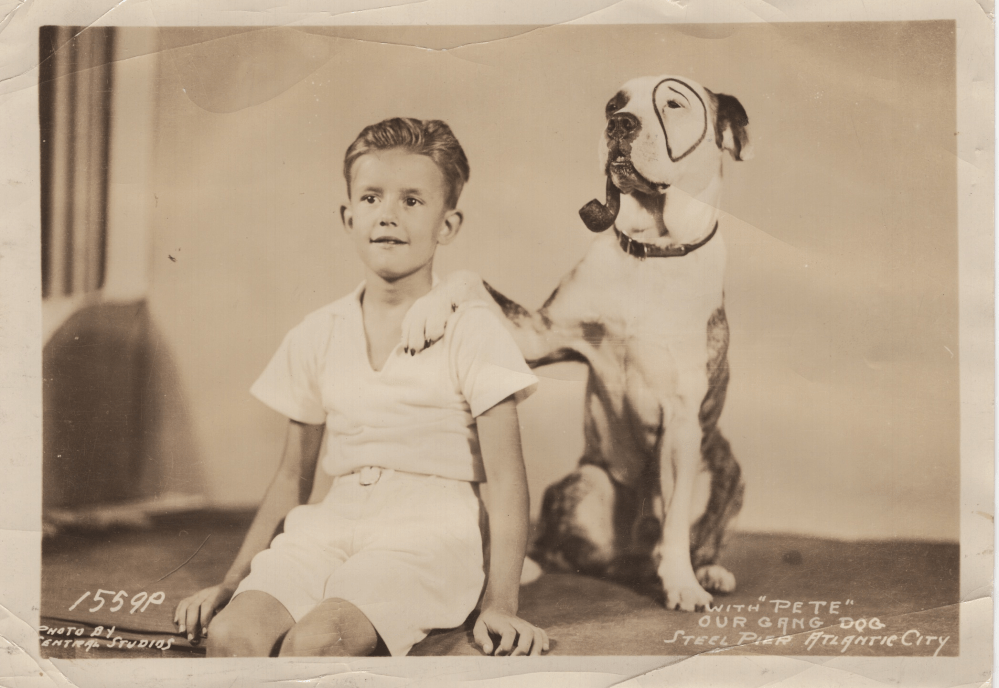
Those stories are set in a bygone era, the 1930’s and 40’s that are nothing like the late twentieth century. One of my favorite stories is the one where Dad and his buddy shot dried peas through a pea shooter into bread and bagel dough through the bread factory window on summer days. According to him they never got caught because they were high in an adjacent tree. The baker would look out the window and down the street, never suspecting my dad and his buddy were above him.
Or the story where as a teen, he’d decide on a Saturday that he wanted to walk in the woods on South Mountain, miles from his home in Allentown, PA. He described how he’d pack up his backpack with a sandwich, water and an apple. Then off he’d trek to South Mountain some five miles away. When I asked if he went with a friend, he said no. He just wanted to be alone, walking and watching in the woods. I always found this fascinating because he is such a people person. It was a whole other side of him.
Today is a serious talk.
After thirty minutes of fishing and making small talk, my dad asks, “So how are you doing?” I know he’s asking about my desire for a baby and my inability to conceive.
“If the fertility shots and IUI (Inter-uterine insemination) don’t work, we’ve decided to try IVF (Invitro Fertilization)”, I say with that little pain in my gut that always appears when I talk about my quest for a child of our own.
My dad considers this and says, “ You know being married with no children has many positives.”
“Like what?” I ask.
“ You and John would be able to travel, not have the worries of a parent.”
“That’s true, but I really don’t care much about traveling. “
“Okay you’re not that interested in traveling right now.”
After a pause, he says, “Sometimes children bring couples closer, sometimes farther apart”.
“I’m sure you’re right, Dad, but I don’t think John and me are like that. We think a lot alike about most things. And we’ve discussed the down side of kids.”
\“You could have that farm with a stream you’ve talked about since you were twelve. Your horse could be right in your back yard,” dad added.
“ I know. It would be a dream come true.”
“I only want you to be happy, Katsey. When you think there’s just one way you can be happy, life is hard. We never get it all,” he looked at me and smiled as he spoke.
“I know.”
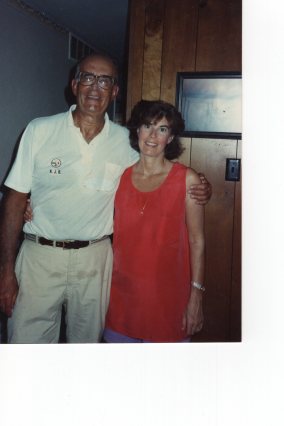 As we talk, we take turns skinning and slicing the bait squid into triangles. You put them on the hook with the pointy end dangling so they’re super appetizing to our cold blooded quarry. When we use live minnows, they are kept in a perforated bait bucket hanging from the stern cleat bobbing up and down in the briny water. Since the minnows inside are constantly oxygenated with fresh water, grabbing one inside the bucket, holding on to it as you put it on the hook through its mouth, challenges both our dexterity and our will.
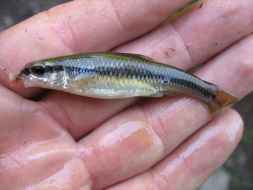
Baited Minnow
Many people are squeamish about baiting minnows, but if you’re a ‘real’ fisherperson, you do it and do it quickly so you don’t harm them. The hook does not hurt their mouths; however they don’t like being on a leash so to speak and so move rapidly trying to get away. How can we blame them? Would you like to be a bait minnow? Fortunately, dad and I believe they have no idea about their possible fate. If they are lucky enough to survive inside the flounder’s mouth, we always set them free. (Even though they’ll most likely be eaten sooner or later by another passersby.)
A good drift can last 30 minutes, so we have plenty of time to bob our rods up and down, always making sure we hit the bottom each time so the flounder will see the bait. The bobbing of the rod is key to fishing for bottom feeders in salt water. When I was younger, my dad constantly reminded me to keep my rod moving – up and down, up and down in a slow rhythmic beat. Now, it’s second nature to me. I like the bobbing rhythm; it’s a sort of moving meditation that calms and soothes.
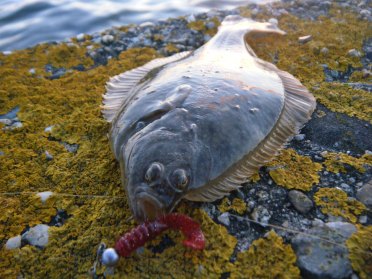
Flounder on Lure
When one of us has a fish on the line, the other reels in and gets the large net stowed under the starboard gunnel. Then quickly and steadily, keeping tension on the line and pointing the rod up, we reel and reel until we see the fish. Usually, when we see the fish, the fish sees us.
If it’s a bass, it usually jumps partially out of the water and sometimes breaks free from the hook. Other times when the flounder or bass sees the boat, it fights more. But the person doing the netting quickly gets underneath the fish, lifts it straight up and wala it’s ours! It’s important to carefully take the hook out of the fish’s mouth so as not to harm it. Next onto the stinger and over the side of the boat into the water.
If you wonder how our catch goes from alive on the stringer to dead in our frying pan or oven, we hit the fish’s skull just before the dorsal fin and instantly he or she is gone to fish heaven. A good fisherperson never breaks the skin or damages the flesh.
As I’m writing this, I’m imagining readers cringing and closing their eyes trying not to picture my descriptions. I, too, upon reflection am amazed how easily and without any moral/ethical angst, I embraced everything about fishing from baiting live minnows to the cleaning (gutting) on our beach house back porch. To me it seemed and still seems the most natural of human activities. To fish for food – catch it, kill it, eat it with thankfulness for its nutrition and sustenance. We’ve been doing this for millennia.
The sun is directly overhead, and we are getting hot and hungry.
“Do you want to go in or do one more drift?” My dad asks.
“Let’s do one more drift – a long one. It’s so beautiful today,” I answer.
“Just being our here is the gift. Catching fish is icing on the cake. Even when it’s bad it’s good”, My dad responds. This is a usual refrain. I’ve never known anyone who enjoys life as much as he does. I realize now, he mostly operated in the present. He was a man of very few regrets.
Dad turns on the engine and off we go back up the stream beside the Wetland’s Institute to catch another drift as the tide is turning. When the tide turns fishing is good. Thirty seagulls are swarming above a roiling on the water’s surface – a large school of blue fish are in a feeding frenzy. As the blue fish force the mullet to the surface, the seagulls dive and dive feasting and feasting.
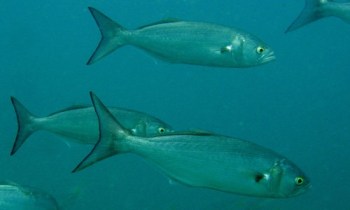
Bluefish
Dad throws in a line at the bow, and I cast from the stern. In seconds, Bam, Bam – two hits.
“ Get the net.”
“It’s right there. Grab it.”
“I can’t. No, I have it.”
“The seagulls. They’re swooping near my head. “
“They won’t hurt you. Watch the rod. Keep it up.”
“I am, I am.”
We laugh and whoop as we reel them in. Bluefish for dinner.
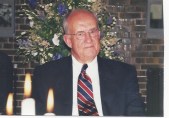
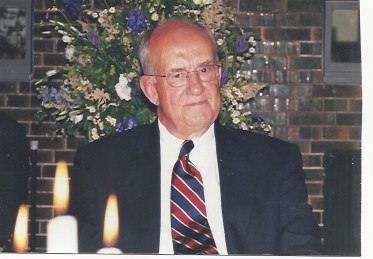
Now at 67, after scores of fishing adventures together, I can see my dad and me fishing and talking when I was 10, when I was 35, and later when I was 55. Sadly, we haven’t fished for ten years. My daddy, my dad died three years ago at 87. Yet, yet here he is. Brown eyes twinkling, face smiling as we head back to the marina. “Its always a good day when we’re fishing, Katesey.”








 Seeking The Wild