motherhood

Snippets — Renewing in the ADK

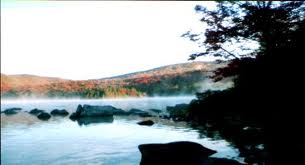
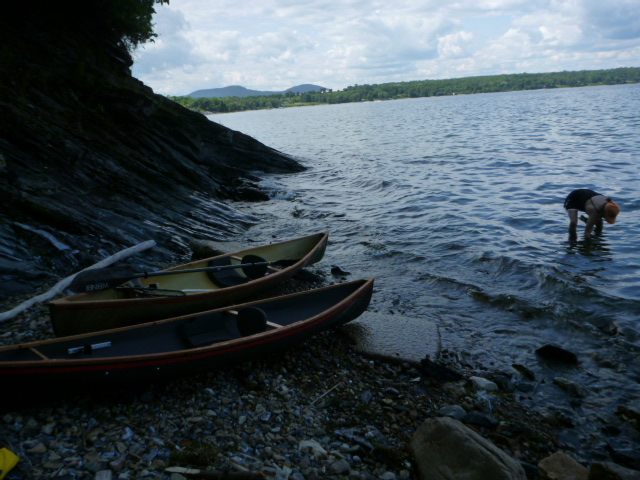
Two Hornbeck's on the shore of Lake Champlain

Two Hornbeck’s on the shore of Lake Champlain

I usually write essays, drafted and tinkered with over many weeks — sentences and words agonized over and then agonized over once again.

Now after 5 weeks in the ADK, I want to write only snippets. Too much has happened in these past weeks.  I could write a bulleted report of my doings but that would not only be boring but would only scratch the surface of my experience, would leave out the most important part — how I came to be more of who I am, not restored after the terror of the past three plus years, but  renewed.

Over these weeks, I have discovered through moving my body and mind and soul through experiences as diverse as restorative yoga, paddling rivers, hiking mountains, grading students’ essays, chatting with friends, attending concerts and theater, shopping, eating, and visiting with family and friends that I am different from when I left Stewartstown, PA.  I am my old self and my new self.  The anxiety, pain, and fear that was my daily and hourly experience has vanished, and I am in a foreign land, one in which I want to stay, permanently. If I had to sum up my new place, it would be with one word — perspective.  My perspective has shifted, shifted to a place that I plan on staying for quite awhile. It feels so  good to be here, seeing and feeling from this place that current or future conditions can’t shake so ferociously.


The Beauty of Opposites

The beauty of opposites

The beauty of opposites

Imagine you have spent all day at the hospital sitting next to your 20 year old daughter as she struggles to heal. Imagine that she has been in this hospital for 6 weeks and counting. That she has had blood transfusions, CT scans, MRI’s, and blood tests galore, and still she bleeds internally. The doctors keep trying one treatment and then another. They bring in one more specialist, confer with doctors across the United States, all to no avail. Your daughter has lost 35 pounds she didn’t need to lose; she is 5’10” and weighed 128 pounds before all of this began. As you sit and watch her doze, you work on your laptop answering email from work, work you have no interest in attending to. Your daughter is slowly bleeding to death. And all you can do is be on full alert, learning about her condition, learning about anatomy and physiology and abdominal infections when your expertise runs to organizing teaching workshops and helping students learn to write. You sit and try to do your work and care for your child at the same time, something you have always done as a working mom. Only now you are trying to do both while filled with the kind of terror and anxiety that comes with every parent’s worst nightmare. Your child is critically ill. She is not getting better. She is getting worse.

I leave our home in the morning for my daily vigil at the hospital and go back home at nine PM after the doctors have come by for their daily check in. The doctors are kind and serious and always calm. Their calmness frightens me even more than their newest idea for healing my child.

At ten PM, I am home, numb and wired. My sweetheart and partner, Kevin, has made me mashed potatoes, roasted chicken, and green beans, one of my favorite comfort food meals. There is always plenty of red and white wine. He hugs me, arms wrapped softly around in blissful completeness and waits patiently for me to talk or get a glass of wine or take a shower. He doesn’t hover or ask too many questions. He is there, a quiet, calm, and nurturing anchor, my overnight mooring. My safe-spot for the night.

This was our life for most of two and half long years until today when we are once again doing something ‘normal’, something fun. Today we are light-headed and hearted with the reprieve of sickness and hospitals. Today we wear shorts and T-shirts and feel like children finally let out to play in the warm sunshine. And we are playing, playing in kayaks on the Gunpowder River in Maryland, a place that doesn’t look much different than it has for the past 20 years we’ve been paddling it. As I step into the 50° water wearing neoprene socks inside my water shoes I wonder why my feet always burn with cold before my calves, arms, or hands.
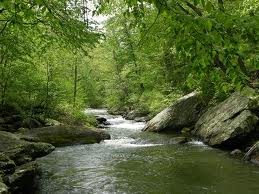
Gunpowder River, MD on a day in June, 2013

Gunpowder River, MD on a day in June, 2013

“Do you want spiders or ants?” asks Kevin smiling as he puts on his new REI khaki fisherman’s floppy hat. “Spiders”, I say with complete nonchalance. This is our first paddle of the season, and we’re lucky there aren’t worse in our kayaks after the long, damp winter our boats spent overturned on wooden horses on the edge of the woods in our backyard. Earlier we hosed them out but apparently, a few critters have survived our hose tsunami.

As we climb into our boats, the 94°air temperature sinks to 80° on the surface of the 50° Gunpowder River water. Sometimes the temperatures are so extreme between the air and the water that clouds float along the surface rising three or four feet so that it feels like you are paddling through chilly fog on another continent. But not today.

Today it’s perfect. Cold, clear water, bright blue sky, and hot sunshine beat on us in between the oaks, sycamores, and poplars that shadow the river. The pale pink fairy-cap shaped Mountain Laurel blossoms peep out of the jade velvet feather- shaped leaves as they climb up the steep hillside banks, covering them with sweet scent. Invisible Wood Thrush flute back and forth; a Louisiana Water Thrush flies across our path and lands a few feet alone and ahead of us, moving each time we come within the ‘too close’ zone. A Kingfisher scolds and darts in a straight line diagonally in front of us, as a score of colorfully dressed hikers wave and pick their way along the rocky trail running parallel to the riverbank. Their t-shirts and shorts sag with humidity. Patches of sweat circle their armpits and outline their spines as we sit coolly in our boats, dipping a leg overboard or cupping water onto our shoulders, neck, and chest whenever we wish to enjoy the shock and shiver of icy water running down our spines. Ahh. Instant hot to cold.

On this hot June day, we paddle together for a stretch and then apart just as we do in life, chatting about what we each see. It’s nice how we notice different things though we are paddling the same river at the same time in relative proximity. Now we are side-by-side steeped in the quiet that comes with knowing someone better than you know any other. Then a riffle or a shallow stretch appears with only one deep channel, so we part. Kevin asks, “Do you want to go first?” And I, just about every time, respond, “No, I do not want to go first.” Following instead of leading, I can maintain my semi-meditative state. That’s impossible when I’m the one having to pick the watery path through the rocks and riffles, the brushy overhangs and low branches. Sometimes entire trees stretch across the river jolting me into super consciousness. Today, I need my semi-meditative state for it has been a long time since we paddled anywhere together and two years since we paddled the Gunpowder.

My daughter’s illness stopped us in our tracks two and a half years ago. The 125 days in Baltimore hospitals, the middle of the night Emergency Rooms, sitting for hours on a tiny hard plastic chair in a corner of a tiny holding room, my daughter laying half asleep if the pain and fever weren’t too bad or curled in a fetal position if it was. Her father and I or Kevin and I waiting, waiting, waiting for the results of blood, urine, CAT scan and the inevitable admitting and then more waiting, waiting, waiting until there is a clean room (there never was, and so we waited a couple of hours more). Finally a room was ready and we settled my daughter there (the hospital had become so familiar it was a second-home kind of place to her now) and then driving the one hour back home, north to Stewartstown, or crashing several minutes away at my daughter’s apartment. Either place, I arrived wired, tired, and numb. Usually, I drank some wine or took an Ambien or both, and then crashed for five or six hours of a, hopefully, dead woman’s sleep. A sleep without nightmares was a good night indeed.

A sick child is no fun. It takes you by the throat and then the chest, chains you to the floor through an iron claw hooked deep, down inside your heart, and every time you move, it yanks down hard, its steely grip breathtaking and unyielding. And since you can’t surrender or leave town for the islands, you heave yourself up, and breathe knowing only one thing. You will do whatever it takes to save your daughter. Screw the iron claw and the mind-numbing fear. Each time it strikes, you will sit and breathe and gather yourself so that you can perform clearly and calmly. You will continue your dogged act of competence and serenity. You are the mother. You are the one your daughter will take her cue from. If you are steady and collected and proactive, then she will also be. You tell yourself over and over, “if she can take this, so can I.”. In this, there are no choices. We are moving onward, onward, onward. That’s all there is, head up, one foot in front of the other, trudging, trudging, trudging with a pasted smile on your face at least some of the time.

A daily trudge until today, when here I am in this relaxed, semi-meditative state floating on water with birds singing and green everywhere I look — the amazing and beautiful experience of opposites illustrated for me on this river. The sound of dipping paddles, laughing hikers, and silent fisherman is salve to the traumas of these past many months. I smear it all over my consciousness and breathe, smiling and happy. I think, “Be peaceful. Be calm. Let go.” These are my mantras of the past 24 months. I float quiet and far away from those frightened moments. I float quiet at last.

No matter how many times we paddle this river or even the same stretch of this river, it is new-found to me and I think, to Kevin as well. The scene changes: the woods, animals, birds, and people alter paddle to paddle, as does the light, weather and temperature. We have paddled and fished in winter with snow floating down around us, each of us coated in neoprene and wool, warm despite the frigid water. Once we surprised a Great Blue Heron as we rounded a bend, and he squawked and flapped awkwardly trying to move faster than his multi-jointed wings could lift him up and away. We both gasped at the same time, then shot each other a smile that said, “How lucky we are!” To be that close, to round a bend and run smack into energy and being and movement. It thrilled us for days.
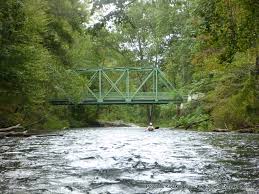
 

Masemore Road Bridge

Masemore Road Bridge

Today, we laze along – both in no hurry. Usually, I am the slow one always stopping to look, to see, to get wet. My daughter and Kevin, often chide me for stopping so many times on a hike or a paddle – they complain they can never ‘just go’ when I’m along, saying, “You constantly stop. First, you’re too cold so you put on your jacket. Then you stop a bit later because your boot laces are too tight. Next you have to pee. Finally, when we think we’re on our way and that there will be no more stops, you say you need the green bandanna from your daypack so you can swat the black flies. Since we don’t want you to take off your backpack yet one more time, we spend several minutes rooting around trying to find this much needed bandana aka fly-swatter, as you stand there directing us on its location (which is always at the bottom). But that’s not the last of it. Incredibly, a quarter of a mile later, there’s yet another stop to take your jacket off and plunge it back inside your pack. You are now hot instead of the previous cold. We have come full circle, and finally, unbelievably, we hike on without further delays.”

Since they have embellished their account only minimally, what can I say except, “You’re right.” I’ve stopped defending myself. They don’t care that I want to be comfortable, neither too hot nor too cold. Nor do they understand what they would call my ‘strolling’ versus ‘hiking’. I wonder why we are in a hurry. Who cares how long it takes to get there? The there can be in upstate New York on the summit of Porter Mountain in the Adirondack high peaks, 6 miles and 4000 feet up or a 7 mile paddle on the Chubb, a meandering prehistoric-looking river close to Lake Placid. I don’t believe in rushing when out of doors; that’s what I have to do inside most days.

Even so, I do understand their point – who wants to begin an adventure and then stop unexpectedly a whole bunch of times before you’re halfway there? It wrecks the momentum and annihilates the crescendo of enthusiasm and excitement that builds as you move further along into the wilderness. We all have a hankering to move onward no matter where we are – advocating for medical expertise or walking in the woods.

Today, Kevin’s only comment to my voicing, “I’m going to pull over to this bank for a minute” is, “of course you are”. I know he is warmed by my unchanged pattern. Maybe our lives have seen drastic changes because of my daughter’s illness, but we are still essentially the same. This stopping along the way is an affirmation for each of us. We have once again reclaimed the peace of being together out of doors.

Six months ago, I couldn’t imagine as I sat in Johns Hopkins Hospital nursing my daughter’s devastated body that I would ever paddle or hike or float seamlessly from one peaceful moment to another. For days and months, I couldn’t imagine while witnessing my daughter’s concentration camp appearance that I could move onward lightly and effortlessly basking in the now. Yet, here I am. Dipping my paddle in and then out of the river as it moves along, the scene and my life changing moment to moment, day to day.
Into the Wilderness

ADIRONDACK  MOUNTAIN STREAM

ADIRONDACK MOUNTAIN STREAM

Amelia M. Murray, the maid of honor to Queen Victoria, camped in the Adirondack Mountains in 1855 with the Governor of New York, Horatio Seymour, his niece, and three guides.  While on

Adirondack Autumn Landscape Where Amelia Murray Hiked

Adirondack Autumn Landscape Where Amelia Murray Hiked

her five-day trip, she learned how to sleep on a hemlock bed, to bathe in Saranac Lake, and to hike sixteen miles in one day through a dense forest filled with “gigantic timber felled by storms…deep bogs and slippery rocks.”  She did all this while wearing a corset, which greatly restricted her breathing capacity, and very unsensible shoes.

Although she was a refined English lady, she carried her fair share — “a basket and a bundle.”  Throughout her diary account of the trip, she makes light of the dirt, rain, thunder, damp bedding and clothes.  She brags about her “London portable soup” which she had brought from England a year earlier and claimed was still in “good preservation” although one should “add lemons and a good store of sugar, brown and white” before eating it.  Amazing.  Her account is enthusiastic, joyous, and chatty.

She was a woman of privilege, an English lady.  Yet she was able to escape “polite society” long enough to have an adventure out of doors in the company of the genteel (the Governor) and not so genteel (the guides).  Although she writes after the trip that it took her “three days at Utica …to recruit and repose” herself, she had had a fine time and welcomed the chance to do it all again.

What is this need, this trenchant desire we have to be in the “wilderness”, to connect with the natural world?  Why would an elegant and refined lady of the 1800s who had probably never ventured much further than a stroll down an English country lane seek the untamed woods of New York State?  She sought adventure, yes, but more than that, I think.  She sought to discover a part of her that had not been tested, had lain dormant.  She wanted to test her fearlessness, her courage, her adaptability.  Normally, tests of fearlessness and courage are associated with men as men’s goals.  Men are supposed to like adventuring; they want to be tested in nature.  Isn’t that what the armed forces ads used to say, “Come see the world. Come adventuring with us.”?  But women need to be tested too. Even girls of thirteen seek adventure.

Last Sunday, my daughter Campbell announced she wanted to go fishing with me down by Cross Mill in Cross Mill stream about one and half miles away.  I thought she was kidding.  Even

Campbell, age 12, my outdoor girl.

Campbell, age 12, my outdoor girl.

though it was sunny and warm for February, 55 degrees, there were still patches of snow about, and I knew the water would be icy cold.  She persisted.   After packing an old red school backpack with a water bottle, water shoes, a towel, and a fishing rod, she pronounced herself ready to ride her bike down to the stream.  I couldn’t convince her to walk, arguing unsuccessfully that the roads are narrow and winding and in some places cars fly by at forty miles an hour. Ultimately, I agreed to her riding the bike as long as she stayed with me.  I wanted to walk.  We spent three hours walking and riding to and from the stream and playing in the water.  We waded in the frigid creek, our feet aching and numb.  We skipped rocks, looked for crayfish.  I snoozed in the sun on the brown picnic tabletop in between commenting to Campbell about her solo rock skipping contest.  On the way home, we spotted a male pheasant a few feet away, scurrying through the bushes by the side of the road.

Why had Campbell wanted to go? Did my daughter latch onto the idea of riding off with fishing rod, towel and water bottle because she needed to get away, needed to be out of doors?  Or did she want to go adventuring in order to test her mettle by  riding her bike to a place she hadn’t fished before and wading in frigid February water?  I doubt she could answer these questions or would even want to.  She’s thirteen.  She just wanted to go.

She just wanted to go like Opal Whiteley, a writer who grew up in Oregon in the early 1900’s.

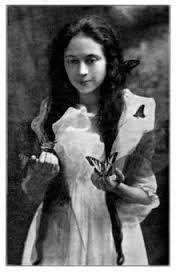
Opel Whiteley, Nature Writer

Opel Whiteley, Nature Writer

Whiteley wrote in her diary at about age seven, “I like to go in among the rushes where the blackbird s with red upon their wings do go.  I like to touch fingertips with the rushes.  I like to listen to the voices that whisper in the swamp.  I do so like to feel the mud ooze up between my toes.”  Campbell could identify with that.  This desire to connect with nature and to seek sensory experiences in it is common to most of us.   My daughter and Opal Whiteley aren’t the only young girls who’ve found adventure and joy in nature.

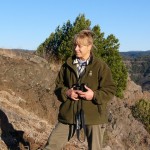
Hannah Hinchman, a contemporary writer and visual artist, created an enchanted world in the woods near her home when she was a teen.  She spent whole days attired in a wood nymph dress dancing among tall oaks and pines, performing rituals she had “learned “ from the woodland fairies.  She “wanted these adventures to form an unassailable world, composed only

Hannah Hinchman, out door writer and artist.

Hannah Hinchman, out door writer and artist.

of pure things.”  As she grew older she abandoned her woodland fairies and her fantastical view of nature, yet nature continues to be her solace.  “If I were about to pull the trigger and happened to hear a red-winged blackbird, I doubt that I could complete the act.”

Sometimes this desire to connect to nature becomes a pathological need, a self-medication for mental or physical illness or ordinary loneliness.  When I was enduring and battling a brutal divorce, I used to run long and often on the Panther Branch trail in Maryland.  The two mile trail curves through the woods around house-sized boulders, decaying deadfall, and foot high maiden hair ferns edging the stream and winding up to the top of a hill.  I used my runs there as therapy, going over and over all the terrible lies and injustices.  I recounted the same sad incidents and betrayals in my head; the dialogue never changed.  “He said this; can you believe it? And then he did that on top of everything else.  Doesn’t he even care about his children?”

As I ran, I ran, literally and figuratively, through this dialogue every time.  I spoke sentences, paragraphs in my mind as if I were speaking to a therapist or friend.  As I hit the chest high boulder with the red columbine I would begin my diatribe.  I couldn’t stop it; it rolled on and on of its own free will.  After the divorce was final, I still began this ugly conversation whenever I got to the red columbine boulder.  I did it unintentionally, unconsciously, until I consciously put an end to it.

Sadly, after I’d resolved my divorce and the ugly voices, I no longer wanted to go to the place.  The Panther Branch trail, which had been my solace, my comfort, my dumping ground became my nemesis, a reminder of bitterness, hurt and anger.  I felt as if I’d deposited every vengeful thought and desire in its rocks and branches and they were all there waiting for me.  I didn’t go back for years and then only occasionally.

For me, the Panther Branch became a place that was lovely on the surface but underneath was seething with unpleasantness.

Why do we attach meaning to place?  Does it make it more real, make it more our own?  I heard a psychologist say that artists are often depressed because they try to find meaning in every single thing, and when they can’t find it, they become despondent.  Most of us don’t go that far, yet most of us do attribute some meaning to place.

Places are the tangible stage sets for our happiest and saddest moments, celebrations, rituals and events. Hospital bedsides, altars, and babies’ rooms are the backdrops for life’s most poignant moments. Some cultures construct places to house these significant events – churches, burial mounds and grounds, concert halls, and court rooms. Others, like Native Americans, believe some natural outside places hold deep significance; these places contain spirits or powers that other places do not.  They are hallowed or evil, full of the universe’s energy or places of death.

Place enriches or diminishes what happens within it.  Sipping tea in front of a roaring fire is not the same as drinking tea at the local Seven Eleven store.  Place can change our mood, alter our interactions with one another in positive or negative ways.   Having a conversation in a basketball court or in a room full of whining children is not the same as having a conversation beside a woodland stream or in a quiet, candle lit room.  “Place subtends and enfolds us, lying perpetually under and around us.  Place…is the bedrock of our being-in-the-world,” writes Edward S. Casey, author of  Getting Back Into Place.

I just came back from spending two days in New York City.  I love New York.  I love its

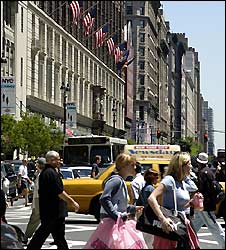
Manhattan Street Scene

Manhattan Street Scene

overabundance.  It’s so full of everything human, overflowing with everything people make. Art, buildings, fashion, food, noise, dirt.  People are everywhere.  On foot, in cars, on bicycles — talking, driving, and honking.  Walking around the city is like walking a human obstacle course; you are blasted with people, color, and noise — snippets of intimate conversations, a man on a space age motorized walker rolling along the sidewalk, pigeons under foot, shop window after shop window stuffed with every conceivable and inconceivable object.  Food markets, their cases over laden with hundreds of cheeses, ten types of proscuitto, twenty pates, truffles, black or white, sauced or canned, marinated or plain. The stimulation becomes overwhelming; the noise eventually becomes too noisy and then it’s time to go home.

After 48 hours of being high on the over-stimulation, I crashed and felt like Amelia M. Murray.  I needed three days at home in the woods in rural Pennsylvania “to recruit” myself.  Just like Murray, I wanted an adventure, a taste of the unfamiliar.  And when it was over, I wanted to repose — in my own place.

Adventure Calls

dolly-sods-wilderness-area-west-virginia-mark-vandyke

Dolly Sods West Virginia


Adventure Calls

After I’ve been cooped up in my office for too long, I yearn for an adventure that doesn’t involve hosiery or cell phones.  I long for the rush of a wilderness adventure with all its real and imagined dangers.  One where I’m camping along the Yukon River in Alaska one hundred miles from anywhere, watching grizzly bears come down to scoop up twenty-five pound salmon with their paws.  Or one where I’m backpacking in the Appalachian Mountains and a black bear sniffs around my tent.  But I don’t want too much danger.  Not like the adventure two mountain bikers had in California when they encountered a mountain lion while mountain biking.

They were riding along a narrow brushy mountain trail, talking about life and the scenery when suddenly a mountain lion leaped out and swatted one of the women off of her bike.  The mountain lion chomped down on her head, dragging her into the brush as her friend grabbed hold of her legs and pulled, screaming at the predator.   Luckily another biker came along and heard the screams.  He ran into the brush, picked up his bike, and threw it at the mountain lion all the while yelling as loudly as he could.  It worked. The lion slunk away and the injured woman was flown to shock trauma.  Later that same day rangers found the remains of another man also taken by a mountain lion, perhaps the same one.  The fellow who saved the day told the National Public Radio correspondent that he’d never go mountain biking alone or in that part of the mountains again.  I wouldn’t either; that’s too much adventure for me.

I think we forget that there is danger in the wilderness, in the woods and in the mountains of this country.  We’ve developed so much of it into cities, towns, farms, and suburbs that we forget another world is out there. And it’s not tame.  I’ve been reading Annie Dillard’s, Living Like Weasels.  She tells a story about a naturalist whom a weasel bites on the hand:   “The man could in no way pry the tiny weasel off, and he had to walk half a mile to water, the weasel dangling from his palm, and soak him off like a stubborn label.”   What a terrifying picture I had in my head after reading that.  Or the story I read in Adirondack Life magazine about a group of college students who tried to ascend 46 Adirondack high peaks (over 4000 feet) during a nineteen day Christmas vacation.   They didn’t make it.  One of them fell on a steep slop and luckily only sprained an ankle.  Still it took all day to get him out with the others carrying his equipment through snow so deep they “found themselves walking on the tops of small trees.”  People die in the Adirondack Mountains in the winter.

I don’t want a wilderness adventure that intense.  I don’t want to be traumatized or injured.  I don’t want to come out damaged, psychically or physically.  I want a wilderness adventure that will reconnect me with nature, one where I will be astonished and amazed, exhilarated and perhaps a little bit frightened.  I want a wilderness adventure like the one I had backpacking in the Dolly Sods Wilderness Area.

It is Memorial Day weekend and my husband, our dog, Jo, and I go backpacking every Memorial weekend in Dolly Sods.  Dolly Sods, West Virginia is a special place because it looks exactly like the northern Canadian tundra although it is only five hours away from Baltimore, Maryland. Timbering and fire changed the entire ecology of the mountain’s ridge in the 1800’s.  Before that happened, Dolly Sods was covered with seven to nine feet of humus and a red spruce and hemlock forest where, according to the Dolly Sods web site, “the average tree was four feet in diameter.”  After the forest fires and timbering, the rich land became a thin rocky soiled moor covered with bogs, streams, and dwarfed, bent evergreens about six feet high and 100 years old.  In 1975 Congress designated it a wilderness area. Congress didn’t need to tell us it was a wilderness.  We already know.

We love going to Dolly Sods at the end of May because anything is possible.  Sometimes it’s warm and the wild azaleas are blooming, fragrant flame orange.  Sometimes we hike across glacier-like snowfields three acres wide and two feet deep.  We have to be prepared for snow or rain or mosquitoes and 75 degrees.

We arrive mid afternoon and hike down the Blackbird Knob Trail a couple of miles to Red Creek.  Red Creek is about twelve feet wide and in most places no more than six inches deep.  We camp by its banks, eat freeze-dried shrimp, and  homemade spaghetti and drink cabernet.    We are back in heaven.

Dolly Sods Brook Stream

Red Creek

The next day we hike five miles further along the trail through the forest and back out into open land.  I love the openness and the views especially after the cloister of the woods.  We camp again beside water, this time a small brook with steep 3 ½ foot clay banks

At about 5:00 AM I wake up.  I feel as if I’m floating, as if I’m sleeping on a waterbed.  And in a way I am.  It’s pouring, and the floor of our tent is sitting on an inch of water.  I awaken my husband.  About an hour later at first light, the rain becomes a drizzle. We gulp down some granola and water, pack up our camp and walk to the water’s edge.  The brook has risen to the top of both banks and it’s rushing, not with too much force but enough to knock us over.  We hike up stream and find a spot where the water looks calm but is four feet deep.  If we walk  across we’ll be soaked and the clothes in our packs are already damp.  We can’t afford to walk seven miles in wet clothing when the air is 50, maybe 55 degrees.  It’s  perfect hypothermia weather.

So we take off our clothes and boots and walk across naked with our packs on top of our heads like African women carrying their laundry.  The water is surprisingly warm. Jo swims across and then shakes on the opposite bank as we dry off, get back into our clothes and boots and hike on.  At the next stream, we do the same thing.  It begins to rain lightly as we got closer to Red Creek.  I am feeling quite macho, high on adrenaline, and into the whole wilderness experience.

When we arrive at Red Creek, it has turned into a raging river, twice as wide, who knows how deep, large boulders sending waves of foaming water into churning whirlpools.  Three guys stand soaking wet, on the other side yelling at us.  We can’t hear them over the roar.  They yell again as we venture onto a boulder at the water’s edge.  “Don’t try to walk across.  You’ll get swept down stream.  We barely made it.”

Dolly Sods Stream

My husband wants to get across if we can.  He has power cord, a very strong thin rope only 1/8 inch in diameter and a carabiner, a steel D-shaped coupling link used in rock climbing.  He ties a rock to one end of the power cord and throws it across to the guys on the opposite bank.  They catch it on the third try.  Then they throw it back to us.  We construct a pulley, using the carbiner tied in the middle to ferry our backpacks across.  It works.

Now to ferry a person.  I go first.  This time I can’t take off my clothes, not with three guys standing there.  I’ll have to be wet the last two miles.   I keep my boots on too.  No telling what’s under the water.  I hope the guys are strong enough to pull me across fast because there is a terrifying rapid in the middle of the creek where the latte colored water churns and rises and swirls like a hungry thing.  It has slung each backpack out like a pea in a slingshot ready to shoot it down stream. I am shaking as I wade into the water and grab onto the cord.  I get to the middle. The current sucks my feet off the creek bottom, pulls them down stream and I am suddenly on my stomach, my legs strung out like the tail on a kite.  I hang on as the cord stretches and stretches. All I can see is me being swept away like a twig or a leaf bouncing from rock to rock, unable to grasp anything that can stop me. I can hear my husband yelling, “Pull. Pull.”  And they do.  Just as I think I can’t hold on, the cord relaxes and my feet feel the river bottom.  I have made it.

Jo, our dog is next.  My husband ties her up with a makeshift harness of webbing straps and clips her onto the carabiner.  He’ll go across with her, holding onto the dog with one hand so her head won’t go under and holding onto the power cord pulley with the other.  The guys begin to pull.   Jo’s head is above the water. They hit the mid-stream rapid.  The cord stretches out and out and snaps.  My husband and Jo go flying downstream bobbing and turning under water.  I scream, “Hold onto the dog.  Hold onto the dog.”  I know if he lets go she’ll be swept away and be gone.  My husband grabs onto a rock, pulls himself and Jo into shallow water and they are out of danger.  But they’re on the wrong side.   I’m shaking as we re-throw the cord and tie it back together.  We try again.  I can hardly bear to watch.  They hit the bad spot; the guys pull faster. The cord holds.  They are across.  Shivering, we hug, and laugh and kiss each other.  We’ve done it.

After we get back to the car, change, eat, and have a beer, we are feeling quite triumphant.  We’ve had an adventure, a real wilderness adventure.  It was scary and challenging and daring.  And we had made it.  We feel like pioneers who have survived a flood, modern day adventurers who’ve made the summit.  We can’t wait to tell our friends and our families.  I talk about it for weeks.

Freedom, Space, and Women Out of Doors

Freedom, Space, and Women Out of Doors

Outside I can see in a way I can’t indoors.  Outside I’m brought back to another rhythm, primordial and familiar.  Wind rustling across acres of dry corn stalks grounds and rejuvenates me. When children and work bear down too hard, I yearn for the freedom of space and the possibility of adventure.  I yearn for the freedom to breathe fresh air.  My breath moving in and out, my chest rising up and down purges the stress and clutter I’ve collected indoors.  I yearn for freedom from piles of laundry, noisy children, ringing phones, and unmade beds.  Outside those things don’t exist.  Looking out over miles of rolling hills gives me the illusion of escape.  Escape from routine, escape from the mother, writer, teacher, homemaker part of me.  I become what I think of as myself.  All the others fall away. The only voice I hear is my own and if I’m lucky, the honks of snow geese flying overhead.

Last Tuesday I walked my three-mile loop in southeast Pennsylvania. Up Hickory Road, down Kefauver Road to Cross Mill where I stop and stand by the mill stream in cold weather and sit in the cooling water when it’s hot.  It’s halfway.  Peaceful weeping willows sway on the ripples; minnows scatter when I step off of the bank.  I listen to the water’s gurgles and chuckles as it flows towards the village of Crossroads.  I walk around the restored mill, painted milky red.  The dimples in the original glass panes act as a prism reflecting mauve light. It’s nice bored teenagers didn’t break all of them years ago before this place became a tiny park.  A framed sign stating opening dates, demonstrations and times is attached to the wall beside the front door.  Cross Mill, donated by its last owner Harry E. Cross, ran continuously from 1826 until the 1980’s.   An undiscovered treasure of a place, it is on both the National and Pennsylvania Registers of Historic Places.  And although it is one of the York County Parks, it is lovingly operated and meticulously tended by a local volunteer group called, Friends of Cross Mill.

I walk on — up the steep hill to Pheasant Hill Farm where they breed pheasants and quail for hunting.  The two hundred acre farm rolls out along a wide ridge and down to shrubby hollows thick with deer.  People come here to hunt and shoot these birds, bred solely for this purpose.  One wonders the sport of releasing birds born in captivity, hand fed, and then let go in the nearby fields of dry Amaranth only to be chased by dogs and shot.  The hunters do wait a bit after the birds are released. Then they use dogs to flush the disoriented birds into the air so they can be shot in flight.

Paullina Brandreth would be outraged.

Brandreth grew up in the late 1800’s where she spent much time on her family’s 24,000 acres in the Adirondack Mountains.  There she hunted pheasants, bear, and deer. From the age of nine she wrote hunting and fishing articles under the alias, Paul Brandreth and as an adult in the early twentieth century, she waged an editorial campaign for still-hunting when it wasn’t popular.  Still-hunters stalk their prey alone, waiting motionless in places where deer, or birds travel or rest.  They do not shoot their prey until they have a clear kill shot.  Brandreth decried hunting deer with dogs, or driving deer with groups of men toward the gunners.  She was successful.  Today still-hunting is the most popular way to hunt deer in many states.  However, on private hunting camps and farms where the animals are bred, the rules do not apply.  I wonder how much it costs to kill a semi-tame pheasant.

As I walk by the farm I hear the pop of a gun close by.  I marvel that people can march around fields and woods with rifles and shotguns slung over their shoulders or across their torsos posed to shoot if anything suddenly appears.  Bullets from a rifle can travel up to one mile. Shot from the shotguns these pheasant hunters are carrying can travel more than one hundred yards, and I’m only fifty yards away. The hunters look at me and keep walking, thankfully, in the opposite direction, their dogs sniffing along the ground searching with their noses for those terrified birds.  I think about freedom, the hunters’ freedom to hunt and to have an adventure.  I wonder who am I to dictate how they shoot those birds.   I’m not opposed to hunting per se, just the sort of hunting that resembles a trap shoot.

I don’t always walk on the road; many times I walk in the woods or in the fields.  My decision is often based on whether it is hunting season or not.  I don’t like getting shot at. Hunting season begins here in November and ends in early March.  Then I waken to gun shots most Saturday mornings.  I resent the inability to walk up through the woods behind my house and down the other side to the stream during those months. When hunters are about, I may be mistaken for a deer.

And since I’m a woman, my sense of freedom has to do also with my ability to feel secure from harm by men.  In the city or suburbs I’m aware of those around me, those that might do me harm.  In the city I may become their prey.  At least in the country when it’s not hunting season and I’m bushwhacking in the woods or across fields this is not a concern.  The possibility, the reality of freedom exists there. And that nagging awareness of possible danger, which all women experience whenever they’re outside, vanishes.  I’m free and completely safe.  I’ve spent entire afternoons lying, relaxed and unafraid, on an ensolite pad in the middle of the woods reading a book and snoozing.   I’ve always felt safer off the trail in the woods than anywhere else outside.

I suppose Gretel Ehrlich, who wrote The Solace of Open Spaces, felt safe from men, at any rate, when she was a shepherd in Wyoming. Being thirty miles away in any direction from another human being would provide that security at least.  But then she had other concerns.  No phone, no contact with anyone for two weeks at a time.  That is a sort of freedom and a sort of confinement. Freedom to roam wide open spaces, setting one’s own pace and thinking what one will and the confinement of being isolated and unable to leave. Ehrlich loved the wide openness of Wyoming writing, “Space has a spiritual equivalent and can heal what is divided and burdensome in us.”  Yet she felt the duality of such freedom: “There’s too much of everything here. I can’t pace myself to it.”   She spent her days outside looking over one hundred mile views and hoping she’d find the next water hole for her thousand sheep and the small trailer filled with food and water for herself.  She was afraid she wouldn’t find them.  But she or the sheep always did.

Space represents freedom and adventure, but also danger and its sister fear.  When we’re outside there’s no shelter from predators imagined or real.  Alone outside we recognize our vulnerability, but we also recognize our willingness, our trenchant desire to be where the action is.  We want to attend the show, see what’s going to happen next. We know we’re vulnerable to the physical elements of weather, people and animals.   But we also know we’ll be present to hear wind playing music on 100 acres of dried corn stalks, to see trout lilies’ and spring beauties’ first blooms, to break ice thin as sheets of rice paper edging a stream with our boot. That is what draws me — this yin and yang of my recognized vulnerability and my willingness to be vulnerable at the same time.  It’s a trade off.  If I want to be outside then I have to take some chances.  Will I be cold, hot? Will I chance upon a fox trotting by pretending he doesn’t see me?  Will I see a hawk snagging a rodent, or will there be men with guns? We go outside to be surprised.

Last week I decided to take a different route when I came to Pheasant Hill      Farm.  I walked up Rock Jim Road to a place where I couldn’t be seen from the farmhouse, barns, and pen.  Then I struck out across their fields, aiming for the woods and stream behind my house – a short cut of sorts. I was trespassing, but I didn’t care.  I wanted something new, something daring. I got down to the stream and realized that finding a place to cross wasn’t going to be easy.  The water was deep and rushing after rain the previous day.  I walked up and down the bank thinking how foolish I was not to have considered this possibility.  My feet were going to get wet; the water everywhere was over a foot deep.  I found an old log light enough to push into a shallow section of the stream.  It only went half way.  I crossed on the log, stepped off and sloshed across.  Suddenly as I stepped onto the bank, a gunshot pop popped up the steep hill to my left.   How foolish of me – all for a change and a thrill.  I walked quickly to the right staying low along the stream bank aiming for the open fields adjacent to the woods.  That field I knew was posted and safe, even though it took me completely off course and made my original short cut a long cut. As I squished in my boots up through the breaks in the dry corn I felt exhilarated.  I had had an adventure of sorts, albeit a very small one.  I reached McCleary Road; home was around the corner.  The neighbor with the green Ford truck waved as he drove by.  I was back in civilization, feeling as though I’d just come back from a stint in the wilderness.