Families

Saying Goodbye

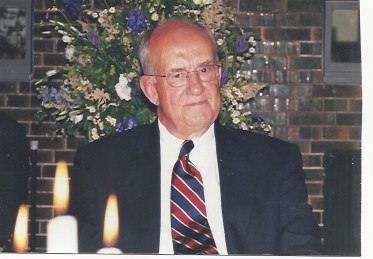
Dad Pic 6

It’s impossible to summarize a person you’ve known for 64 years into a short essay or biography. So after many weeks of thinking and making notes, this is a glimpse into thewonderful, loving man, I called dad or daddy depending on the occasion or situation.

My dad loved life, mostly everything about it. He loved people, anything to do with people. Playing golf, squash, poker and gin, selling rods and wire, serving on boards and committees, and eating, drinking and laughing with his family and friends. He was full of life, affectionate, robust, and warm. And until the last couple of years, always, always, always positive.

My dad called and visited people in need regularly, sometimes for years. Some of these people were sick or lonely; some were friends and some acquaintances. My dad empathized with them all, even though his life was mostly a charmed one, free of pain and sickness until the last few years he was here.

My dad loved nature. He told me not so long ago that when he was a teen, he used to walk up to South Mountain from his home on Union Street in Allentown. He’d walk alone all Sunday with a backpack filled with sandwiches, cookies, water, and fruit. He said he just wanted to be in the woods and away from the city. He just wanted to be.

My father’s love of fishing was all about being. Being on the water or in the water. Saltwater fishing from one of his boats or surf fishing on the beach or fresh water fishing by a stream or on a lake. When he was in college in fished with roommates on a lake in Maine rubbing motor oil all over his face and arms so that the swarming blackflies couldn’t get through to his skin. He liked adventure.

My dad was a fun and funny dad. He taught me to dance when I was two or three, cheek to cheek, holding me in his arms, and twirling me around. Later when I was six, he taught me how to jitterbug. He was a great dancer. He was also a tickling, chasing, hide and seek game playing dad. Roughhouse was one of our favorite games, even though I usually ended up with a bump on the head or a bruised knee or shin. My father never said ‘no’ when my brother or I asked to play. Our dad was a ‘yes’ dad until we became teenagers.

As we grew up, my dad made alone time for each of us children. He took me out to dinner here at Saucon Valley or later at Tio Pepe’s or Libertores in Baltimore. We continued those dinners until a couple of years ago. In fact, our last alone dinner at Saucon was in the Men’s Grill. I remember that evening thinking ‘I wonder if this will be our last time here together.’ It was.

My dad and I were big talkers. One evening, we talked for three hours straight over the phone, each of us with our drinks – dad with his Gordon’s and me with my wine. My mother finally stopped us asking, ‘how can you two talk for so long?’ My dad replied, “If Katie and I were driving cross-country, we’d never run out of things to talk about.” And we never did.

And lastly, I can’t end this piece without saying how incredibly funny our dad was. He could see the humor in absolutely anything. He was a real jokester. Whether it was knocking me overboard when we were fishing, or driving crazily as we water-skied and of course fell down, or hiding my mother’s stuffed mouse from taxidermy class in my bed, or rattling the bathroom doorknob as I was showering in my teens and me screaming every time, “don’t come in” – he was there smiling and laughing in delight. My dad was a happy man.

Now after two plus years of being really sick, my dad is once again safe and sound, strong and laughing. He is with his Mary and all of the others who left before him. Some mornings, as I leave my dreams and float in that middle space between dreaming and waking, I remember my dad is not here. Then I think – he is okay. He is home. I smile and say to myself and to him, I love you, Dad.

Observing Old Age

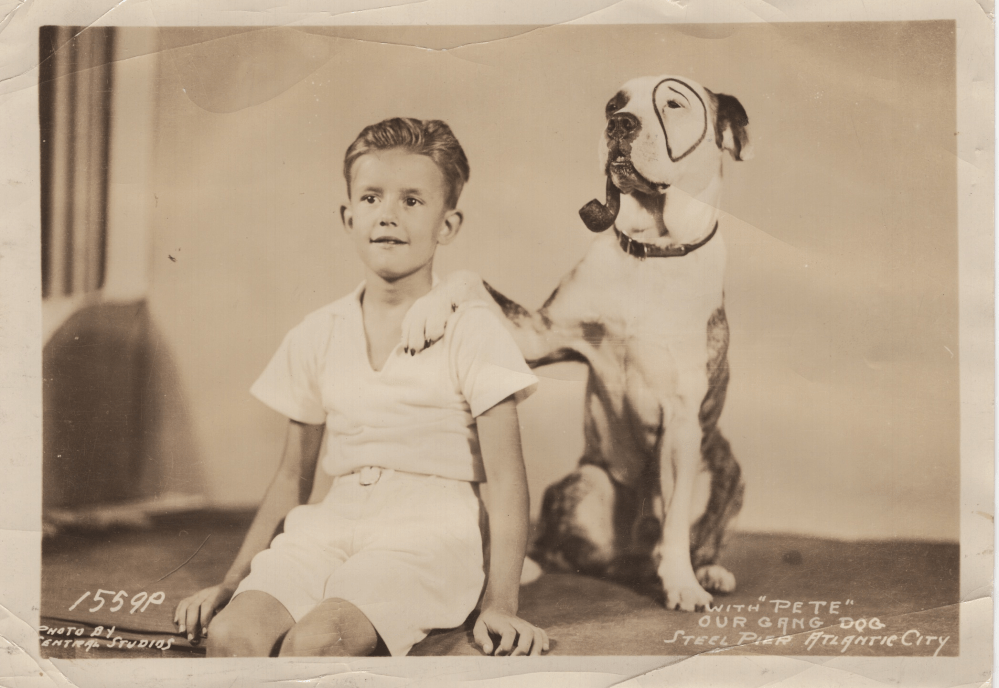
daddy-with-dog

Dad — Age 7 with Pete from Our Gang, Atlantic City — 1936

My dad thinks he’s James Bond. His Honda Accord license plate reads ‘007’. He’s 88 and uses a cane except when he forgets it because he’s feeling more like he used to at 80. I’ve learned over the past year to see my dad as a man who is finding his way on this last part of the trek, this last adventure that is his personal Mt Everest. It’s tough to get old and sick and lose your physical power. It’s hard to watch your parents age.

They aren’t the parents you grew up with. In many ways, they’re strangers who you’re getting to know all over again. Some say we children switch places and become the parents. For me it hasn’t been that simple. My dad is still my dad in some familiar ways. He still calls and gives me instructions and advice. Sometimes he makes a joke, something he used to do all the time.

And yet, my dad is not my dad. He isn’t as light and funny as he was for the first sixty years I knew him. He complains a lot about the food and service at his upscale retirement community, about the many doctors and medical persons he sees every week, about his lack of energy and general shittiness, although he would never uses that word. He’s mostly miserable and before he wasn’t.

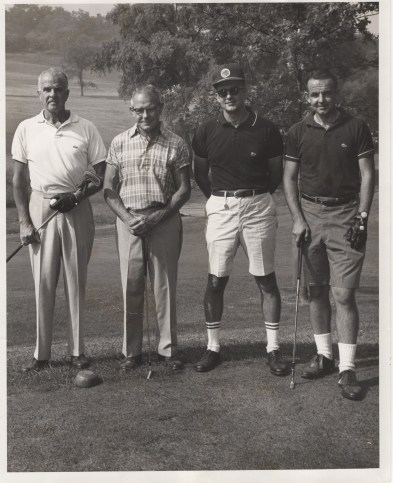
dad-in-his-forties-only-one-in-hat-and-sunglasses

Dad in sunglasses, age 45

Cancer sucks at any age. Even when you’re old and figure you’ve got to get something before you go. It’s tough to watch; it’s tough to stay afloat whether you’re the sick or the well one. It’s impossible to find a pattern or routine in illness. It’s guaranteed to take you on a helluva ride. A ride you can’t control or stop or manage or laugh at (except sometimes).

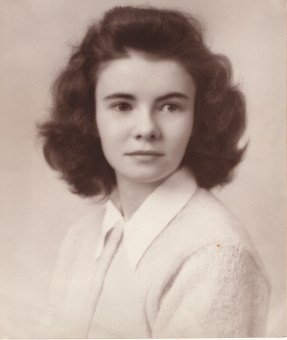
mom-age-14

Mom –age 14

My mom died three years ago at 85. She went from playing 18 holes of golf to dying in 4 short horrible months. My mother said good-bye to each of us. She looked us in the eye. She wrote us letters. She said she was ‘ready to go’. From beginning to end, she was totally aware of where she was and what she wanted. She made it as easy as something heart-breaking can be.

My dad’s a fighter. He blocks anything that he doesn’t want to see. When he was diagnosed with blood cancer six years ago, he never told anyone including himself. It worked. He’s survived two years longer than most. He never spoke of being terminally ill or being at the end of his life until a few months ago. And when he does speak of it, he is scornful and       angry that his life has come to this. He can’t believe it.

My dad wakes up every day and thinks about how he can stay, not leave. He makes daily phone calls to doctors and physical therapists asking how he can feel better not worse. He doesn’t like to use a walker; it makes him think he’s old and sick like most of the people he lives with.   His days revolve around calling and visiting doctors’ offices and contacting business offices, even though I now take care of managing and paying the bills. He’s a man on a mission who takes a nap every afternoon so he’s ready to go out most evenings with his friends. He complains. He’s laser-focused on himself. He won’t stop fighting until he can’t swing another punch.

My observations thus far? You can get old and sick peacefully or not. You can decide whether to accept your reality or create another. In the end, you can be grateful or ungrateful. You can focus on yourself or others. You can complain or find the positive. We decide how we want to go. We even decide whether we want to know we’re going.

Old age is hard. Old age and illness even harder. Can we make this last journey the way we want to? Yes and no. Maybe and maybe not. It all depends.     

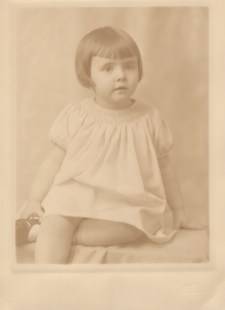
mom-age-3-copy

Mom — Age 3

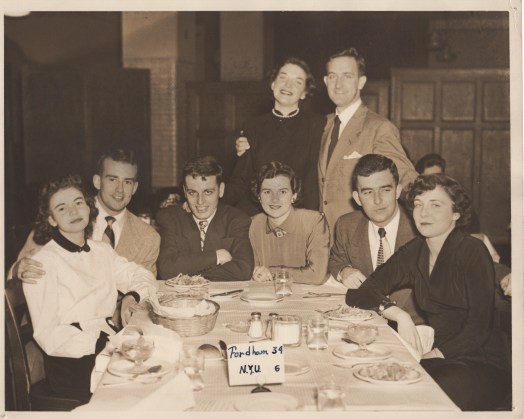
mom-and-dad-revised-college-years-copy

Mom and Dad — Far left couple, college years

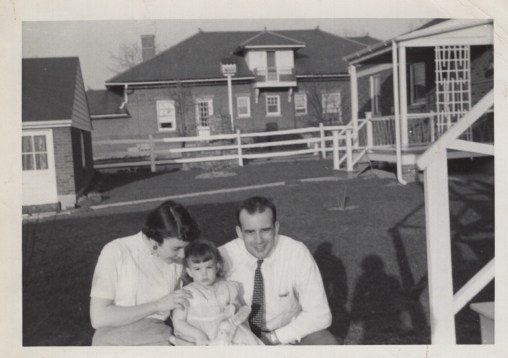
revised-mom-and-dad-age-25-with-me-copy

Mom, Dad, and Me

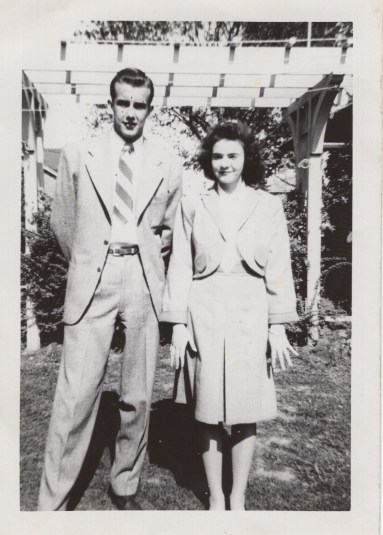
mom-and-dad-revised-high-school-sweethearts-copy

Mom and Dad — High School Sweethearts

Packing Up

img_0545

Paul Avenue

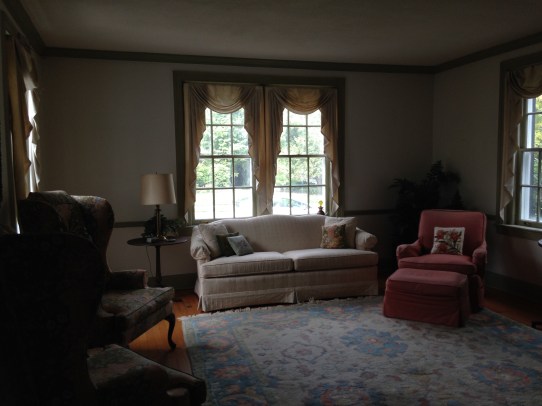
Everything was old and tired and worn. The chintz on the wingback armchairs was split and the green background in places had faded to near white. The small Art Deco vase that had sat forever on the Queen Ann table was chipped. The off white silky drapes hung limp; gray dust shadowed their folds. The house smelled old and empty and untended.

I sighed and thought how everything in my childhood home looked exactly as it had 35 years ago, only totally spent. It was surreal. It was strange. And, it was weird. It looked as if my parents had up and left one day leaving everything in its place, as if they would return in a short time. They didn’t.

My mom had died two years earlier. My dad was in their Florida condo and was too ill to help me. He said even if he was well, he just couldn’t bear to do it.

I was there to pack up.  I felt the hook in my chest, the tension headache coming on, so I breathed in deeply and exhaled slowly, just like I do when I’m practicing yoga. Packing up. Packing up, I kept thinking. How can I do this? It’s too much: too much to deal with emotionally and physically.

A 3,000 square foot house lived in for 60 years and packed, and I mean packed. Packed to the gills. Every drawer, closet, and room contained stuff. Every empty nook was filled. The basement rafters and crawl spaces were jammed full of old bent curtain rods, dirt covered Lionel Train boxes, paint cans, plastic covered fabric from the sofa slipcover back in 1963. You get the picture.

And then there was the emotional part. My mother had loved this house on Paul Avenue, poured herself into its appearance and decoration. This was her home. This was the last physical expression of whom she was that I would experience. And I was in charge of taking it apart.

img_0499

Our Living Room — Unchanged for 35 Years

Every object, painting, chest, table, piece of crystal or china had been chosen and placed by my mother’s eye and hand. She’d created the still lives on the tabletops, the bookshelves, and the mantel. As I walked from room to room, I remembered when we’d driven to Lahaska, Pa to look at the 19th century chest in the dining room. I remembered learning to dance the jitterbug with my dad in front of the 1950’s oil painting of the bridge covered woodland stream. Now two years after her death, the dried pomegranates she’d arranged in the silver bowl five years ago sat dust covered in the center of the dining room table. The dozens of family photos sat crowded together on the piano as usual. Memories leapt out of everything. Pictures, movies unreeled in my brain. I grew up here, was happy and sad here, argued and laughed here.

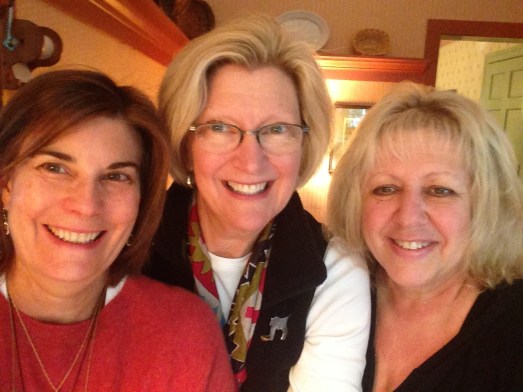
Fortunately for me, I wouldn’t have to pack up all alone. My two childhood friends, Cheryl and Fran, helped me a lot. We spent whole weekends together. My partner, Kevin, came several times helping me to make decisions about what to keep and what to toss. My twin 24-year-old daughters helped too. And through the relator, I had the help of the dismantling-sixty-years-of-stuff expert, Nancy. Taking apart my mother’s home took 10 weekends of cleaning out and packing up.

img_0610

Rosemont Mini-Skirt Mob

It was hard, really hard especially that first weekend. By the end, I’d hardened. I’d become an expert at throwing away without remorse. I threw away the three dozen framed photos on the piano. We all had these pictures in our own homes. I even threw away the hundreds of photos of long dead ancestors. No one had any idea who they were. Chipped crystal and china that my mother had loved so much she’d kept the damaged ones, I tossed without a pang. Dirty, faded crewel pillows I’d embroidered for my mom 40 years ago, into the Hefty bags they went.

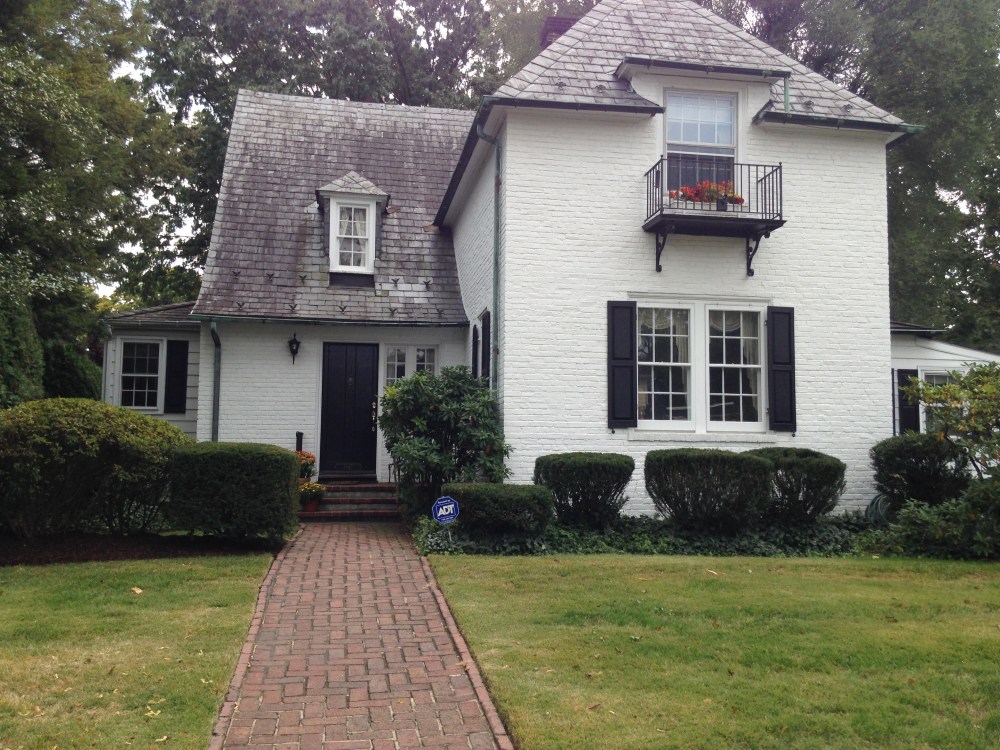
We recycled what we could. Old towels and sheets went to the animal shelter. Dr. Clutter, a recycling company, picked up three truckloads of stuff.  Weekend by weekend, Paul Avenue changed from being somehow my mother and my mother’s home to a house. A pretty 1920’s painted brick house with a slate roof and the original cooper gutters. A very desirable house to old house lovers according to the dismantler, Nancy and the realtor, Barb. As my friends, daughters, and I cleaned out and packed up together, we reminisced. Rooms and objects brought up old stories, some we’d forgotten until then. Yes, the house was packed with a mountain of stuff, but it was packed even more with our memories.

On those packing-up weekends, I was a teenager once again, laughing with Cheryl and Fran about sleepovers, remembering the dinner parties my mother made for our group of six girlfriends. My twin daughters, Anna Lou and Campbell, and I talked about the weekends spent with my mom and dad at the pool or the golf course. We laughed about how Anna Lou had peeled the wallpaper off of the bedroom wall during her nap. (I’d thought my mom would be really upset; she wasn’t.) As we packed up the kitchen, Campbell reminded us of my mother baking blueberry pies and never being too busy or too tired to make French toast or sit at the kitchen counter and play a hand of gin.

I realized dismantling my mom’s house wasn’t getting rid of my mom or my dad or my life. I realized we were dismantling a place that was once beautiful and interesting and meaningful – and now it wasn’t. Just because it was gone didn’t mean it was gone in my imagination. I could be right back in our living room or kitchen or my childhood bedroom, anytime I chose.

img_0500

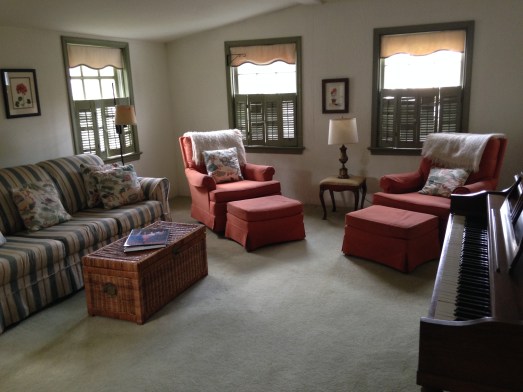
My Parent’s Den and Their Two Chairs

I realized too, that family traditions and rituals go on. We still have my mom’s blueberry pie and special muffins every time Campbell bakes them for us in my mom’s muffin and pie tins. I use my mom’s sterling forks, knives, and spoons in our home now. She’s with me at every meal. Anna Lou wears my mom’s gold scallop shell locket and remembers long heart-felt talks with her Nana about what’s important in life and how to see the world as a place of love and beauty and possibility.

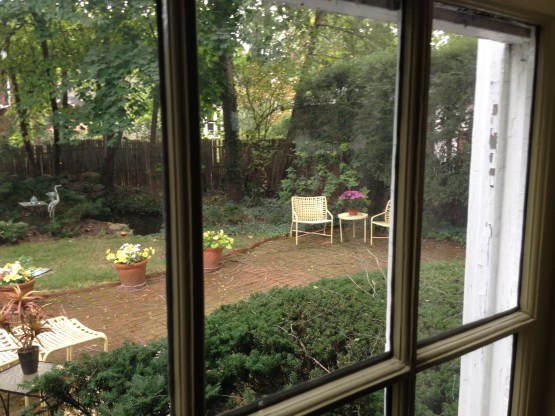
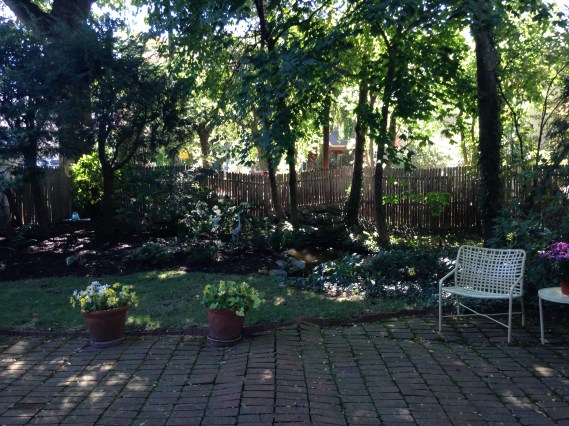
Paul Avenue sold on the first day it was on the market – we had five contracts, most over the asking price. A young woman bought it. She fell in love when she walked into the dining room and looked out its many windows to the sweet brick patio and original fishpond surrounded with hostas, rhododendrons, and hemlocks. The same view my mom had fallen in love with sixty years earlier. A circle.

img_0542

My Mother’s Favorite View

Now, many months later, I consider my stuff and begin clearing out. I’m reading Paris In Love, a memoir by romance novelist and English Lit professor, Eloisa James. She packed up and cleared out most of her stuff after she recovered from breast cancer. I’m also reading The Life-Changing Magic of Tidying Up by Marie Kondo.   I totally get why clearing out makes you feel lighter and freer. I totally get why some stuff is a burden and some stuff isn’t. It seems to me that stuff has a shelf life. When it’s expired, pack it up.

img_0568

The Fish Pond and Patio

Snippets — Renewing in the ADK

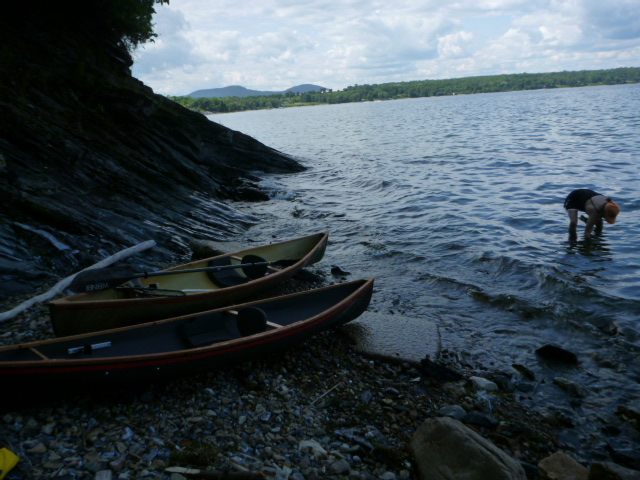
Two Hornbeck's on the shore of Lake Champlain

Two Hornbeck’s on the shore of Lake Champlain

I usually write essays, drafted and tinkered with over many weeks — sentences and words agonized over and then agonized over once again.

Now after 5 weeks in the ADK, I want to write only snippets. Too much has happened in these past weeks.  I could write a bulleted report of my doings but that would not only be boring but would only scratch the surface of my experience, would leave out the most important part — how I came to be more of who I am, not restored after the terror of the past three plus years, but  renewed.

Over these weeks, I have discovered through moving my body and mind and soul through experiences as diverse as restorative yoga, paddling rivers, hiking mountains, grading students’ essays, chatting with friends, attending concerts and theater, shopping, eating, and visiting with family and friends that I am different from when I left Stewartstown, PA.  I am my old self and my new self.  The anxiety, pain, and fear that was my daily and hourly experience has vanished, and I am in a foreign land, one in which I want to stay, permanently. If I had to sum up my new place, it would be with one word — perspective.  My perspective has shifted, shifted to a place that I plan on staying for quite awhile. It feels so  good to be here, seeing and feeling from this place that current or future conditions can’t shake so ferociously.


The Magic Tray

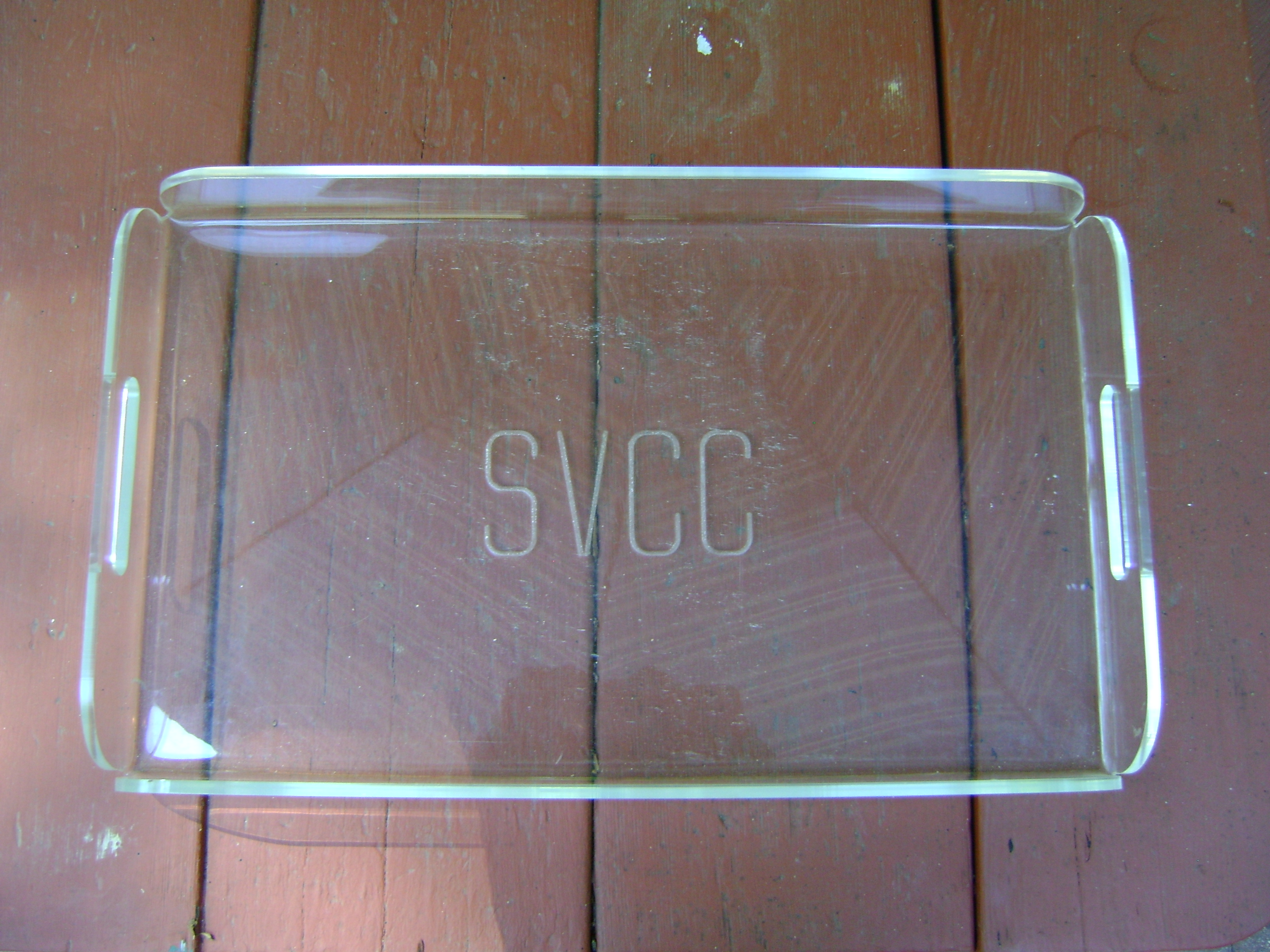
The 'magic' tray we used in our Young Writers' Club

The ‘magic’ tray we used in our Young Writers’ Club

There once was a class of writing students who were terribly behaved around food of any kind. After school they acted as if they’d been starved for days, rushing up and edging one another out-of-the-way so they could get at the table laden with bags of Oreos, Chips Ahoy, and Synder’s pretzels. One would imagine they had just come off a 10 day trek on the Gobi desert by the way they ripped open the plastic loops holding the Deer Park water bottles. As they gingerly negotiated the classroom desks getting back to their own, their 13-year-old hands overflowed with eight or ten cookies (Were they hypoglycemic?), three or four pretzels (Were they salt deprived?) Then once seated (and that was a tricky business if they’d pushed their chairs back under their desks) each child stacked and sorted their loot in his or her own way upon the napkin I’d placed there. Some stacked their cookies six high, some in short stacks of two or three. Either way they wiped out the snacks on the snack table within minutes. It was a frantic and chaotic business at the start of each and every club meeting.

Reminding them to share and slow down made absolutely no difference. These young writers were deaf to me and to the other two teachers who coordinated this Young Writers’ afterschool program for middle school adolescents who actually love to write. This love of writing made them anomalies of their Title I middle school. They were the smart ones, the ones who lived and loved to read and write and talk about fiction and poetry with one another. One often overheard them discussing their latest work, “I based this story off the Anime series Sazae-san”. They were a polite and serious group of over-achievers so their uniquely sensitive behavior juxtaposed to their Darwinian behavior when it came to cookies was hard to fathom. Why did they greedily and without regard for one another attack the snacks I brought each week? Were they truly that hungry? Or was it something else?

We teachers tried sending them to the snack table one or two at a time, but this strategy left the last students with the broken bits and only one or two whole cookies a piece. We said over and over again, “Remember your friends are hungry, too. Only take two cookies and two pretzels at a time.” This sort of worked. But as soon as our attention shifted to working with the student writers individually, their club-mates stealthily made their way to the snack table and grabbed as many cookies and pretzels as they could without our noticing. When at last we did notice, we saw that the original two cookies and two pretzels on each student’s desktop had suddenly been replaced with Oreo cookie towers ten high and mountains of fifteen Synder’s thin pretzels. Empty containers tipped sideways their crumbs spilled out on the floor were all that was left behind from the snack invaders.

After many months of watching this weekly drama unfold and our attempts to contain and modify their attacks failing each and every time, I decided to come up with a plan. I wasn’t sure what this plan would be, but I was determined to change this uncivil and uncivilized behavior. But how?

That very weekend of my resolution, I was going to visit and help my father sort out and clean out closets and drawers at his home, the home in which I’d grown up. The home that was crammed full of 50 plus years of stuff. My mother had died a few months earlier, and I was helping my dad sort things out. His desire to ‘clean out’ was his way of mourning and moving through my mother’s passing. They had been married for 60 years. As we worked together on the kitchen cabinets, we came upon the tray cabinet which held 3 dissimilar trays, one circular plastic coated gold leaf, one chipped painted metal, and one clear plexiglass with the initials “SVCC”.

As we worked, my dad often asked, “Do you want this vase?”; “Do you need a cookbook?” “Should we throw this away or give it to Good Will?” So as we looked at the trays, he said, “I want to keep the gold one, but you can have the other two if you want them?” “Okay,” I said, “I think I’ll take both. We could use them at home.” And so I left that Sunday afternoon with two trays, one with chipped paint and the other a brand new looking plexiglass.

The metal cream-colored tray with a chipped scene of red and blue winding flowers and two black unicorns was ancient. When it was new and un-chipped, my mother had used it as our ‘sickroom’ tray when she brought me toast and tea after a night spent with a fever or vomiting or both. We never saw or used it at any other time. The plexiglass tray, on the other hand, was a prize won by my mother at a golf tournament. My mother was crazy about golf and had played for 50 years. Although she was never a great golfer, she was an impassioned one, playing and practicing several times a week. This prize was from the country club at which she had played hundreds of times. It was one of the very few golf prizes she had ever won. In fact, it was one of the best prizes she had ever won.

And so that next week when I awoke as usual at 4:00 AM thinking about work or children or both, it suddenly came to me, an epiphany, “Use a tray for our Young Writers’ club”. Yes – I would serve them their snacks, water, and napkins on a tray. In this way, they would be honored and taught at the same time. I was so excited to try it. But which tray to use? The ones at our home were in constant use, and I wanted to leave a tray at the school which was an hour’s drive away. Surely not the chipped one; these children didn’t deserve a battered looking tray. That left the plexiglass with the initials SVCC aka Saucon Valley Country Club. As an otherwise unmarked, simple rectangle with 2 inch sides (those sides would help eliminate things falling off as I moved about the classroom), it was perfect. I couldn’t wait to try it.

The other two teachers thought the tray was a good idea too and were eager to try it. So that Wednesday, I brought the usual Oreos, Chips Ahoy, pretzels, and water along with the unusual, my tray. As the teachers and I unloaded the snacks, I explained to the children that I would be serving them their snacks on this tray. They watched as I opened the cookie containers and the pretzel bag and placed them in the middle of the tray. Next I stacked the napkins in one corner and lined up the water bottles in the other. It all fit, perfectly! With the two slotted handles, it was easy to carry the tray around the room stopping at each child’s desk and asking, “Would you care for a snack?” That first time, they looked questioningly at me as they stretched out their hand to the cookie container, asking out loud or silently with their eyes, “how many?”   In response, I said, “Let’s take two cookies now, and I’ll be around again a little later.” The effect was instant. These grabbing, gobbling children became 19th century drawing room aristocrats, ever so slowly and carefully taking one or two cookies, a napkin, a pretzel, and water. As if we’d always had our snacks in this way, they spontaneously said, “yes, please” when offered the tray and “thank you” as I moved on to the next student. It was magic to see and hear their transformation from ruffians to refined gentlefolk.

Now eight months later, the tray has worked even better than I’d imagined. It brings out the best parts in our young writers, the civil, caring part. They love the tray and being waited on. Now when the students want more, they ask if I’m coming around again soon. And so this tray won by my mother at a golf tournament at a fancy country club has traveled to a very different place, a place filled with children who love to write. Each week as I set up the tray with snacks, I thank my mother for giving me this great idea. Because of an afternoon spent cleaning out her kitchen cabinets, I discovered a simple and elegant way to change our student’s weekly snack attack. Who’d have thought it?

The Beauty of Opposites

The beauty of opposites

The beauty of opposites

Imagine you have spent all day at the hospital sitting next to your 20 year old daughter as she struggles to heal. Imagine that she has been in this hospital for 6 weeks and counting. That she has had blood transfusions, CT scans, MRI’s, and blood tests galore, and still she bleeds internally. The doctors keep trying one treatment and then another. They bring in one more specialist, confer with doctors across the United States, all to no avail. Your daughter has lost 35 pounds she didn’t need to lose; she is 5’10” and weighed 128 pounds before all of this began. As you sit and watch her doze, you work on your laptop answering email from work, work you have no interest in attending to. Your daughter is slowly bleeding to death. And all you can do is be on full alert, learning about her condition, learning about anatomy and physiology and abdominal infections when your expertise runs to organizing teaching workshops and helping students learn to write. You sit and try to do your work and care for your child at the same time, something you have always done as a working mom. Only now you are trying to do both while filled with the kind of terror and anxiety that comes with every parent’s worst nightmare. Your child is critically ill. She is not getting better. She is getting worse.

I leave our home in the morning for my daily vigil at the hospital and go back home at nine PM after the doctors have come by for their daily check in. The doctors are kind and serious and always calm. Their calmness frightens me even more than their newest idea for healing my child.

At ten PM, I am home, numb and wired. My sweetheart and partner, Kevin, has made me mashed potatoes, roasted chicken, and green beans, one of my favorite comfort food meals. There is always plenty of red and white wine. He hugs me, arms wrapped softly around in blissful completeness and waits patiently for me to talk or get a glass of wine or take a shower. He doesn’t hover or ask too many questions. He is there, a quiet, calm, and nurturing anchor, my overnight mooring. My safe-spot for the night.

This was our life for most of two and half long years until today when we are once again doing something ‘normal’, something fun. Today we are light-headed and hearted with the reprieve of sickness and hospitals. Today we wear shorts and T-shirts and feel like children finally let out to play in the warm sunshine. And we are playing, playing in kayaks on the Gunpowder River in Maryland, a place that doesn’t look much different than it has for the past 20 years we’ve been paddling it. As I step into the 50° water wearing neoprene socks inside my water shoes I wonder why my feet always burn with cold before my calves, arms, or hands.

Gunpowder River, MD on a day in June, 2013

Gunpowder River, MD on a day in June, 2013

“Do you want spiders or ants?” asks Kevin smiling as he puts on his new REI khaki fisherman’s floppy hat. “Spiders”, I say with complete nonchalance. This is our first paddle of the season, and we’re lucky there aren’t worse in our kayaks after the long, damp winter our boats spent overturned on wooden horses on the edge of the woods in our backyard. Earlier we hosed them out but apparently, a few critters have survived our hose tsunami.

As we climb into our boats, the 94°air temperature sinks to 80° on the surface of the 50° Gunpowder River water. Sometimes the temperatures are so extreme between the air and the water that clouds float along the surface rising three or four feet so that it feels like you are paddling through chilly fog on another continent. But not today.

Today it’s perfect. Cold, clear water, bright blue sky, and hot sunshine beat on us in between the oaks, sycamores, and poplars that shadow the river. The pale pink fairy-cap shaped Mountain Laurel blossoms peep out of the jade velvet feather- shaped leaves as they climb up the steep hillside banks, covering them with sweet scent. Invisible Wood Thrush flute back and forth; a Louisiana Water Thrush flies across our path and lands a few feet alone and ahead of us, moving each time we come within the ‘too close’ zone. A Kingfisher scolds and darts in a straight line diagonally in front of us, as a score of colorfully dressed hikers wave and pick their way along the rocky trail running parallel to the riverbank. Their t-shirts and shorts sag with humidity. Patches of sweat circle their armpits and outline their spines as we sit coolly in our boats, dipping a leg overboard or cupping water onto our shoulders, neck, and chest whenever we wish to enjoy the shock and shiver of icy water running down our spines. Ahh. Instant hot to cold.

On this hot June day, we paddle together for a stretch and then apart just as we do in life, chatting about what we each see. It’s nice how we notice different things though we are paddling the same river at the same time in relative proximity. Now we are side-by-side steeped in the quiet that comes with knowing someone better than you know any other. Then a riffle or a shallow stretch appears with only one deep channel, so we part. Kevin asks, “Do you want to go first?” And I, just about every time, respond, “No, I do not want to go first.” Following instead of leading, I can maintain my semi-meditative state. That’s impossible when I’m the one having to pick the watery path through the rocks and riffles, the brushy overhangs and low branches. Sometimes entire trees stretch across the river jolting me into super consciousness. Today, I need my semi-meditative state for it has been a long time since we paddled anywhere together and two years since we paddled the Gunpowder.

My daughter’s illness stopped us in our tracks two and a half years ago. The 125 days in Baltimore hospitals, the middle of the night Emergency Rooms, sitting for hours on a tiny hard plastic chair in a corner of a tiny holding room, my daughter laying half asleep if the pain and fever weren’t too bad or curled in a fetal position if it was. Her father and I or Kevin and I waiting, waiting, waiting for the results of blood, urine, CAT scan and the inevitable admitting and then more waiting, waiting, waiting until there is a clean room (there never was, and so we waited a couple of hours more). Finally a room was ready and we settled my daughter there (the hospital had become so familiar it was a second-home kind of place to her now) and then driving the one hour back home, north to Stewartstown, or crashing several minutes away at my daughter’s apartment. Either place, I arrived wired, tired, and numb. Usually, I drank some wine or took an Ambien or both, and then crashed for five or six hours of a, hopefully, dead woman’s sleep. A sleep without nightmares was a good night indeed.

A sick child is no fun. It takes you by the throat and then the chest, chains you to the floor through an iron claw hooked deep, down inside your heart, and every time you move, it yanks down hard, its steely grip breathtaking and unyielding. And since you can’t surrender or leave town for the islands, you heave yourself up, and breathe knowing only one thing. You will do whatever it takes to save your daughter. Screw the iron claw and the mind-numbing fear. Each time it strikes, you will sit and breathe and gather yourself so that you can perform clearly and calmly. You will continue your dogged act of competence and serenity. You are the mother. You are the one your daughter will take her cue from. If you are steady and collected and proactive, then she will also be. You tell yourself over and over, “if she can take this, so can I.”. In this, there are no choices. We are moving onward, onward, onward. That’s all there is, head up, one foot in front of the other, trudging, trudging, trudging with a pasted smile on your face at least some of the time.

A daily trudge until today, when here I am in this relaxed, semi-meditative state floating on water with birds singing and green everywhere I look — the amazing and beautiful experience of opposites illustrated for me on this river. The sound of dipping paddles, laughing hikers, and silent fisherman is salve to the traumas of these past many months. I smear it all over my consciousness and breathe, smiling and happy. I think, “Be peaceful. Be calm. Let go.” These are my mantras of the past 24 months. I float quiet and far away from those frightened moments. I float quiet at last.

No matter how many times we paddle this river or even the same stretch of this river, it is new-found to me and I think, to Kevin as well. The scene changes: the woods, animals, birds, and people alter paddle to paddle, as does the light, weather and temperature. We have paddled and fished in winter with snow floating down around us, each of us coated in neoprene and wool, warm despite the frigid water. Once we surprised a Great Blue Heron as we rounded a bend, and he squawked and flapped awkwardly trying to move faster than his multi-jointed wings could lift him up and away. We both gasped at the same time, then shot each other a smile that said, “How lucky we are!” To be that close, to round a bend and run smack into energy and being and movement. It thrilled us for days.
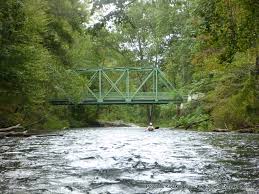
 

Masemore Road Bridge

Masemore Road Bridge

Today, we laze along – both in no hurry. Usually, I am the slow one always stopping to look, to see, to get wet. My daughter and Kevin, often chide me for stopping so many times on a hike or a paddle – they complain they can never ‘just go’ when I’m along, saying, “You constantly stop. First, you’re too cold so you put on your jacket. Then you stop a bit later because your boot laces are too tight. Next you have to pee. Finally, when we think we’re on our way and that there will be no more stops, you say you need the green bandanna from your daypack so you can swat the black flies. Since we don’t want you to take off your backpack yet one more time, we spend several minutes rooting around trying to find this much needed bandana aka fly-swatter, as you stand there directing us on its location (which is always at the bottom). But that’s not the last of it. Incredibly, a quarter of a mile later, there’s yet another stop to take your jacket off and plunge it back inside your pack. You are now hot instead of the previous cold. We have come full circle, and finally, unbelievably, we hike on without further delays.”

Since they have embellished their account only minimally, what can I say except, “You’re right.” I’ve stopped defending myself. They don’t care that I want to be comfortable, neither too hot nor too cold. Nor do they understand what they would call my ‘strolling’ versus ‘hiking’. I wonder why we are in a hurry. Who cares how long it takes to get there? The there can be in upstate New York on the summit of Porter Mountain in the Adirondack high peaks, 6 miles and 4000 feet up or a 7 mile paddle on the Chubb, a meandering prehistoric-looking river close to Lake Placid. I don’t believe in rushing when out of doors; that’s what I have to do inside most days.

Even so, I do understand their point – who wants to begin an adventure and then stop unexpectedly a whole bunch of times before you’re halfway there? It wrecks the momentum and annihilates the crescendo of enthusiasm and excitement that builds as you move further along into the wilderness. We all have a hankering to move onward no matter where we are – advocating for medical expertise or walking in the woods.

Today, Kevin’s only comment to my voicing, “I’m going to pull over to this bank for a minute” is, “of course you are”. I know he is warmed by my unchanged pattern. Maybe our lives have seen drastic changes because of my daughter’s illness, but we are still essentially the same. This stopping along the way is an affirmation for each of us. We have once again reclaimed the peace of being together out of doors.

Six months ago, I couldn’t imagine as I sat in Johns Hopkins Hospital nursing my daughter’s devastated body that I would ever paddle or hike or float seamlessly from one peaceful moment to another. For days and months, I couldn’t imagine while witnessing my daughter’s concentration camp appearance that I could move onward lightly and effortlessly basking in the now. Yet, here I am. Dipping my paddle in and then out of the river as it moves along, the scene and my life changing moment to moment, day to day.