Month: June 2020

The Politics of Place

IMG_0090

I just came back from visiting my parents in Southwest Florida where it was eighty degrees in March with a constant cool breeze. My parents live in a golf club community where homes vary from condos to mansions, costing from $175,000 to $5,000,000. not including maintenance fees,  golf privileges and club membership dues. The 2000 acre enclave, called Fiddlesticks, is surrounded by six foot high chain link fencing topped with barbed wire. This is thickly covered with taller shiny leaved Euonymus bushes that were just coming into fragrant white-flowered bloom. So as I cycled or walked or drove around the inside perimeter road, the only thing I saw on my visit was the lush foliage waving in the breeze. Just outside the fencing, a construction company is building a canal into which water will be drained from adjacent land that will become the newest to-be-built golf community. It’s easier to build on dry ground.

IMG_0040

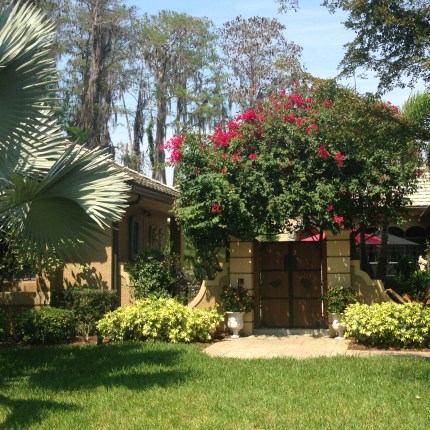
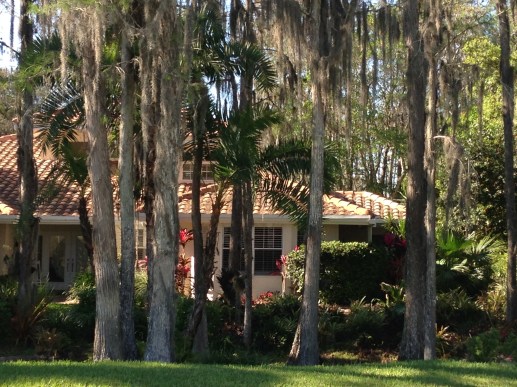
Fiddlesticks Home

The Fiddlesticks property is stunningly beautiful. Many species of palms — royal, chamel, and saw palmetto live here along with cypress trees draped with hanging moss. Bougainvillea climbs up trees and around doorways and walls. Sometimes it stands alone, a ten-foot bower of dark pink. Dense plantings of begonia, alyssum, Tradescantia ‘Purple Queen’, hibiscus, impatiens, and petunias line roadways, swirl around houses, surround trees, congregate at corners, and form islands. Color, scent, and texture are everywhere. Lawns are edged, manicured, and irrigated with underground sprinklers fed by recycled wastewater from the community. As I rode my bike each morning in and out of the different ”villages” and around the golf courses, I couldn’t help thinking, how lovely. This gated and guarded community is only one of many in the area. How nice it would be if most of us could live in such a place. But most of us don’t.
IMG_0052

Fiddlesticks Home

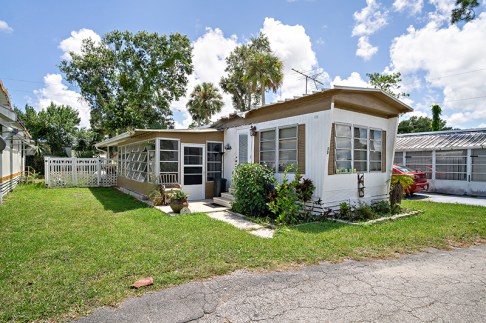
One mile outside the gates of Fiddlesticks is the “real world.” Eight lanes of traffic sprawling on and on bordered by one unattractive shopping center after another. There are no trees or flowers, not a scrap of nature anywhere. This vast suburban sprawl goes on for miles in every direction. One marvels at the ability of so many stores to stay in business. One marvels that we perceive we need so many things. Tucked amid and behind the commercialism are the small tract houses and trailer parks of the not so-well-to-do. In their neighborhoods a scraggly palm leans here and there; sometimes a pot of orange geraniums or pink impatiens sits on a porch or stoop.
9022d6f8-dde8-4838-99e4-88e62739a7b0

FL Trailer Park

I’ve never seen a more vivid picture of how wealth equates to plenty of comfortable, beautiful space and lack of wealth equals lack of space, beauty, and comfort.   Those who have, have the best places. Those who have not, have the worst ones. I guess it’s the American way–exaggerated in this particular locale to the point of   unpalatable absurdity. In a culture that equates success with money and money with a nice place to live, our newer cities are bound to look this way. What happened to open space and parks?

Unfortunately, many American city parks and even some suburban ones have degenerated to meeting places for criminal activity and dumping grounds for old furniture and tires. They are unsafe, scary places. These planned green places originally were built as space for us to reconnect with nature and recharge our inner and outer selves. Why have they failed? Are the many trees and bushes to blame because they are good hiding places for muggers and rapists? Or is it that we don’t have enough police and security people patrolling should trouble arise? Perhaps it is because we don’t use then enough because they are dangerous, and they are dangerous because we don’t use them enough — a vicious cycle.

Jane Jacobs, who wrote The Death and Life of Great American Cities, believes that in order for public spaces to be dynamic, safe and people- filled, they must intersect. She says in an interview in 2001,” In a real city or a real town, the lively heart always has two or more well-used pedestrian thoroughfares that meet. In traditional towns, often it’s a triangular piece of land. Sometimes it’s made into a park.” This kind of park is not pushed off to the outskirts of a town or city; it is an integral part of it. And that makes it both user friendly and safe.

In Southwest Florida, a few county and state parks sit along the Gulf of Mexico where those who can afford the five-dollar parking fee may swim and sun themselves. However, another park, the Six Mile Cypress Slough Preserve is free and volunteer guides will take you on a ninety-minute walk through a preserved cypress slough (a moving swamp) filled with birds (some endangered), plants, and animals that wouldn’t be in the area otherwise.   The park closes at dusk and large steel gates make sure no one can enter to make mischief or to hunt for alligators. Again the problem of open space attracting troublesome behavior.

Perhaps these predators in our parks are trying to tame the wilderness, exerting control over our natural world. Or are they dominating that of which they are afraid?   Perhaps their psychoses require an outlet, and dark, brushy spaces are a conducive environment for heinous acts. Or maybe drug addiction prompts them to prey on victims in the easiest places, those empty and unpatrolled.   Whatever the provocation, parks evoke a wilderness in an urban environment that harkens back to when primitive man began to “tame” it.

Thousands of years ago man tamed the wilderness, cutting down the trees and cultivating the earth. This huge leap in the way we lived removed us from one place and put us into another. We separated ourselves from the natural world, took ourselves out of it psychically and physically. Even though we still prayed to gods and goddesses, made sacrifices to ensure good crops and prosperity, we “created” our own food, rather than “searching it out” in the wilderness.

When the Romans arrived in the Netherlands around 150 B.C., they found a people that they described as blue skinned because of the cold, swampy conditions of their environment. At that time, the Netherlands was a series of terps (manmade mud hills) amid swamps and lakes. It was cold, damp, dreary and rainy. The “Nederlanders” ( below the land), as they are still called, and their land were quickly passed over by the conquering Romans. Who would want to live in such a place?   Yet through incredible ingenuity and imagination, the Nederlanders developed their bit of land into a thriving place by manipulating too much water into a maze of dikes, waterways, and locks. By the twentieth century, they had increased the size of their country’s landmass by twenty-five percent. And by inventing and using windmills they were able to grind grain, process lumber, operate the locks and eventually produce electricity.

One might argue from this example that landing in the better place does not always ensure having the better life. It is human imagination together with a positive attitude and cooperative spirit that can create a productive and comfortable living space out of a swamp.

Take the Yucatan village, Nueva Vida (New Life) as a modern example of what man can do if so motivated. This village was begun as an experiment at the edge of the Calakmul Reserve as an attempt to save what was left of the wilderness reserve. For centuries, the natives had slashed and burned the dense forests in order to grow rows of corn. Every three years they moved on to a new place because the poor soil was used up. Nuevo Vida has changed that cycle by not cutting down all the trees and not growing corn. Instead, these ancestors of the Mayans live in the forest, clearing only a small area of land. They grow crops, plants, and trees that thrive in this environment — lime and papaya trees, bunched plantings of cilantro, lettuce, and chaya (a high protein leaf crop). The cooperative of thirty-six families works together composting, cultivating, building cisterns and high peaked houses, and gathering medicinal herbs from the forest. Recently they began beekeeping. Where once they subsisted, they now thrive – in the same place but with a different understanding.

Finding a new and different understanding of how to live has prompted humankind to create utopian societies particularly in the nineteenth and twentieth centuries. Some of these “utopias” were inspired by religion, others were inspired by political ideas, and still others by aesthetics. Some such as, the Branch Dividians in Waco, Texas or the People’s Temple in Guiana began innocently and ended in tragedy. Others resembled tidy perfectly neat towns like Columbia, Maryland which was the first entirely planned city built in the late 1960s and early 1970s by James Rouse. Everything in Columbia was pre-planned and approved from street signs to house colors and construction materials to commercial areas and landscaping. Critics called it “Milton Bradley Town” after the maker of the board games Candyland and Chutes and Ladders.

Utopian societies created from religious ideals such as the Shakers have vanished, but the Amish culture still survives and thrives. The Amish believe in living a simple, plain life close to God and the earth. This belief informs their idea of living a kind of heavenly existence on earth. Although some of the Amish have adopted the use of modern conveniences such as cars, computers and telephones, they have picked and chosen which things and how much they will be incorporated into their lives. They may use electricity at their work places but not always in their homes. One thinks of the Amish as a group both unwilling to change and uncertain of change. This is not true. More and more Amish are going into business. In 1990 in Lancaster County, Pennsylvania the Amish owned 1000 businesses. Now they own 2000 businesses. Unlike “regular” American businesses whose failure rate is 50%, the Amish have a 5% failure rate. And this is while doing business on their own terms within the values and beliefs of their religion, culture and life style.

The Amish who work at and own the Amish market near my home in southern Pennsylvania use telephones and computers at their market, but many don’t at home. They still dress in plain black clothes with no buttons or zippers and only bath on Saturday evenings. Most Amish live on family farms where they grow their own food and keep dairy cows and pigs. Extended families living together is the norm. Theirs is a tight knit community where they know and help one another with child tending, harvesting, and building.   This dependence on each other fosters their unique lifestyle and helps them to grow and prosper. Although they have become merchants by opening Amish markets that cater to consumer-minded Americans, they retain their core values and beliefs in the non-material. It’s an interesting contradiction.

For example, my sister recently attempted to buy some outdoor wooden furniture from the Amish market owners. Initially, they were delighted to sell several pieces to her until they learned that the furniture had to be shipped to Holland where my sister lives. As Matt, the Amish owner, explained to my sister, they had no idea how to do this nor did they wish to do it. My sister couldn’t understand this thinking. Being a businesswoman herself, she thought she was expanding their market. Her friends in Holland would want to buy Amish furniture too once they saw my sister’s. When she explained this to Matt, he said he didn’t want to expand his market. He said it would be too stressful to ship furniture to Holland. He didn’t care about the money. What was he going to buy with the extra income? What did he need? He was contented with what he already had.

I wonder if Matt would say the same thing if he wasn’t Amish and lived in a trailer park next to a Saks Fifth Avenue in southwest Florida? Out side of his Amish community Matt would quickly become a member of the ‘have nots.’ Inside the Amish community, he is has all that he needs. He feels he is prosperous. I wonder if mainstream American culture is capable of forming communities where people work together like the Amish or the Mexicans in Nueva Vida to create a fairer, less destructive, more beautiful, more prosperous place? I wonder if we, as individuals, have the courage to work and to do business within the limits of our values and beliefs? How many of us have the courage to say, “no”?   I wonder if we are capable of imagining a society where no bad places exist?
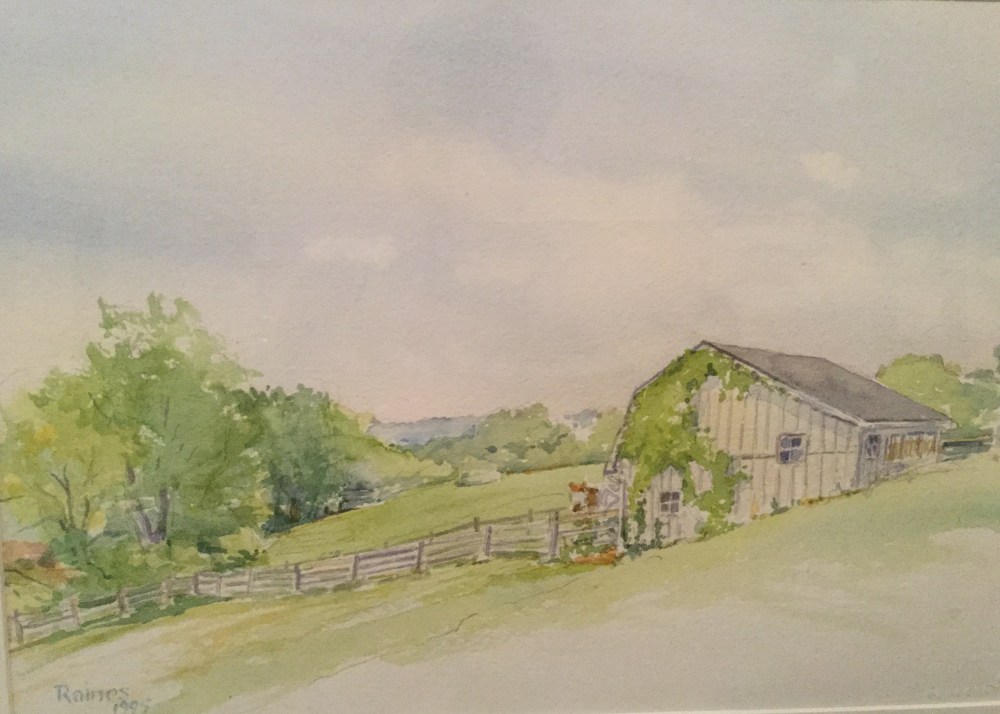


Ballina

3D858F07-074B-44E0-BCB9-BF2DDD85B5E6

Ballina


Here I am. The car door creaks; the mid morning sun makes me squint. I look, down the slope of weedy pasture to my old barn, now lifeless, buried under creeping vines, waist tall wild roses, and lots of poison ivy. Hopefully, this will be the last time. After the barn is cleared out I won’t have to come back here again. No more crying. I’ve cried enough and the new owners might be here.

“Ballina”, our farm, looks unused and alone with weeds clogging our flowerbeds, choking our hydrangea. Everything is dry, too dry just as I am, coming back to this place, this land, this view from the hill that I gazed on every morning. I used to count on that view to keep me balanced, to fill me with its every nuance, and to reassure me with its familiarity.

I used to scan the field from my bathroom window as I brushed my teeth. I’d look for our horses just outside, their hindquarters to me, their heads looking east. I thought they stood in that spot every morning to watch the sun rise and in the winter to feel its first warm rays.

Later, I’d put on my barn clothes (a pair of old tan pants and a turtle neck in winter or a T-shirt in summer) call the dogs, put on my work gloves, wellies and walk outside. As I walked around the house I’d scan the sky, feel the wind, and call the dogs back to me. They loved to race round and round my legs as I opened the gate, walked across the field, and listened for Peader’s whiny. Usually Peader was waiting in his stall except in early spring when the grass was too good to leave behind even for a handful of feed and a pet from me.

I’d muck out the stalls, sweep the floor, and refill the water buckets and hayracks. I loved the mindless routine of it. As I worked I’d watch my neighbors leave for school or work. Sometimes we’d wave to one another or even yell “Hey” across the fields.

Once many years ago, a flock of snow geese flew over me, over our field. I stood watching, transfixed. Funny, standing here now I can hear the sound of their trumpeting, in this empty place I once called Ballina.

Birthing Duke


For their fortieth birthdays most women want gold, diamonds, or a weekend at a fancy spa. Not me. When my husband, Freddy, asked me what I wanted, I replied, “Goats. Pygmy Goats.”

Pygmy goats”? he said, not quite understanding.

“Yes, Pygmy goats, the little ones. I want to breed them and have a few little goats running around. They’re so cute. You should see them.”

He simply shook his head in amazement and then asked where do you get them and how much do they cost. He also said that ‘few’ meant no more than ‘two’ to him. He reminded me that we already had 2 horses, a pony, a dog and 4 cats. Two little goats were plenty. What he meant was that he didn’t think we needed anymore animals – we already had enough work to do every day.

I had seen the goats at the Maryland State Fair and had been pinning for them ever since, but couldn’t think of a way to broach the subject. Now I had my chance. My fortieth birthday. How could he say, “No.”

And he didn’t.

After some phone calls to various farm neighbors, I found the goat lady in Pylesville, Maryland. Peggy bred and raised pygmy goats and miniature horses. When I called, she invited me to come out and have a look and to bring along the girls.

Anna Lou and Campbell were just 2 years old at the time. It was a snowy February day. I bundled them up in their snowsuits and boots, hats, and mittens. They looked like colorful beach balls with heads and hands.

I drove for a good 25 minutes before I wound my Bronco up the winding driveway and through the woods, up and up until we got to the top of the hill on which her small farm sat. It was a maze of several small sheds and outbuildings, looking as if they had been built as every new animal venture had come to pass.

And indeed that was the case. Peggy had had no children and had wanted them. So with each passing childless year, she and her husband had adopted a new animal or animals. They had turtles, ducks, chickens, dogs, cats, pot-bellied pigs, miniature horses and of course the goats. The goats had been a venture for several years, so she had twelve – two  Billies and ten nannies.

When I got out of our car, I noticed a strong pervasive sickeningly sweet musky smell. I had to go to the bathroom when we arrived and even inside her house – there was that strong, stick in your throat smell. As we walked toward the pen that held the Billies, I noticed the smell was even stronger. The whole place smelled like goat cheese on nuclear steroids.

As Peggy walked into the small playhouse-sized building next door to the billie goats, she said, “Do you smell that smell?” I nodded. “That’s why most people don’t want Billie goats on their property, but we don’t mind the smell. We kind of like it.”

I couldn’t imagine having every article I owned perfumed with that cloying almost gagging odor. As we walked inside the goat house, she said that the nannies would not hurt us. They would only nibble on our clothes but not bite us. I walked in holding Anna Lou’s and Campbell’s hands. They were frightened at first, but when they saw that the goats came to their waists, they were no longer frightened but instead delighted.

Goats are curious by nature so they immediately scampered around us. Peggy put all but two of them outside so the girls wouldn’t be overwhelmed. One of the goats was named Greta. She was newly pregnant and would have one or two babies in the early spring. Peggy suggested we take this one, since then we wouldn’t have to buy 2 goats; they must be sold in at least twos since they are herd animals. With pregnant Greta, we would end up with two or possibly three goats, and we’d have the experience of birthing goats as well. I was so excited.

I decided not to tell Freddy about the possibility of more than one baby. I would just dwell on the fact that we wouldn’t have to buy more than one since a pygmy goat costs more than you would think. And as a bonus, if we had a male and didn’t want a billie, then we could trade him in on breeding rights with one of her billies and Greta could have more baby goats. This was too good to be true.

But what about our twin girls? Would they be safe around these goats? As my girls put out their little hands to the two goats left inside the goat house, they came over and sniffed and then nibbled their coat sleeves. Anna Lou and Campbell laughed and put their hands around the goat’s necks. The goats didn’t mind; they shook them loose gently and nuzzled and nibbled on their coats some more.

One goat, Greta, was black with white markings on her ears and legs. The other was a salt and pepper combination with black ears and tail. Neither had horns and they were friendly and interactive, but not rough or pushy. Anna Lou tried to kiss one on the face but the nannie moved. She laughed and followed her around the shed. Campbell followed the other trying to pat and touch her. Sometimes the goats nibbled and nuzzled, and sometimes they walked away. The shed was carpeted with straw which I knew must have some manure in it, but c’est la vie we were having fun.

Peggy came in with a can of feed and showed the girls how to hand feed the goats. “Put out your hand nice and flat like this,” she showed them. And each took a small handful and held out their hands as the goats nibbled away. Anna Lou laughed and laughed and wanted to do it again and again. Campbell, being quieter, tried a few times after Anna Lou did it but was still a little uncertain.

My angel girls were true to form, Anna Lou rushing ahead never concerned about what lay ahead even when it was an unknown. And dear Campbell watching and waiting to see how the goats responded to Anna Lou before trying it herself.

Whenever we were doing something new, Campbell would always say to Anna Lou, “You can go first.” Or “You go, Anna Lou.” And Anna Lou always did. I don’t think Campbell would have adapted so well to nursery school at three if it hadn’t been for Anna Lou taking her hand each morning as they walked through the classroom door. As Anna Lou brought her sister into the room, she would call out, “I’m here”.

After much squealing and feeding and calling to them to ‘come’ (the goats didn’t of course), I announced for the third time that now it really was time to go home. They still didn’t want to go of course. This was too much fun –playing in a playhouse-sized shed with animals that were just the right size for a 2 year old. They said, “NO” and “No” again.

Thankfully, Peggy bribed them with a peek at the miniature horses if they would cooperate and walk outside. They did.   My girls do not like to leave a place they find exciting. Too many times I have had to pick them up and carry them away screaming from a beloved activity. One would think that I was jabbing them with barbs of steel the way they could wail. I’ve found through many unpleasant and sweat–filled experiences that two year olds do not like transitions especially from one activity to another.

After each one had looked into the horse shed and waved at the tiny horses, we finally said goodbye. It took another few minutes to get everybody strapped in, but finally we were off.

It was cold that day, about 15 degrees, so it was cold for quite awhile in our car. As we drove and the car began to warm, I smelled the same smell I had smelled at Peggy’s farm, only now it was stronger. It smelled like a mixture of skunk, fox musk and cat urine. The billie goat smell had gotten on us. As it got warmer in the car, so did the smell. I sniffed my coat sleeve. It smelled like the musk. I thought, ‘Oh, no’. When we got home I smelled the girls’ coats, and they reeked. Their hats reeked, their mittens, their hair, their hands and faces all smelled like a musky billie goat. Every crevice on the soles of their boots was packed with goat manure pellets.

I took off their boots in the garage, carried each child upstairs and into the front hall where there was a stone floor. I stripped each one down to her diaper and ran a bubble bath. I put everything they had worn into the washer and prayed that their new snowsuits and hats would come clean. I washed their hair which they hated, but I couldn’t let them go to bed with that smell. I tried to make a game out of getting the Billie goat smell out of their hair. I adapted the South Pacific song — “Gonna Wash that Goat Right Outta My Hair”. They didn’t think it was as much fun as I did.

Thank goodness, the smell was gone after their bath. After a long wash cycle and fabric softener in the rinse cycle, the snowsuits, hats and mitten smelled like a fake pine woods, better than the Billie goats. I took me one hour with an ice pick and a knife to pick out all of the manure from their boot soles. These I dipped in pine sol and rinsed. It worked. No more smelly boots.

When Freddy came home he asked how it had gone at the goat farm. I smiled and so did the girls. We all smelled wonderfully clean. I said, “Great.” Anna Lou said, “I love goats.” And Campbell said, “I wanna a goat.”

Over the next weeks we had had a wood and wire fence put up in a portion of the horse pasture and a cute pygmy-sized shed built. The cream –colored shed was approximately 4.5 x 4.5 x 4.5 with slanted roof and a wooden door in which a mouse shaped hole was cut. Inside there were two shelves, one on either side about a foot off of the floor. I spread straw on the floor and on the shelves.

Goats like to sleep off the ground; it keeps them away from drafts and dampness. They naturally like being up high so the design works well. I could open the door with the mouse hole cut into it and clean out the straw from time to time. The hole in the door was just big enough to admit one goat so it was draft free, warm, and cozy.

Six weeks later, in early April a very pregnant Greta arrived via Peggy and her husband. I walked her across the field on a horse lead attached to her collar. Peggy’s goats were trained to wear leather dog collars so it was easy to grab and hold them if you needed to, and they would break in case a goat got caught on something. No strangulation worries with leather.

 Because Greta was ready to give birth any day, we had made a place for her in a horse stall. In it we had laid straw 2 feet deep, and hung a heat lamp  in one corner. She had food and water and cats to keep her company until her time came. I checked on her many times a day.

On her fourth day here and fortunately on a Saturday since Freddy was home, I noticed she was lying down and panting a bit. I called Peggy for the same instructions she had given me 10 times before. I went back and forth to the barn every 10 minutes for the first hour. She seemed to be fine. Peggy had assured me Greta had had several healthy uncomplicated deliveries, and I should not worry. Freddy and I were excited and nervous.

We decided to take the girls down to the barn when they awoke from their naps. This would be a great experience for them, so natural, so every day. Maybe they wouldn’t have the hang-ups most of us grew up with concerning reproduction.

When we arrived, I looked over the stall door first. There was a light colored shape in the straw. My heart beat faster. Oh no. It was a tiny, emaciated tan goat, dead in the straw. I was so upset, but couldn’t show it for fear of frightening our girls. I opened the door and told them to wait for a moment. Then I gently and quietly moved the little body to a corner and covered it with straw. The girls never really noticed being two years old and having only eyes for their Greta who was lying on her belly just inside the door.

Greta was panting heavily. I looked under her stubby tail and to my amazement there was a wiggling nose coming out of her vagina. I said, “Freddy, look. She has another one inside.”

We sat there anticipating that the baby would be born at any moment. We showed the girls the tiny nose. They were so excited. Freddy kept them over in a corner away from Greta, but near her head where she could see them. I sat at her behind. Greta strained and strained but the baby could not get out. He never moved. I started to get worried after about 5 or 10 minutes. I thought, “How long has she been straining like this? This is just like a story from James Herriot’s, All Creatures Great and Small. “

I thought I should do something so I said to Freddy. “I think I have to pull him out.”

Freddy said, “Do you know how to do that”?

I said, “Not really. But I’ve read about it in James Herriot.”

“Well, go ahead and give it a try”, my husband replied. “Greta doesn’t look too good.”

I was too afraid to use my bare hands, and I didn’t have surgical gloves. Then I remembered. I’d just bought myself a brand new bright yellow pair of Playtex dish washing gloves. So, I  ran up to the house, retrieved them from under the sink and back I raced to the barn. Greta was still panting and looking worried. With much trepidation, I pulled on my  gloves and thought  ‘Would it be really slimy inside and would her contractions break my fingers’?

Still panting from running back and forth, I squatted down and timidly stuck my gloved index and middle fingers inside her, praying I would feel the tiny legs and hooves. Greta was indeed slimy inside, but her contractions didn’t hurt at all. It felt like the pressure of a hand gently pushing against my fingers. Then, I felt a leg and pulled it forward.  I went to the other side of the little body and found the right leg and pulled it out. ‘Thank God’, I thought, ‘I can’t believe I’m doing this.’

As I was working, Freddy was sending me words of encouragement, saying things like, “You can do it. I bet this goat is a big hugger.” I guess the idea of a hugger pygmy goat was such an obvious oxymoron and brought to mind the idea that a  big pygmy goat must be a male because Freddy suddenly said, “If it’s a boy, we’ll call him Duke.” My husband was a died-in-the-wool Duke University Basketball fan, never having missed a game in 20 years. I was too stressed to answer so I nodded and said, “Okay. Fine”.

As soon as I had both feet out, Greta knew she was finally good to go. She strained one more time, and I held on to the baby’s legs. Out he came. A tiny black billie goat. He looked like a toy. About 6 inches long and 6 inches high, he was wet but breathing well. Greta licked and licked him. After about 25 minutes, Duke stood up on wobbly legs and looked at this fine new world. He naaed to his mother, and she licked him some more.

In a couple of hours, Duke was gambling and frolicking through the straw. I sat there with Freddy and our girls watching this toy goat jumping as if he’d been doing it for years.  He was so happy to be out and about. Anna Lou and Campbell took turns trying to hold and pet him, which he wasn’t too thrilled about. I couldn’t believe that such a tiny perfect thing could move with such grace and enthusiasm.

Over the next weeks, Greta  and Duke became accustomed to our multiple daily visits, leaping and settling into our laps when we sat in the straw. Soon, they were  an integral part of our extended animal family and the highlight of our children’s days. We couldn’t imagine life without goats.

And I couldn’t imagine what I’d have done at Duke’s birthing without the guidance of James Herriot’s All Creatures Great and Small and my brand new yellow Playtex gloves!